Vue.js Developer Jobs in 2026: Where to Look, Salary Ranges, How to Prepare
Where to find Vue.js developer jobs in 2026, salary ranges from 60K to 104K EUR, remote work rates, and interview preparation for Vue and Nuxt positions.

Vue.js developer jobs remain in steady demand across Europe in 2026, with companies seeking frontend specialists who can build reactive interfaces and full-stack applications with Nuxt. The Vue ecosystem has matured into a serious alternative to React, and employers are hiring for roles that range from greenfield projects to large-scale enterprise migrations.
70 active Vue.js positions on the SharpSkill job board. 39% publish salary information. 36% offer full remote, 37% hybrid.
Where Vue.js jobs are posted in 2026
Vue.js positions appear across several channels, each with different characteristics. Knowing where to look saves time and surfaces roles that match specific preferences.
| Channel | What to expect | Notes |
|---|---|---|
| Company career pages and ATS | Direct applications, often full job descriptions | Greenhouse, Ashby, Workday, SmartRecruiters host most postings |
| Specialized job boards | Curated tech roles, often remote-friendly | Himalayas, Jobicy, Arbeitnow aggregate remote and European roles |
| LinkedIn public listings | High volume, variable quality | Many roles from agencies, duplicates common |
| Freelance platforms | Mission-based contracts, TJM visible | Free-Work, Malt for French market |
The SharpSkill job board aggregates postings from company career sites, applicant tracking systems, specialized boards, and public LinkedIn pages. Listings update every three hours. For Vue.js specifically, Free-Work contributes a significant share of freelance missions, while Himalayas and Arbeitnow surface remote-first roles.
Direct applications through a company's own career page typically yield faster responses than third-party aggregators. The job description is usually more detailed, and the recruiter sees the application without intermediaries.
What Vue.js job postings ask for in 2026
Seniority expectations skew senior. On the SharpSkill job board as of 25 September 2026, 69% of Vue.js positions target senior developers, 17% target mid-level, and only a handful list junior or lead roles.
The most requested skills alongside Vue.js:
- TypeScript: 8 postings explicitly require it; many more expect it implicitly
- React or Angular: cross-framework experience appears in 20+ postings, signaling employers who want versatile frontend engineers
- Node.js: backend familiarity for full-stack roles
- Kubernetes and GCP: infrastructure skills for roles at scale-ups and enterprises
Nuxt experience is a differentiator. Employers building server-rendered applications or static sites increasingly specify Nuxt 3 or Nuxt 4. The official Vue.js documentation and Nuxt documentation are the primary references for current APIs.
Postings that list every JavaScript framework under the sun, with vague requirements, often come from staffing agencies backfilling a generic frontend need. Postings that specify Vue version, TypeScript strictness, or a particular state management library (Pinia vs Vuex) tend to come from teams that know what they want.
Vue.js salary ranges in 2026
Salary transparency varies by geography and company type. On the SharpSkill job board, 39% of Vue.js postings include compensation data.
| Metric | Value |
|---|---|
| Sample size | 27 positions with salary |
| 25th percentile | 60,425 EUR/year |
| Median | 87,200 EUR/year |
| 75th percentile | 103,550 EUR/year |
These figures reflect the mix of markets in the current dataset, with a concentration in France and Western Europe. Senior roles in Paris, Lyon, or Lille cluster near the median and above. Remote roles for US-based companies can exceed the 75th percentile.
For freelance missions, daily rate data remains sparse in the current sample (fewer than 20 postings with TJM). Anecdotal ranges from French platforms like Free-Work and Malt suggest 450 to 650 EUR/day for experienced Vue.js developers, with Nuxt specialization and TypeScript fluency at the higher end.
The Hays 2026 salary guide and Robert Half salary calculator provide additional benchmarks for permanent roles in France and Germany.
Browse Vue.js openings
70 active Vue.js positions, updated every 3 hours. Each listing links to interview questions for the skills it requires.
Remote, hybrid, and onsite Vue.js roles
Remote work remains common for Vue.js positions: 36% of current postings offer full remote, 37% hybrid, and 9% require onsite presence. The remainder do not specify.
Remote roles often come with geographic constraints. A posting labeled "remote" may restrict applicants to a specific country for tax and payroll reasons, or require overlap with Central European time zones. Reading the full job description matters more than the headline.
Hybrid arrangements vary from "one day a week in the office" to "mostly remote with quarterly gatherings." Candidates should clarify the actual cadence before accepting.
For freelancers, remote missions dominate. The 37% freelance share in the current dataset reflects demand for contractors who can join distributed teams without relocation.
How to prepare for a Vue.js interview in 2026
Vue.js interviews test three areas: framework knowledge, JavaScript fundamentals, and system design for frontend applications.
Framework knowledge: expect questions on the Composition API, reactivity with ref and reactive, lifecycle hooks, and the difference between Vue 2's Options API and Vue 3's Composition API. For Nuxt roles, SSR vs SSG tradeoffs, data fetching with useFetch and useAsyncData, and the Nitro server engine come up frequently.
SharpSkill's Vue.js technology page covers interview topics across the framework. For specific modules:
- Vue Composables: reusable logic patterns, when to extract a composable, testing composables
- Nuxt Data Fetching:
useFetchvsuseAsyncData, caching, error handling - Vue Testing: Vue Test Utils, component testing strategies, mocking Pinia stores
JavaScript fundamentals: closures, the event loop, promises, and async/await remain interview staples regardless of framework. Candidates who stumble on these basics rarely proceed to framework-specific rounds.
System design: senior roles include frontend architecture discussions. Topics include component design, state management at scale, performance optimization (lazy loading, code splitting), and micro-frontend patterns. The Vue.js style guide provides conventions that interviewers expect candidates to know.
The SharpSkill cheatsheet offers a quick reference for common interview topics organized by technology.
Landing a Vue.js role: the checklist
- Check the SharpSkill job board weekly for new Vue.js positions. Set an alert if the feature is available.
- Apply directly through company career pages when possible. Aggregators are useful for discovery, but direct applications often get faster responses.
- Prepare for TypeScript even if the posting does not explicitly require it. Most Vue 3 and Nuxt 4 codebases use TypeScript.
- Review the Composition API thoroughly. Legacy Options API knowledge is useful for migration projects, but new codebases default to Composition.
- Practice explaining SSR vs SSG tradeoffs if targeting Nuxt roles. Interviewers want candidates who understand when server rendering adds value and when static generation suffices.
- Know Pinia. Vuex is legacy; Pinia is the official state management library for Vue 3.
- Ask about the stack in interviews: Vue version, TypeScript strictness, testing expectations, deployment pipeline. This signals seriousness and helps evaluate fit.
Start practicing!
Test your knowledge with our interview simulators and technical tests.
Can you spot the bug in Vue.js / Nuxt.js?
One real snippet, one hidden bug, one attempt a day. No account needed to try.

Written by
Anthony Fillion-MailletFounder of SharpSkill
Full-stack developer for over 10 years. Runs SharpSkill and answers for everything published here.
Updated on September 25, 2026
Share
Related articles
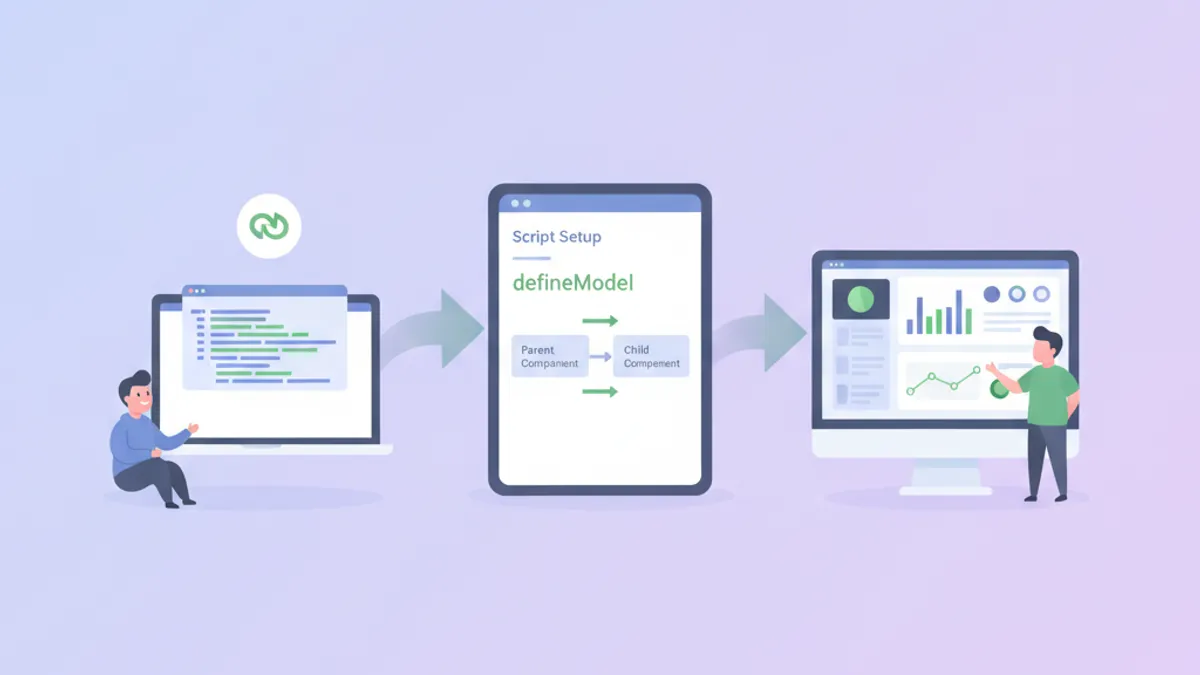
Vue 3 Script Setup and defineModel in 2026: Modern Syntax and Interview Questions
Master Vue 3 script setup syntax and defineModel for two-way binding. Learn reactive props destructure, TypeScript patterns, and prepare for Vue interview questions.

Nuxt 4 SEO and Meta Tags in 2026: useHead, useSeoMeta and Interview Questions
Master Nuxt 4 SEO with useHead and useSeoMeta composables. Learn type-safe meta tags, performance optimization, AI crawler compatibility, and common interview questions.
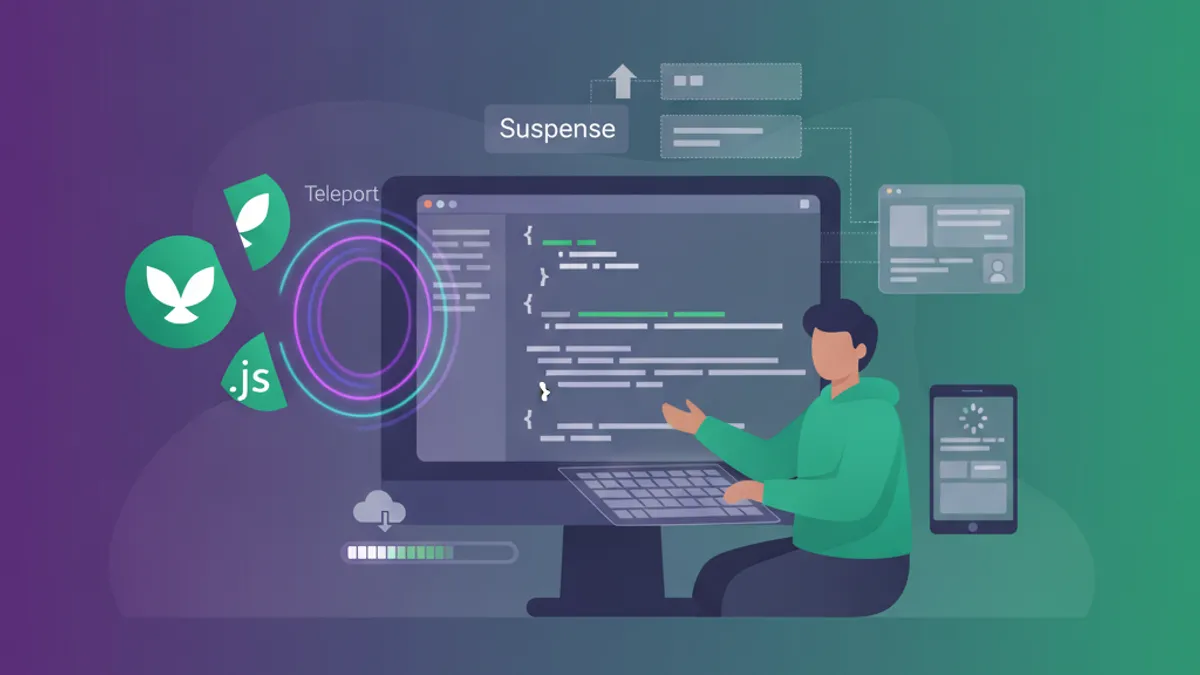
Vue 3 Teleport and Suspense: Advanced Patterns and Interview Questions 2026
Master Vue 3 Teleport for DOM portaling and Suspense for async rendering. Covers the new defer prop, nested Suspense patterns, and interview questions for 2026.