Freelance .NET developer jobs in 2026: where to find contracts, day rates, how to prepare
The freelance .NET market in 2026 offers solid day rates and growing demand for cloud-native skills. This guide covers where to find contracts, what rates to expect, and how to prepare for technical interviews.

Freelance .NET developer positions remain in high demand in 2026, driven by enterprise modernization projects and cloud migration to Azure. With .NET 9 now stable and .NET 10 previews rolling out, companies need contractors who can upgrade legacy systems while building new microservices. This guide covers where contracts are posted, what day rates look like across regions, and how to stand out in technical interviews.
The SharpSkill job board lists 602 active .NET positions. 31% are freelance or contract roles. 41% include published compensation. 33% offer full remote work.
Where freelance .NET contracts are posted in 2026
The freelance .NET market is fragmented across multiple channels, each with its own strengths and pitfalls. Knowing where to look saves time and surfaces better-paying contracts.
Specialized freelance platforms dominate volume. Free-Work (formerly Freelance-info in France) lists the most .NET contracts in Europe, particularly for French and German markets. Malt, Comet, and Toptal focus on vetted profiles and tend to offer higher day rates but require passing their screening process. These platforms handle invoicing and often provide liability insurance.
Company career pages and ATS boards post direct contracts that skip intermediaries. SmartRecruiters, Workday, and Lever power most enterprise career sites. Fintech companies, banks, and large retailers frequently seek .NET contractors for specific projects lasting 6 to 18 months. Checking these directly avoids the 10 to 20% cut that agencies take.
The SharpSkill job board lists publicly posted developer jobs, updated daily. These roles often pay in USD or GBP regardless of contractor location, which benefits developers in lower cost-of-living regions.
| Channel | What to expect | Watch out for |
|---|---|---|
| Free-Work, Malt | High volume, local contracts, platform handles admin | Rates visible to competitors |
| Company ATS | Direct relationship, no middleman cut | Slower response, more paperwork |
| Remote boards | Location-flexible, often USD rates | Time zone requirements, 1099/B2B only |
| Networking, referrals | Recruiter spam, vague postings |
What .NET contract postings ask for in 2026
Most .NET freelance contracts in 2026 require experience with the modern stack: C# 12 or 13, ASP.NET Core 8 or 9, and Entity Framework Core. Azure skills appear in 25 out of every 100 postings, making cloud proficiency nearly mandatory for senior rates.
On the SharpSkill job board on 27 September 2026, the most requested skills alongside .NET are:
- C# (78 postings): the language itself, expected in every role
- Angular (38 postings): common frontend pairing for enterprise apps
- .NET Core (26 postings): modern cross-platform runtime
- Azure (25 postings): cloud platform, especially App Service, Functions, and AKS
- SQL (25 postings): relational database skills, often SQL Server
- Azure DevOps (17 postings): CI/CD pipelines and project management
Seniority distribution skews heavily toward experienced developers. 57% of .NET postings target senior profiles, 24% target mid-level, and only 3% are open to juniors. Lead and staff roles account for another 5%. Freelance contracts rarely go to developers with less than 3 years of experience.
.NET freelance day rates and salary ranges in 2026
Day rates for .NET contractors vary significantly by location, remote policy, and specialization. The SharpSkill job board data from 27 September 2026 provides a snapshot of current market rates.
Daily rates (EUR):
- 25th percentile: 415 EUR/day
- Median: 460 EUR/day
- 75th percentile: 525 EUR/day
- Sample size: 114 contracts with published rates
These figures represent contracts across multiple European markets. Paris and London command rates at or above the 75th percentile, while Eastern European markets often sit closer to the 25th percentile for similar skill requirements.
Equivalent annual compensation for permanent .NET roles shows wider spread:
- 25th percentile: 55,000 EUR
- Median: 87,200 EUR
- 75th percentile: 109,000 EUR
For freelancers, the rule of thumb is that a 500 EUR/day rate translates to roughly 110,000 EUR annual gross before expenses, assuming 220 billable days. After deducting health insurance, retirement contributions, and business costs, net income approaches that of a 75,000 to 85,000 EUR permanent salary with benefits.
The Hays 2026 Salary Guide reports similar ranges for .NET contractors in Western Europe, with Azure specialization adding 10 to 15% to base rates.
Browse the SharpSkill job board
Publicly posted developer jobs, updated daily, each linked to the interview questions it calls for.
Remote, hybrid, and onsite .NET contracts
Remote work availability for .NET freelancers has stabilized after the post-pandemic correction. On the SharpSkill job board on 27 September 2026:
- 33% full remote: work from anywhere, though often restricted to specific time zones or countries
- 39% hybrid: typically 2 to 3 days onsite per week, common in finance and government projects
- 11% fully onsite: security-sensitive sectors, legacy system maintenance
The remaining 17% of postings do not specify location policy, which usually means negotiable terms.
"Remote" in .NET contracts often comes with strings attached. Many specify that the contractor must be based in the EU for tax and compliance reasons. Others require overlap with CET or GMT business hours, effectively limiting the hiring pool to Europe and parts of Africa.
Financial services contracts tend toward hybrid or onsite arrangements due to regulatory requirements. A .NET contractor working on trading systems for a London bank will likely need physical presence for sensitive deployments, even if day-to-day coding happens remotely.
Top cities for .NET contract work, based on posting volume:
- Paris (60 postings)
- Ile-de-France region (33 postings)
- London (24 postings combined)
- Kyiv (17 postings)
- Lyon, Nantes, Montpellier, Lille (5 to 8 each)
- Munich (5 postings)
How to prepare for a .NET freelance interview in 2026
Freelance interviews differ from permanent role interviews. The hiring manager assumes technical competence and focuses on fit for the specific project. Contractors who can demonstrate immediate productivity and low ramp-up time get offers.
What gets asked:
Technical interviews for .NET contracts in 2026 concentrate on:
-
ASP.NET Core internals: middleware pipeline, dependency injection lifetimes, configuration binding. Interviewers want to know if the contractor can debug production issues without extensive hand-holding.
-
Entity Framework Core patterns: change tracking, lazy vs eager loading, raw SQL fallbacks, migration strategies. Legacy codebases often have EF anti-patterns that need fixing.
-
Azure services: App Service deployment slots, Azure Functions triggers, Blob Storage access patterns, Managed Identity authentication. Cloud-native architecture questions appear in most senior-level interviews.
-
C# language features: async/await pitfalls, nullable reference types, records, pattern matching. Interviewers test whether the contractor stays current with language evolution.
The SharpSkill .NET interview questions page covers these topics in depth. For specific preparation, review the async in ASP.NET Core module and the Entity Framework Core advanced patterns module.
The classic trap:
Many .NET contractors stumble on questions about ConfigureAwait(false). In library code, omitting it can cause deadlocks in synchronous contexts. In ASP.NET Core applications, it is unnecessary because there is no synchronization context. Knowing when to use it, and more importantly when not to, separates contractors who have debugged real production issues from those who have only read documentation.
What distinguishes a senior freelance profile:
- Experience with incremental .NET upgrades (migrating from .NET Framework 4.8 to .NET 8)
- Azure cost optimization: choosing between App Service, Container Apps, and AKS based on workload
- CI/CD pipeline ownership: GitHub Actions or Azure DevOps YAML pipelines
- Observability setup: Application Insights, OpenTelemetry, structured logging with Serilog
The .NET developer cheatsheet provides quick reference material for last-minute review before interviews.
Landing a .NET freelance contract: the checklist
The .NET freelance market in 2026 rewards specialists with cloud experience and strong interviewing skills. Here is what to focus on this week:
- Check Free-Work and company career pages daily for new .NET contracts in target locations
- Set rate expectations using the 415 to 525 EUR/day range as a baseline, adjusting for Azure or lead responsibilities
- Review async patterns, EF Core migrations, and Azure deployment models before interviews
- Prepare a 2-minute pitch explaining the last complex .NET project delivered as a contractor
- Verify remote policy details early in conversations to avoid wasting time on onsite-only roles
- Keep the .NET interview questions bookmarked for technical preparation
- Update LinkedIn and freelance platform profiles to reflect .NET 9 and Azure experience
Start practicing!
Test your knowledge with our interview simulators and technical tests.
Can you spot the bug in .NET?
One real snippet, one hidden bug, one attempt a day. No account needed to try.

Written by
Anthony Fillion-MailletFounder of SharpSkill
Full-stack developer for over 10 years. Runs SharpSkill and answers for everything published here.
Updated on September 29, 2026
Share
Related articles

.NET Developer Jobs in 2026: Where to Look, Salary Ranges, How to Prepare
Guide to finding .NET developer jobs in 2026: where positions get posted, salary ranges by seniority, remote work availability, and how to prepare for .NET technical interviews.
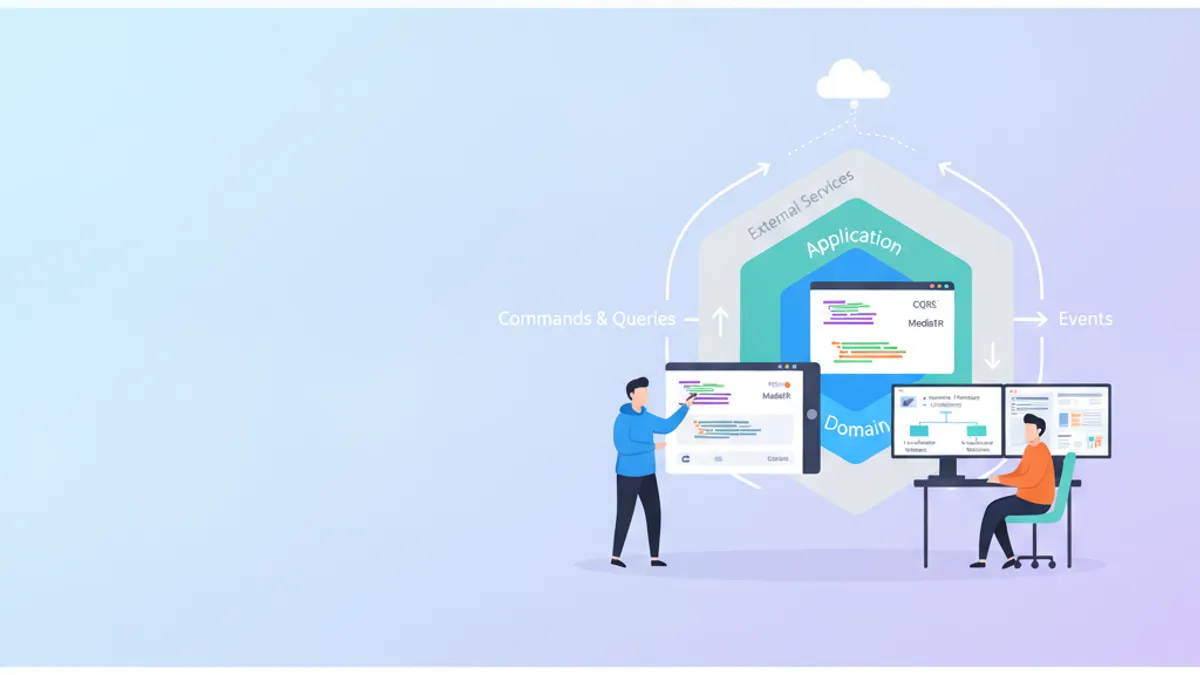
Clean Architecture .NET in 2026: CQRS, MediatR and Developer Interview Questions
Master Clean Architecture in .NET with CQRS and MediatR 14. Learn layered architecture patterns, pipeline behaviors, and prepare for technical interviews with real-world examples.
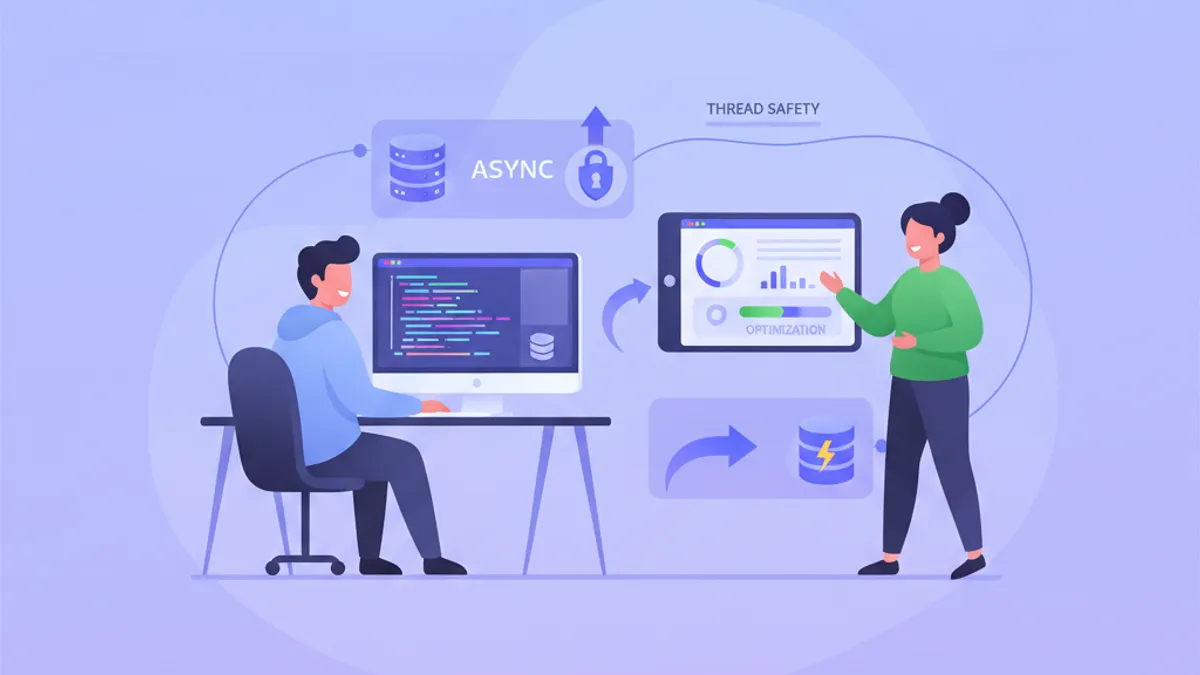
DbContext Lifetime in ASP.NET Core: Performance vs Thread Safety in Async Operations
Master DbContext lifetime management in ASP.NET Core. Learn when to use scoped vs transient lifetimes, how to safely handle async operations, and optimize performance with DbContext pooling.