.NET Developer Jobs in 2026: Where to Look, Salary Ranges, How to Prepare
Guide to finding .NET developer jobs in 2026: where positions get posted, salary ranges by seniority, remote work availability, and how to prepare for .NET technical interviews.

.NET remains one of the most demanded backend stacks in enterprise software, and companies actively hire .NET developers in 2026. The job market shows consistent growth, with positions spanning banks, insurance, SaaS providers, and consulting firms across Europe and North America.
605 active .NET developer positions. 40% display a salary. Median annual salary: EUR 87,200 (P25: EUR 55,000, P75: EUR 109,000). 33% fully remote, 38% hybrid.
Where .NET Positions Get Posted in 2026
The .NET job market fragments across multiple channels, and knowing where to look matters as much as having the right skills.
Career sites and ATS portals remain the primary source for direct employer postings. Large enterprises (banks, insurance, telecom) run their own career pages through Workday, Oracle HCM, or SmartRecruiters. These listings often include salary bands and full benefits disclosure, but require checking each employer individually.
Specialized boards aggregate positions from multiple sources:
| Channel | What to expect | Watch out for |
|---|---|---|
| Company career pages | Salary often disclosed, direct application | Manual effort to track multiple employers |
| Specialized tech boards | Aggregated listings, remote filters | Some lag behind direct postings |
| Freelance platforms | TJM/daily rates, contract duration | Duplicate listings, intermediary fees |
| Networking opportunities, referrals | Salary rarely shown, many ghost postings |
Freelance channels serve contractors and consultants. The SharpSkill job board lists publicly posted developer jobs, updated daily.
What .NET Job Postings Ask For in 2026
The skills most frequently mentioned in active listings reflect where the ecosystem stands today:
- C# and .NET Core/.NET 8+: the foundation, expected in nearly every posting
- Azure: present in 25 of the top skill mentions, cloud-native development dominates
- SQL and database design: relational databases remain central to enterprise stacks
- Angular or React: full-stack roles pair .NET backends with SPA frontends
- Azure DevOps: CI/CD pipelines, release management, infrastructure as code
Seniority distribution shows a mature market: 57% of postings target senior developers, 24% target mid-level, and only 3% are junior positions. Companies hire experienced .NET developers, not trainees.
A posting that lists only buzzwords without explaining the project context or team structure often signals a staffing agency fishing for CVs. Listings from direct employers typically describe the product, the team size, and what success looks like in the role.
.NET Developer Salary Ranges in 2026
Salary transparency varies by region. In France, postings increasingly disclose ranges due to evolving labor transparency rules. In the UK and Germany, salary disclosure remains less common but improving.
Based on 245 positions with disclosed compensation on the SharpSkill job board on 27 September 2026:
| Metric | Annual EUR |
|---|---|
| 25th percentile | 55,000 |
| Median | 87,200 |
| 75th percentile | 109,000 |
For freelance contracts (114 positions with rates disclosed):
| Metric | Daily rate EUR |
|---|---|
| 25th percentile | 415 |
| Median | 460 |
| 75th percentile | 525 |
Salaries vary significantly by location. Paris and London command the highest rates, while remote positions open opportunities regardless of geography. The Hays 2026 Technology Salary Guide provides additional market context by region.
Browse the SharpSkill job board
Publicly posted developer jobs, updated daily, each linked to the interview questions it calls for.
Remote, Hybrid, and Onsite .NET Roles
The work arrangement breakdown on 27 September 2026:
- 33% fully remote: available from any location, though many specify timezone or country requirements
- 38% hybrid: typically 2-3 days in office, common in banking and insurance
- 11% onsite: security-sensitive environments or client-facing consulting
"Remote" in job postings often means different things. A listing may require residence in a specific country for tax and legal reasons, or mandate overlap hours with a particular timezone. Reading the fine print prevents surprises during interviews.
Freelance missions show higher remote availability (31% of listings are contract/freelance), as companies engage external specialists for project-based work regardless of location.
How to Prepare for a .NET Interview in 2026
Interviews for .NET positions follow predictable patterns. Technical screens test C# fundamentals, ASP.NET Core architecture, and database design. Senior roles add system design rounds covering distributed systems, caching strategies, and Azure service selection.
The questions that separate candidates:
- Dependency injection lifetime management: knowing when to use scoped vs transient vs singleton, and why it matters for Entity Framework DbContext
- Async/await patterns: explaining deadlock scenarios, ConfigureAwait, and cancellation tokens
- EF Core performance: N+1 queries, compiled queries, change tracking overhead
- Clean Architecture boundaries: where to place domain logic vs infrastructure concerns
SharpSkill modules cover these topics with interview-focused depth:
- Authentication and Authorization patterns
- EF Core advanced scenarios
- Clean Architecture implementation
For broader preparation, the .NET technology page structures the concepts every .NET interview touches, and the developer cheatsheet provides quick-reference material for last-minute review.
Microsoft's official documentation remains the authoritative source on ASP.NET Core fundamentals and C# language features.
Landing a .NET Role: The Checklist for 2026
- Check company career pages directly for positions with disclosed salaries, especially large enterprises using Workday or SmartRecruiters
- Set alerts on specialized tech boards with .NET and C# filters, filtering by remote if relevant
- Review Azure fundamentals: most .NET roles expect cloud familiarity, Azure certifications differentiate candidates
- Practice dependency injection and async patterns: these appear in nearly every technical screen
- Prepare system design answers for senior roles: API gateway patterns, caching with Redis, message queues with Azure Service Bus
- Ask about team structure, deployment frequency, and tech debt during interviews: these reveal company culture better than job descriptions
- Negotiate with data: the median EUR 87,200 salary and EUR 460 daily rate provide concrete reference points
Start practicing!
Test your knowledge with our interview simulators and technical tests.
Can you spot the bug in .NET?
One real snippet, one hidden bug, one attempt a day. No account needed to try.

Written by
Anthony Fillion-MailletFounder of SharpSkill
Full-stack developer for over 10 years. Runs SharpSkill and answers for everything published here.
Updated on September 29, 2026
Share
Related articles

Freelance .NET developer jobs in 2026: where to find contracts, day rates, how to prepare
The freelance .NET market in 2026 offers solid day rates and growing demand for cloud-native skills. This guide covers where to find contracts, what rates to expect, and how to prepare for technical interviews.
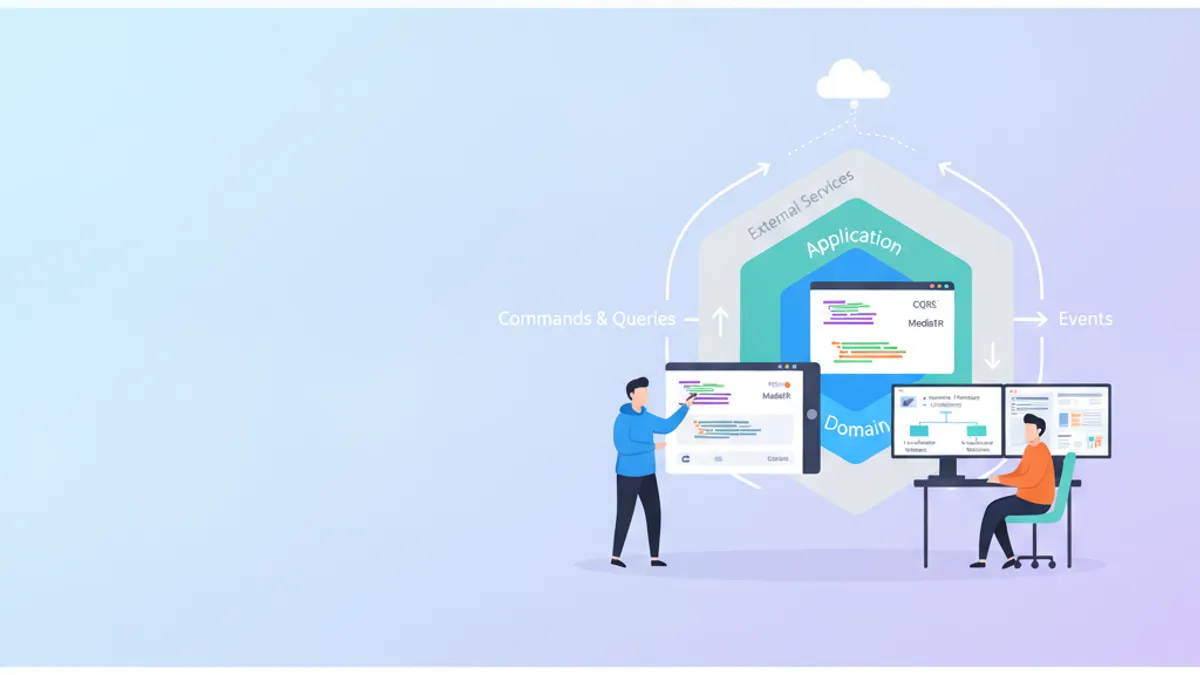
Clean Architecture .NET in 2026: CQRS, MediatR and Developer Interview Questions
Master Clean Architecture in .NET with CQRS and MediatR 14. Learn layered architecture patterns, pipeline behaviors, and prepare for technical interviews with real-world examples.
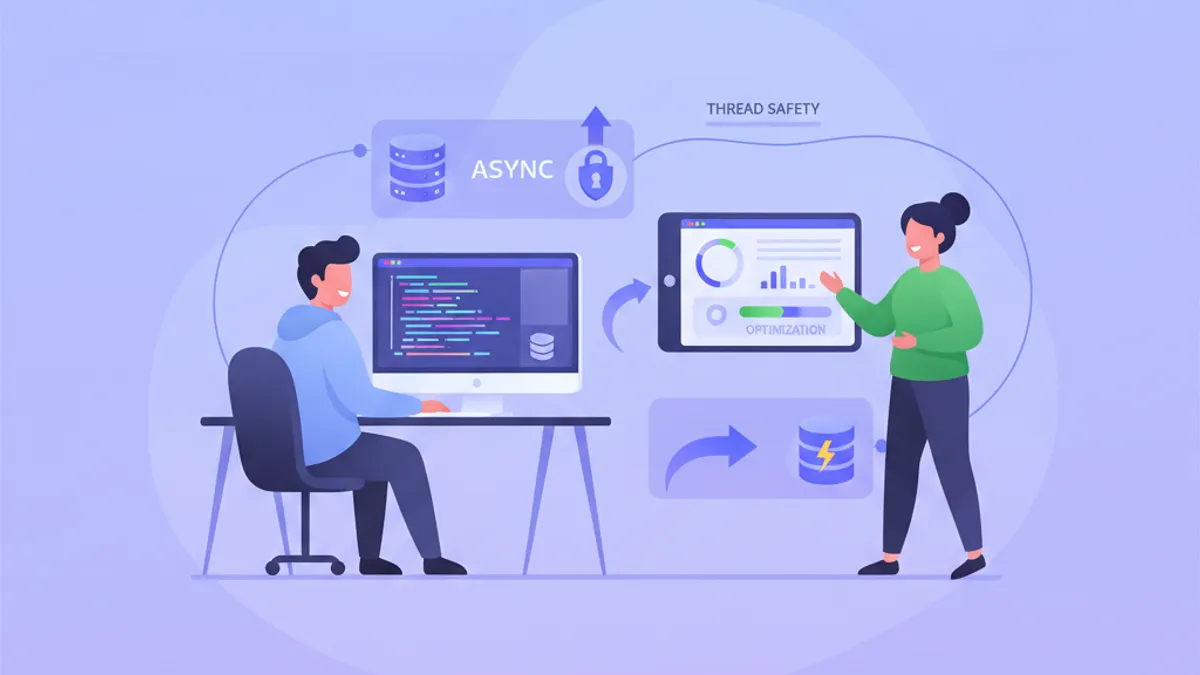
DbContext Lifetime in ASP.NET Core: Performance vs Thread Safety in Async Operations
Master DbContext lifetime management in ASP.NET Core. Learn when to use scoped vs transient lifetimes, how to safely handle async operations, and optimize performance with DbContext pooling.