Freelance data scientist jobs in 2026: where to find contracts, day rates, how to prepare
A practical guide to finding freelance data scientist contracts in 2026, with current day rates, top platforms, and interview preparation strategies.
Comprehensive Data Science and Machine Learning curriculum with Python as the main language. From data manipulation with Pandas and NumPy to implementing Deep Learning models with TensorFlow/Keras, through classic ML with Scikit-Learn. Also includes MLOps skills to deploy and maintain models in production with Docker, FastAPI and cloud platforms.
Modern Python with object-oriented programming and best practices
Data manipulation with Pandas, NumPy and SQL (BigQuery)
Visualization with Matplotlib, Seaborn and Plotly
Descriptive and inferential statistics with Statsmodel
Machine Learning with Scikit-Learn and XGBoost (regression, classification, clustering)
Deep Learning with TensorFlow and Keras (CNN, RNN, Transformers)
NLP and GenAI with Hugging Face, LangChain and LLMs (GPT, Gemini)
MLOps with MLflow, Docker, FastAPI and Streamlit
Development environments: Jupyter, Google Colab
Cloud deployment with Google Compute, Cloud Storage and GPU
The most important concepts to understand this technology and ace your interviews
Python: types, data structures, OOP, decorators, generators, context managers
NumPy: arrays, broadcasting, indexing, vectorized operations, linear algebra
Pandas: DataFrames, Series, indexing, groupby, merge, pivot, time series
SQL: SELECT, JOIN, GROUP BY, window functions, CTEs, query optimization
Visualization: Matplotlib (figures, axes, subplots), Seaborn (statistical plots), Plotly (interactive)
Statistics: distributions, hypothesis testing, confidence intervals, regression
Feature Engineering: encoding, scaling, feature selection, feature creation
Supervised ML: linear/logistic regression, trees, Random Forest, XGBoost, metrics
Unsupervised ML: K-Means, hierarchical clustering, PCA, t-SNE
ML Pipeline: train/test split, cross-validation, hyperparameter tuning, overfitting
Deep Learning: perceptrons, backpropagation, activation functions, optimizers, loss functions
CNN: convolutions, pooling, architectures (ResNet, VGG), transfer learning
RNN/LSTM: sequences, vanishing gradient, attention mechanism, Transformers
NLP: tokenization, embeddings, word2vec, BERT, LLM fine-tuning
MLOps: versioning (MLflow), containerization (Docker), API (FastAPI), monitoring
Cloud: Google Cloud (Compute, Storage, BigQuery), GPU training, Vertex AI
AI Ethics: bias, explainability (SHAP, LIME), fairness, GDPR
One snippet a day. Find the bug, or prove there isn't one.
Permanent and freelance, with country, remote and salary when it is published. Updated every day, reserved for subscribers.
Discover our latest articles and guides on Data Science & ML
A practical guide to finding freelance data scientist contracts in 2026, with current day rates, top platforms, and interview preparation strategies.

Where to find data scientist openings in 2026, salary ranges from €110k to €206k, remote options, and interview preparation tips.
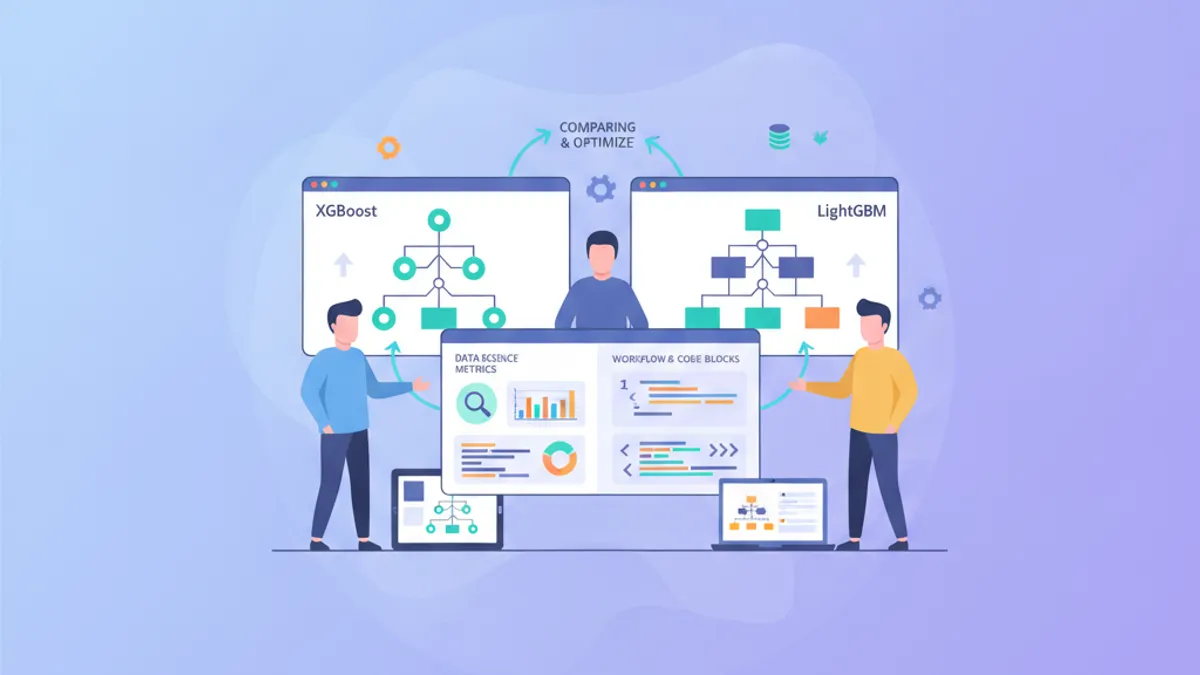
Master XGBoost and LightGBM for data science interviews. Compare gradient boosting algorithms, learn hyperparameter tuning, and practice common interview questions with code examples.