Freelance Android Developer Jobs in 2026: Where to Find Contracts, Day Rates, How to Prepare
A practical guide to finding freelance Android developer contracts in 2026, with current day rate ranges, contract types, and interview preparation strategies.
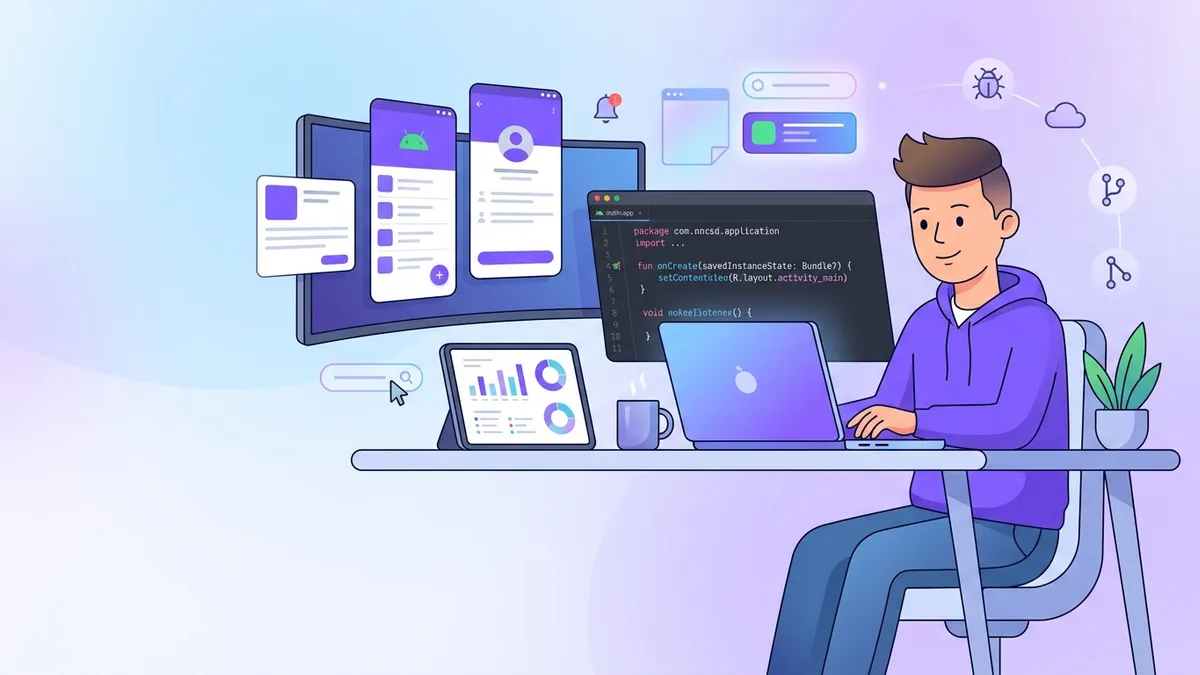
Freelance Android developer jobs remain in steady demand as companies scale mobile teams without long-term hiring commitments. This guide covers where contract opportunities get posted, what day rates look like in different markets, and what technical preparation separates candidates who land contracts from those who keep searching.
On the SharpSkill job board: 326 active Android roles, 9% explicitly freelance or contract-based, 29% remote, 23% hybrid. Day rate data remains sparse in public postings.
Where freelance Android contracts get posted
Freelance Android roles appear across several distinct channels, each with different visibility into compensation and contract terms.
Company career pages and ATS platforms host direct contracts from tech companies and product teams. Google, Amazon, and other large employers publish contractor roles on their career sites, typically through Greenhouse, Lever, or SmartRecruiters. These postings often skip day rate details but specify contract duration (6 months, 12 months with extension options).
Freelance marketplaces like Malt, Toptal, and Free-work list Android contracts with stated day rates. Free-work aggregates missions from ESN (French IT services companies) and consulting firms, often with TJM (taux journalier moyen) displayed. Toptal requires a screening process but connects freelancers with US and European clients at premium rates.
LinkedIn remains the largest single source, with 32% of all Android postings in the SharpSkill database. Contract roles often appear as "Contract" or "Contractor" in the employment type filter. Many are posted by recruiting agencies rather than end clients, so expect one or two intermediary calls before reaching the hiring manager.
Specialized remote boards like Himalayas, Jobicy, and Arbeitnow index remote-first companies that hire contractors across borders. These tend to skew toward startups and scale-ups comfortable with async work.
| Channel | What to expect | Watch out for |
|---|---|---|
| Company career pages | Direct contracts, clear scope, no day rate in posting | Slow hiring process (3-5 rounds) |
| Freelance marketplaces | Day rates visible, ESN and consulting clients | Commission taken on rate |
| High volume, agencies and direct posts mixed | Duplicate postings, vague specs | |
| Remote job boards | Async-friendly companies, often US-based | Timezone requirements buried in description |
What freelance Android postings ask for in 2026
Contract roles emphasize production experience over theory. The technical requirements in current postings center on a consistent stack.
Kotlin is effectively mandatory. The SharpSkill job board shows Kotlin appearing in the majority of Android postings that list specific languages. Java knowledge still matters for legacy codebases, but new contract work assumes Kotlin-first development.
Jetpack Compose appears in roughly half of senior-level contracts. Companies hiring freelancers often need someone who can modernize an existing XML-based UI or build a new feature in Compose without ramp-up time. The official Jetpack Compose documentation remains the authoritative reference.
Architecture patterns matter more in contract roles than in permanent positions. Clients expect a freelancer to slot into an existing MVVM or MVI setup without debates about restructuring. Familiarity with Hilt or Koin for dependency injection, and with Kotlin Coroutines and Flow for async work, is assumed at the senior level.
Seniority distribution skews experienced. On the SharpSkill job board on 21 September 2026, 45% of Android roles target senior engineers, 23% target mid-level, and only 7% target juniors. Freelance contracts cluster even more heavily at the senior end: companies paying contractor rates want immediate productivity.
Freelance Android day rates in 2026
Published day rate data for Android freelancers remains scarce. Most contract postings omit compensation, and freelance platforms vary by region and intermediary markup.
What the numbers show: On the SharpSkill job board, only 21% of Android postings include salary information. Of the 69 roles with stated annual compensation, the median sits at €146,000, with a range from €81,000 (25th percentile) to €186,000 (75th percentile). These figures represent full-time equivalent salaries, not direct day rate conversions, but they indicate the budget range for senior Android talent.
Regional patterns: London and Berlin contracts tend to pay higher gross rates than Southern European markets. US-based contracts (Mountain View, San Jose) pay at the top of the range but often require US work authorization or specific timezone overlap. The Hays 2026 Technology Salary Guide provides regional benchmarks for permanent roles that can inform freelance rate negotiations.
Contract types matter. A freelancer working through a French portage salarial company takes home less than someone billing directly as an independent contractor, but gains social protections. UK contractors working through umbrella companies face IR35 considerations that affect net rates. The stated day rate is only part of the calculation.
Browse Android contracts
Android job postings from company career sites, ATS platforms, and job boards, updated every 3 hours. Filter by freelance and contract roles.
Remote, hybrid, and onsite Android contracts
The SharpSkill job board shows 29% of Android roles as fully remote, 23% as hybrid, and 6% explicitly onsite (the remainder unspecified). These numbers include both permanent and contract positions.
Freelance contracts skew more remote than permanent roles. A company willing to hire a contractor for 6 months is often more flexible about location than one making a permanent hire. That said, "remote" in a job posting does not always mean location-independent.
Timezone restrictions appear frequently. A US-based company advertising a remote Android contract may require overlap with Pacific or Eastern time, effectively limiting candidates to the Americas. European companies often specify "EU timezone" or "within 2 hours of CET." Read the full posting before applying.
Onsite periods sometimes apply even to remote contracts. Some clients want a contractor onsite for the first two weeks or for quarterly planning sessions. Clarify travel expectations early in the conversation.
How to prepare for a freelance Android interview
Freelance interviews tend to compress the permanent hiring process. A client looking for a contractor in two weeks does not have time for six rounds. Expect two to three interviews: a screening call, a technical assessment, and a team fit conversation.
Technical assessments for freelance roles often focus on practical problems. Take-home assignments or live coding sessions typically involve building a small feature with Compose, handling API calls with Retrofit and Coroutines, or debugging an existing codebase. Review the Kotlin Coroutines and Flow questions that come up frequently.
Architecture discussions test whether a contractor can integrate into an existing codebase. Expect questions on MVVM versus MVI tradeoffs, when to use StateFlow versus SharedFlow, and how to structure a multi-module Gradle project. The Android MVVM Architecture module covers the patterns interviewers probe.
Dependency injection questions appear in most senior Android interviews. Clients want to know a contractor understands Hilt's component hierarchy or Koin's module definitions without needing onboarding. The Android Dependency Injection module has the questions that recur.
What distinguishes a confirmed freelancer: The ability to estimate work accurately, communicate blockers early, and ship without extensive hand-holding. Interviewers often ask about past projects to gauge autonomy. Have two or three examples ready: the scope, the timeline, the technical decisions, and the outcome.
The SharpSkill cheatsheet consolidates the technical points across modules for quick review before an interview.
Landing a freelance Android contract: the checklist
- Search company career pages and ATS boards directly, not just aggregators. Many contracts appear on Greenhouse and Lever before reaching LinkedIn.
- Filter for "Contract" and "Freelance" on LinkedIn and remote job boards. The employment type filter eliminates permanent roles from results.
- Check freelance marketplaces (Malt, Free-work, Toptal) for contracts with visible day rates.
- Clarify contract type early: direct billing, portage, umbrella company, or agency placement affects net income.
- Confirm timezone and onsite expectations before technical rounds. A misaligned requirement wastes both parties' time.
- Review Kotlin Coroutines, Jetpack Compose, and dependency injection patterns. These topics dominate senior Android interviews.
- Prepare two or three past project examples that demonstrate autonomy and delivery.
Start practicing!
Test your knowledge with our interview simulators and technical tests.
Can you spot the bug in Android?
One real snippet, one hidden bug, one attempt a day. No account needed to try.

Written by
Anthony Fillion-MailletFounder of SharpSkill
Full-stack developer for over 10 years. Runs SharpSkill and answers for everything published here.
Updated on September 21, 2026
Tags
Share
Related articles

Android Modularization in 2026: Multi-Module Architecture and Interview Questions
Master Android multi-module architecture with convention plugins, Gradle version catalogs, and feature modules. Includes common interview questions on modularization strategies.

Jetpack Navigation Compose in 2026: Type-Safe Navigation and Interview Questions
Master Jetpack Navigation Compose with type-safe routes using Kotlin Serialization. Learn Navigation 2.10, predictive back, argument passing, and common interview questions.
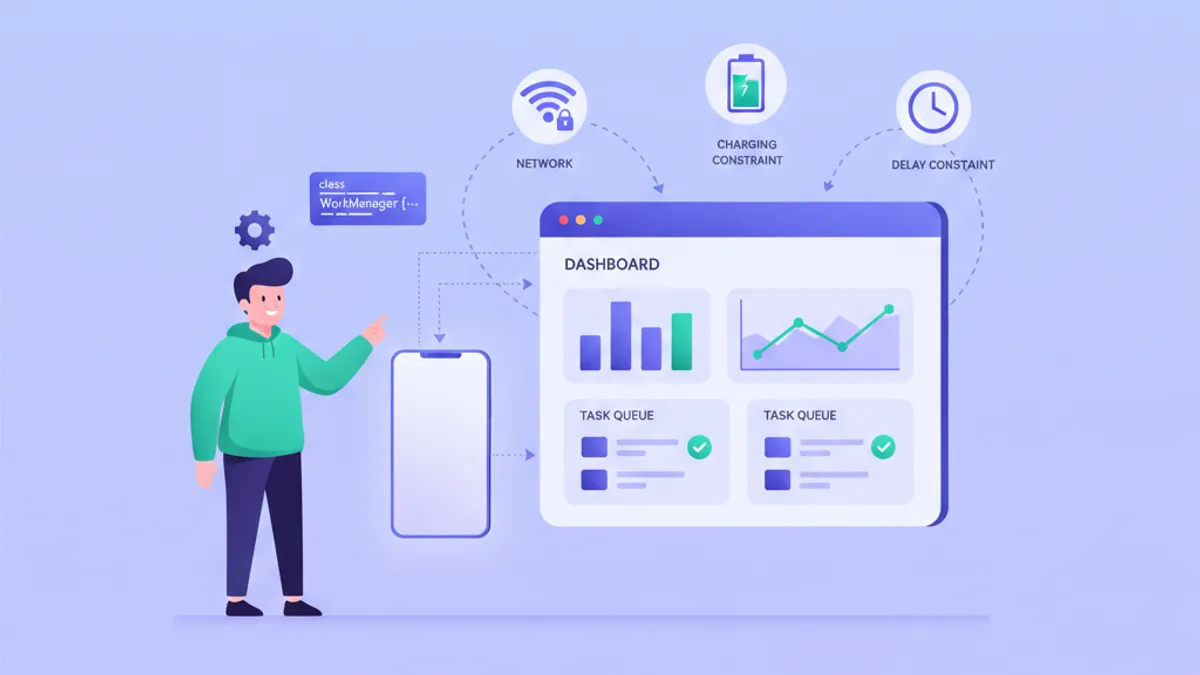
Android WorkManager in 2026: Background Tasks, Constraints and Interview Questions
Master Android WorkManager for reliable background task execution. Learn constraints, chaining, periodic work, and common interview questions with practical Kotlin examples.