Async/Await ใน Rust: อธิบาย Tokio, Futures และ Asynchronous Concurrency อย่างครบถ้วน
บทความอธิบายการเขียนโปรแกรมแบบ Asynchronous ใน Rust ด้วย async/await, Tokio runtime และ Futures ครอบคลุมตั้งแต่พื้นฐานจนถึงแนวทางปฏิบัติขั้นสูงสำหรับระบบที่ต้องการประสิทธิภาพสูง
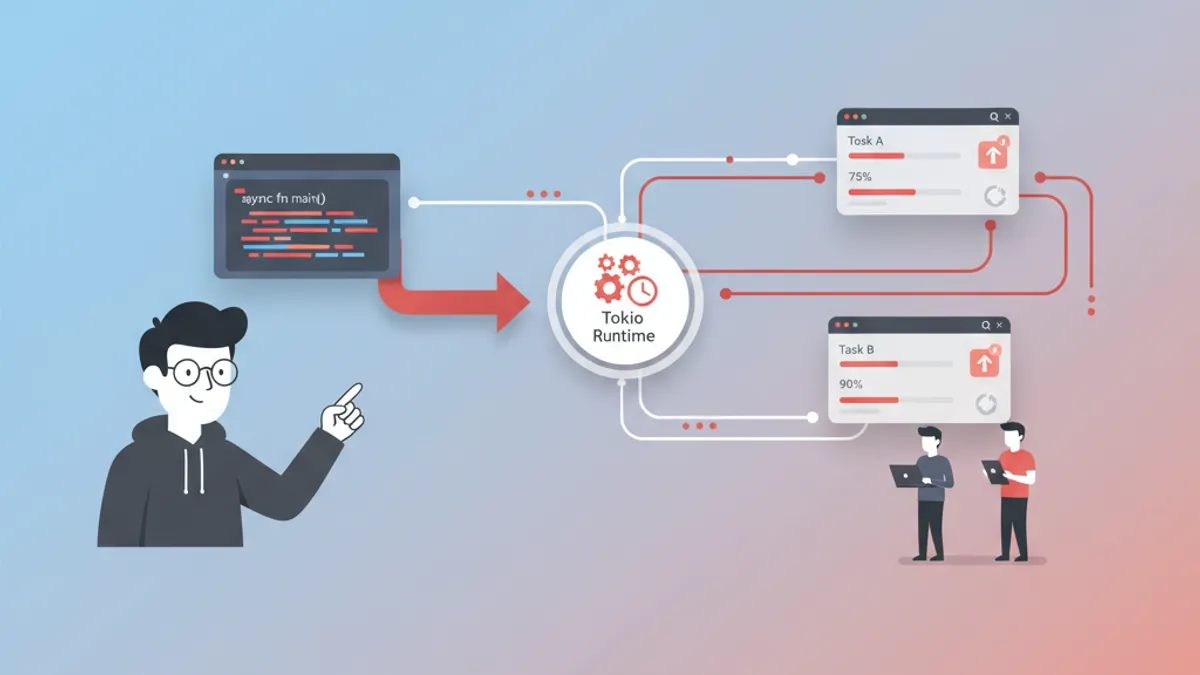
การเขียนโปรแกรมแบบ Asynchronous ถือเป็นหนึ่งในจุดแข็งที่สำคัญที่สุดของภาษา Rust โดยเฉพาะอย่างยิ่งสำหรับงานที่ต้องจัดการกับ I/O จำนวนมาก เช่น เว็บเซิร์ฟเวอร์ ระบบฐานข้อมูล หรือแอปพลิเคชันเครือข่ายที่ต้องรองรับการเชื่อมต่อพร้อมกันหลายพันรายการ Rust นำเสนอระบบ async/await ที่มีความปลอดภัยในระดับ memory safety และ concurrency safety โดยไม่ต้องพึ่งพา garbage collector
บทความนี้จะอธิบายแนวคิดหลักของ Asynchronous Programming ใน Rust ตั้งแต่ Future trait พื้นฐาน ไปจนถึงการใช้งาน Tokio runtime สำหรับงานจริง พร้อมตัวอย่างโค้ดที่สามารถนำไปประยุกต์ใช้ได้ทันที
บทความนี้เหมาะสำหรับผู้ที่มีความรู้พื้นฐานเกี่ยวกับ Rust เช่น ownership, borrowing และ trait แล้ว หากยังไม่คุ้นเคยกับแนวคิดเหล่านี้ ควรศึกษาพื้นฐานของ Rust ก่อนจะช่วยให้เข้าใจเนื้อหาได้ดียิ่งขึ้น
Future Trait: หัวใจของระบบ Async ใน Rust
ทุกอย่างที่เกี่ยวข้องกับ async ใน Rust เริ่มต้นจาก Future trait ซึ่งเป็นนามธรรม (abstraction) ที่แทนค่าซึ่งอาจจะพร้อมใช้งานในอนาคต แตกต่างจากภาษาอื่น ๆ อย่าง JavaScript ที่ Promise จะเริ่มทำงานทันทีที่ถูกสร้าง Future ใน Rust จะไม่ทำงานใด ๆ จนกว่าจะถูก poll อย่างชัดเจน แนวคิดนี้เรียกว่า "lazy evaluation"
// core::future::Future
trait Future {
    type Output;
    fn poll(self: Pin<&mut Self>, cx: &mut Context<'_>) -> Poll<Self::Output>;
}
เมื่อ runtime เรียก poll() จะได้รับค่าเป็น Poll::Ready(value) หาก Future ทำงานเสร็จแล้ว หรือ Poll::Pending หากยังต้องรอการดำเนินการบางอย่าง เช่น การอ่านข้อมูลจากเครือข่าย ในกรณี Pending ระบบจะลงทะเบียน waker ไว้เพื่อแจ้งเตือน runtime เมื่อ Future พร้อมที่จะถูก poll อีกครั้ง
สิ่งที่ทำให้ Rust แตกต่างจากภาษาอื่นคือ Future เป็น zero-cost abstraction กล่าวคือ คอมไพเลอร์จะแปลงโค้ด async ให้เป็น state machine ที่มีประสิทธิภาพสูงในขั้นตอนการคอมไพล์ โดยไม่มีค่าใช้จ่ายเพิ่มเติมในขณะรันไทม์
เริ่มต้นใช้งาน Tokio Runtime
Rust ไม่ได้มี async runtime มาพร้อมกับตัวภาษา จึงต้องเลือกใช้ runtime จากภายนอก โดย Tokio เป็น runtime ที่ได้รับความนิยมมากที่สุดและเป็นมาตรฐานของอุตสาหกรรม รองรับทั้ง multi-threaded scheduler, I/O driver, timer และเครื่องมือ synchronization ต่าง ๆ
ขั้นแรก ให้เพิ่ม Tokio เป็น dependency ในไฟล์ Cargo.toml ดังนี้
# Cargo.toml
[dependencies]
tokio = { version = "2", features = ["rt-multi-thread", "macros", "net", "time"] }
จากนั้นสามารถเขียนโปรแกรม async แรกได้ดังนี้
#[tokio::main]
async fn main() {
    let result = fetch_data().await;
    println!("Got: {result}");
}

async fn fetch_data() -> String {
    // Simulate async I/O
    tokio::time::sleep(std::time::Duration::from_millis(100)).await;
    String::from("data loaded")
}
#[tokio::main] macro จะสร้าง Tokio runtime และรันฟังก์ชัน main ภายใน runtime นั้น คีย์เวิร์ด async ทำให้ฟังก์ชันคืนค่าเป็น Future และ .await ใช้สำหรับรอผลลัพธ์ของ Future โดยจะ yield การควบคุมกลับไปยัง runtime เมื่อ Future ยังไม่พร้อม ทำให้ thread สามารถไปทำงานอื่นได้ในระหว่างที่รอ
การทำ Concurrency ด้วย tokio::spawn
จุดแข็งของ async programming คือความสามารถในการรันหลาย task พร้อมกัน tokio::spawn สร้าง task ใหม่ที่ทำงานแบบ concurrent บน Tokio runtime โดย task แต่ละตัวจะถูก schedule บน thread pool อย่างมีประสิทธิภาพ
use tokio::task::JoinHandle;

#[tokio::main]
async fn main() {
    // Spawn two independent tasks
    let handle_a: JoinHandle<u32> = tokio::spawn(async {
        expensive_computation("dataset_a").await
    });

    let handle_b: JoinHandle<u32> = tokio::spawn(async {
        expensive_computation("dataset_b").await
    });

    // Await both results
    let (result_a, result_b) = (
        handle_a.await.expect("task A panicked"),
        handle_b.await.expect("task B panicked"),
    );

    println!("Results: {result_a}, {result_b}");
}

async fn expensive_computation(name: &str) -> u32 {
    tokio::time::sleep(std::time::Duration::from_secs(1)).await;
    println!("{name} done");
    42
}
tokio::spawn คืนค่า JoinHandle ซึ่งสามารถ .await เพื่อรับผลลัพธ์จาก task ได้ สิ่งสำคัญคือ task ที่ถูก spawn จะเริ่มทำงานทันทีแบบ concurrent กับ task อื่น ๆ โดยไม่ต้องรอจนกว่าจะเรียก .await บน handle
task ที่ถูก spawn ด้วย tokio::spawn จะต้องเป็น 'static หมายความว่าไม่สามารถ borrow ข้อมูลจากขอบเขตภายนอกได้โดยตรง ต้องใช้ move closure หรือ Arc สำหรับการแชร์ข้อมูลระหว่าง task
tokio::join! สำหรับ Structured Concurrency
เมื่อต้องการรัน Future หลายตัวพร้อมกันและรอผลลัพธ์ทั้งหมด tokio::join! เป็นเครื่องมือที่เหมาะสมที่สุด แตกต่างจาก spawn ตรงที่ join! ไม่ต้องการ 'static lifetime และจะรอจนกว่า Future ทุกตัวจะเสร็จสมบูรณ์
use tokio::time::{sleep, Duration};

#[tokio::main]
async fn main() {
    // All three run concurrently, total time ~200ms (not 600ms)
    let (users, orders, inventory) = tokio::join!(
        fetch_users(),
        fetch_orders(),
        fetch_inventory()
    );

    println!("Users: {}, Orders: {}, Stock: {}", users.len(), orders.len(), inventory);
}

async fn fetch_users() -> Vec<String> {
    sleep(Duration::from_millis(200)).await;
    vec!["Alice".into(), "Bob".into()]
}

async fn fetch_orders() -> Vec<String> {
    sleep(Duration::from_millis(150)).await;
    vec!["ORD-001".into()]
}

async fn fetch_inventory() -> u32 {
    sleep(Duration::from_millis(100)).await;
    84
}
ในตัวอย่างนี้ การดึงข้อมูลทั้ง 3 รายการจะทำงานพร้อมกัน ทำให้ใช้เวลารวมเพียงประมาณ 200 มิลลิวินาที (เท่ากับ Future ที่ช้าที่สุด) แทนที่จะเป็น 450 มิลลิวินาทีหากทำงานแบบลำดับ นี่คือประโยชน์หลักของ structured concurrency ที่ช่วยลดเวลาการประมวลผลอย่างมีนัยสำคัญ
tokio::select! สำหรับ Racing Futures
ในบางสถานการณ์ ต้องการรอเฉพาะ Future ตัวแรกที่เสร็จก่อน เช่น การดึงข้อมูลจาก cache และ database พร้อมกัน แล้วใช้ผลลัพธ์จากแหล่งที่ตอบกลับเร็วที่สุด tokio::select! ตอบโจทย์การใช้งานลักษณะนี้
use tokio::time::{sleep, Duration};

#[tokio::main]
async fn main() {
    tokio::select! {
        val = fetch_from_cache() => {
            println!("Cache hit: {val}");
        }
        val = fetch_from_database() => {
            println!("DB result: {val}");
        }
    }
}

async fn fetch_from_cache() -> String {
    sleep(Duration::from_millis(5)).await;
    "cached_value".into()
}

async fn fetch_from_database() -> String {
    sleep(Duration::from_millis(50)).await;
    "db_value".into()
}
select! จะยกเลิก (cancel) Future อื่น ๆ ที่ยังไม่เสร็จโดยอัตโนมัติเมื่อมี Future ตัวใดตัวหนึ่งเสร็จก่อน ทำให้ไม่สิ้นเปลืองทรัพยากร เหมาะอย่างยิ่งสำหรับการทำ timeout, circuit breaker หรือ fallback pattern
การจัดการ Error ในโค้ด Async
การจัดการ error ในโค้ด async ของ Rust ใช้หลักการเดียวกับโค้ด synchronous คือใช้ Result type ร่วมกับ ? operator สิ่งสำคัญคือการออกแบบ error type ที่ครอบคลุมข้อผิดพลาดที่อาจเกิดขึ้นจากหลายแหล่ง
use std::io;

#[derive(Debug)]
enum AppError {
    Network(reqwest::Error),
    Parse(serde_json::Error),
    Io(io::Error),
}

async fn load_config(url: &str) -> Result<Config, AppError> {
    let response = reqwest::get(url)
        .await
        .map_err(AppError::Network)?;

    let text = response.text()
        .await
        .map_err(AppError::Network)?;

    let config: Config = serde_json::from_str(&text)
        .map_err(AppError::Parse)?;

    Ok(config)
}

#[derive(serde::Deserialize)]
struct Config {
    db_url: String,
    port: u16,
}
การสร้าง enum สำหรับ error ทำให้สามารถจัดการข้อผิดพลาดจากหลายแหล่งได้อย่างเป็นระบบ ไม่ว่าจะเป็น network error, parsing error หรือ I/O error โดยคอมไพเลอร์จะบังคับให้จัดการ error ทุกกรณี ซึ่งช่วยป้องกัน runtime error ที่ไม่คาดคิด
Async Channels สำหรับการสื่อสารระหว่าง Task
เมื่อ task หลายตัวต้องสื่อสารกัน Tokio มี channel หลายประเภทให้เลือกใช้ mpsc (multi-producer, single-consumer) เป็นรูปแบบที่พบบ่อยที่สุดสำหรับ pattern แบบ producer-consumer
use tokio::sync::mpsc;

#[tokio::main]
async fn main() {
    // Bounded channel with capacity 32
    let (tx, mut rx) = mpsc::channel::<String>(32);

    // Producer task
    let producer = tokio::spawn(async move {
        for i in 0..5 {
            tx.send(format!("message-{i}")).await.unwrap();
            tokio::time::sleep(std::time::Duration::from_millis(10)).await;
        }
        // tx dropped here, closing the channel
    });

    // Consumer reads until channel closes
    while let Some(msg) = rx.recv().await {
        println!("Received: {msg}");
    }

    producer.await.unwrap();
}
Bounded channel มีข้อดีคือสามารถสร้าง backpressure ได้ เมื่อ channel เต็ม producer จะถูก suspend จนกว่า consumer จะอ่านข้อมูลออกไป ช่วยป้องกันปัญหา memory ล้นในกรณีที่ producer ทำงานเร็วกว่า consumer
พร้อมที่จะพิชิตการสัมภาษณ์ Rust แล้วหรือยังครับ?
ฝึกฝนด้วยตัวจำลองแบบโต้ตอบ, flashcards และแบบทดสอบเทคนิคครับ
การจำกัดจำนวน Concurrent Tasks ด้วย Semaphore
ในการใช้งานจริง มักจะต้องจำกัดจำนวนงานที่ทำพร้อมกัน เช่น การส่ง HTTP request ไปยัง API ภายนอก เพื่อไม่ให้เกิดปัญหา rate limiting หรือทรัพยากรหมด Semaphore เป็นเครื่องมือที่เหมาะสำหรับการควบคุมจำนวน concurrent operations
use std::sync::Arc;
use tokio::sync::Semaphore;

async fn fetch_all(urls: Vec<String>, max_concurrent: usize) -> Vec<Result<String, String>> {
    let semaphore = Arc::new(Semaphore::new(max_concurrent));
    let mut handles = Vec::new();

    for url in urls {
        let sem = Arc::clone(&semaphore);
        let handle = tokio::spawn(async move {
            // Acquire permit before making request
            let _permit = sem.acquire().await.unwrap();
            reqwest::get(&url)
                .await
                .map(|r| r.status().to_string())
                .map_err(|e| e.to_string())
            // permit dropped here, allowing next task to proceed
        });
        handles.push(handle);
    }

    let mut results = Vec::new();
    for handle in handles {
        results.push(handle.await.unwrap());
    }
    results
}
Semaphore ทำงานโดยกำหนดจำนวน permit ที่มีอยู่ ในตัวอย่างนี้ max_concurrent กำหนดจำนวน request สูงสุดที่สามารถทำพร้อมกันได้ เมื่อ task ได้รับ permit จะเริ่มทำงาน และเมื่อเสร็จแล้ว permit จะถูกคืนให้ task ถัดไปโดยอัตโนมัติ
การจัดการงาน CPU-Intensive ด้วย spawn_blocking
สิ่งสำคัญที่ต้องเข้าใจคือ async runtime ของ Tokio ถูกออกแบบมาสำหรับงาน I/O-bound เป็นหลัก หากมีงานที่ใช้ CPU หนัก เช่น การเข้ารหัส การบีบอัดข้อมูล หรือการคำนวณ hash ไม่ควรรันบน async thread pool โดยตรง เพราะจะบล็อก thread และทำให้ task อื่น ๆ ไม่สามารถทำงานได้
#[tokio::main]
async fn main() {
    let hash = tokio::task::spawn_blocking(|| {
        // CPU-intensive work runs on a blocking thread
        compute_hash(b"large dataset")
    })
    .await
    .unwrap();

    println!("Hash: {hash}");
}

fn compute_hash(data: &[u8]) -> String {
    use std::collections::hash_map::DefaultHasher;
    use std::hash::{Hash, Hasher};
    let mut hasher = DefaultHasher::new();
    data.hash(&mut hasher);
    format!("{:x}", hasher.finish())
}
spawn_blocking จะย้ายงานไปรันบน thread pool แยกต่างหากที่ออกแบบมาสำหรับงานที่บล็อก thread ทำให้ async thread pool ยังคงทำงานได้อย่างราบรื่นสำหรับงาน I/O อื่น ๆ
ใช้ tokio::spawn สำหรับงาน async/I/O-bound เช่น network request, database query หรือ file I/O ส่วน tokio::task::spawn_blocking ใช้สำหรับงาน CPU-bound เช่น การเข้ารหัส การบีบอัด หรือการประมวลผลข้อมูลจำนวนมาก การเลือกใช้ให้ถูกต้องเป็นกุญแจสำคัญสู่ประสิทธิภาพที่ดี
แนวทางปฏิบัติที่ดีสำหรับ Async Rust
จากประสบการณ์การใช้งาน async Rust ในระบบ production สามารถสรุปแนวทางปฏิบัติที่สำคัญได้ดังนี้
หลีกเลี่ยงการ block async thread อย่าใช้ std::thread::sleep หรือการดำเนินการที่บล็อกบน async context ให้ใช้ tokio::time::sleep แทน หรือใช้ spawn_blocking สำหรับงานที่จำเป็นต้องบล็อก
ใช้ bounded channel เสมอ เพื่อสร้าง backpressure และป้องกันปัญหา memory leak ในกรณีที่ producer ทำงานเร็วกว่า consumer
ระมัดระวังเรื่อง cancellation safety เมื่อใช้ select! ควรตรวจสอบว่า Future ที่ถูกยกเลิกจะไม่ทิ้งข้อมูลสำคัญ เพราะ Future จะถูก drop ทันทีที่ถูกยกเลิก
ออกแบบ error handling อย่างรอบคอบ สร้าง error type ที่ครอบคลุมและใช้ ? operator เพื่อส่งต่อ error ขึ้นไปยัง caller อย่างเป็นระบบ
ใช้ structured concurrency เมื่อเป็นไปได้ tokio::join! เหมาะกว่า tokio::spawn เมื่อ task ทั้งหมดมี lifetime เดียวกัน เพราะจัดการ lifetime ง่ายกว่าและไม่ต้องใช้ 'static bound
สรุป
ระบบ async/await ของ Rust ร่วมกับ Tokio runtime มอบเครื่องมือที่ครบครันสำหรับการเขียนโปรแกรมแบบ asynchronous ที่มีทั้งประสิทธิภาพสูงและความปลอดภัย ตั้งแต่ Future trait พื้นฐาน, การทำ concurrency ด้วย spawn และ join!, การแข่ง Future ด้วย select!, การสื่อสารระหว่าง task ด้วย channel, การจำกัด concurrency ด้วย Semaphore ไปจนถึงการจัดการงาน CPU-intensive ด้วย spawn_blocking
ความเข้าใจในเครื่องมือเหล่านี้และหลักการเลือกใช้ให้เหมาะสมกับแต่ละสถานการณ์ เป็นทักษะที่จำเป็นสำหรับนักพัฒนา Rust ที่ต้องสร้างระบบที่รองรับ traffic สูงและต้องการประสิทธิภาพระดับ production การฝึกฝนผ่านการเขียนโค้ดจริงและทำความเข้าใจกลไกภายในของ Tokio จะช่วยให้สามารถออกแบบระบบ async ที่แข็งแกร่งและบำรุงรักษาง่ายได้อย่างมั่นใจ
เริ่มฝึกซ้อมเลย!
ทดสอบความรู้ของคุณด้วยตัวจำลองสัมภาษณ์และแบบทดสอบเทคนิคครับ
คุณหาบั๊กใน Rust เจอไหม
โค้ดจริงหนึ่งชิ้น บั๊กที่ซ่อนอยู่หนึ่งจุด วันละหนึ่งครั้ง ลองได้โดยไม่ต้องมีบัญชี

เขียนโดย
Anthony Fillion-Mailletผู้ก่อตั้ง SharpSkill
เป็นนักพัฒนาฟูลสแตกมากว่า 10 ปี ดูแล SharpSkill และรับผิดชอบทุกสิ่งที่เผยแพร่ที่นี่
อัปเดตเมื่อ 30 เมษายน 2569
แท็ก
แชร์
บทความที่เกี่ยวข้อง
การจัดการ Error ใน Rust 2026: Result, Option, thiserror และ anyhow
คู่มือการจัดการ error ใน Rust ด้วย Result, Option, ตัวดำเนินการ ?, thiserror และ anyhow สำหรับนักพัฒนาไทย พร้อม best practices ครบถ้วน

Rust และ SQLx ในปี 2026: การตรวจสอบ Query ขณะ Compile และคำถามสัมภาษณ์งาน
เรียนรู้วิธีที่ SQLx 0.9 ตรวจสอบ SQL query ขณะ compile, การกำหนดค่า sqlx.toml และเตรียมตัวสัมภาษณ์งานตำแหน่ง backend Rust

เรียน Rust 2026: เปรียบเทียบ Bootcamp และแหล่งเรียนรู้ด้วยตนเอง
คู่มือครบถ้วนเปรียบเทียบ bootcamp Rust เช่น RareSkills และ Rustify กับแหล่งเรียนรู้ฟรีสำหรับนักพัฒนาในปี 2026