Blog

Discover our expert articles to master technologies and ace your technical interviews

Data science interview questions with neural networks, statistical charts, and Python code on a dark background
DATA

Top 25 Data Science Interview Questions in 2026

Data science interview questions covering statistics, machine learning, feature engineering, deep learning, SQL, and system design — with Python code examples and detailed answers for 2026.

Kubernetes architecture showing pods, services and deployments
BACKEND

Kubernetes Interview: Pods, Services and Deployments Explained

Master the three core Kubernetes building blocks — Pods, Services, and Deployments — with production-ready YAML manifests, networking internals, and common interview questions.

Django interview preparation covering ORM, Middleware, and Django REST Framework concepts
BACKEND

Django Interview Questions: ORM, Middleware and DRF Deep Dive

Django interview questions covering ORM optimization with select_related and prefetch_related, middleware architecture, and Django REST Framework serializer performance, permissions, and pagination patterns.

Flutter state management comparison diagram showing Riverpod, Bloc, and GetX architecture patterns
MOBILE

Flutter State Management in 2026: Riverpod vs Bloc vs GetX

A practical comparison of Flutter state management solutions in 2026. Riverpod 3.0, Bloc 9.0, and GetX evaluated with real code examples, performance benchmarks, and migration strategies.

Go technical interview preparation covering goroutines channels and concurrency patterns
BACKEND

Go Technical Interview: Goroutines, Channels and Concurrency

Go interview questions on goroutines, channels, and concurrency patterns. Code examples, common pitfalls, and expert-level answers to prepare for Go technical interviews in 2026.

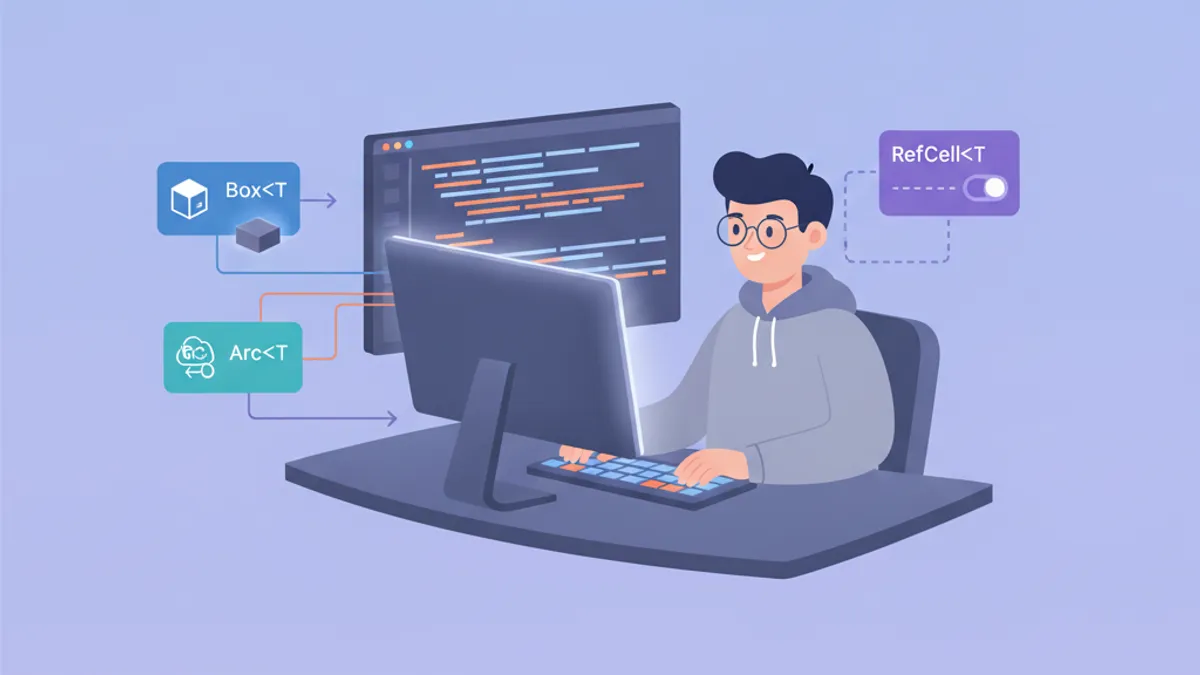
Rust ownership and borrowing memory management visualization
BACKEND

Rust Ownership and Borrowing: The Guide That Demystifies Everything

Master Rust ownership and borrowing with practical examples. Understand move semantics, references, lifetimes, and the borrow checker to write safe, efficient Rust code.