Freelance Laravel Developer Jobs in 2026: Where to Find Contracts, Day Rates, How to Prepare
Freelance Laravel developer contracts remain steady in 2026. Where to find missions, typical day rates, skills in demand, and how to prepare for technical interviews.

Freelance Laravel developer contracts remain a steady segment of the PHP job market in 2026. Businesses looking for rapid feature development, legacy modernization, or API integrations often turn to experienced contractors rather than building permanent teams. This guide covers where these contracts get posted, what clients expect, and how to prepare for the technical interview that typically precedes a mission.
On the SharpSkill job board: 92 active Laravel postings globally, 23% marked as freelance contracts, 47% offering remote work.
Where Laravel freelance contracts are posted in 2026
Freelance Laravel work spreads across several channels, each with distinct characteristics.
Specialized freelance platforms account for most mid-to-senior missions in Europe. The SharpSkill job board lists publicly posted developer jobs, updated daily. Similar platforms exist in Germany (Freelancermap, Gulp) and the Netherlands (Freelance.nl). These platforms often require creating a profile and responding to specific project briefs.
Company career pages and ATS boards remain relevant even for contract work. Larger organizations post contractor positions through Workday, Greenhouse, or Lever, particularly for projects with defined timelines.
Professional networks play a different role for freelancers than for permanent roles. LinkedIn contract postings exist but represent a fraction of the actual market. Referrals and repeat clients drive most established freelancers' pipelines. Building visibility through Laravel community involvement, package contributions, or technical writing generates inbound opportunities.
| Channel | What to expect | Watch out for |
|---|---|---|
| Freelance platforms | Day rate visible, project scope defined | Agency margins reduce net rate |
| Company ATS | Direct client relationship | Longer procurement cycles |
| Recruiters/ESNs | Volume of opportunities | Rate transparency varies |
| Direct referrals | Best rates, trusted relationship | Requires established network |
What Laravel freelance contracts ask for
Contract descriptions cluster around a few recurring patterns.
Core technical requirements center on Laravel itself, but rarely in isolation. On the SharpSkill job board on 28 September 2026, PHP appears in 17% of Laravel postings, and Symfony knowledge surfaces in 10%. This reflects the reality of PHP development: clients expect contractors to move between frameworks when legacy code or existing architecture demands it.
Seniority skews experienced. Among the current 92 Laravel postings, 50% target senior developers, 23% target mid-level, and only 4% are open to juniors. Freelance missions typically involve joining an existing team or taking ownership of a specific feature, both of which require the autonomy that comes with experience.
Common requirements across contracts:
- Eloquent ORM and database optimization (query performance matters for SaaS products)
- REST API design with Laravel resources and Sanctum or Passport authentication
- Queue handling with Laravel queues and Redis or database drivers
- Testing practices: PHPUnit, Pest, feature and unit test coverage
- Docker familiarity for local development parity
Project types range from greenfield applications to legacy modernization. E-commerce backends, SaaS platforms, and internal tools dominate. Contracts involving Laravel with a Vue.js or Livewire frontend are common, as are API-only backends serving mobile or single-page applications.
Laravel freelance day rates in 2026
Day rate data remains fragmented. The SharpSkill job board shows 22% of Laravel postings include salary information, but freelance contracts often list annual equivalents rather than TJM (taux journalier moyen).
France represents one of the more transparent markets. According to Malt's freelance barometer 2025, PHP/Laravel developers with 5+ years of experience report median day rates between 450 and 550 EUR for missions in Paris. Rates decrease by 10 to 15% for remote-only contracts or missions outside major cities. Portage salarial (umbrella company arrangements) take 8 to 12% of gross billing, affecting net income.
Germany and the Netherlands see higher posted rates. Senior Laravel contractors in Berlin or Amsterdam typically bill 550 to 700 EUR daily, though direct comparison is complicated by different social charge structures. German "Freiberufler" status affects rate expectations differently than Dutch "ZZP" arrangements.
Remote global contracts from US or UK clients occasionally appear at higher rates (500+ EUR daily), but often require timezone overlap that effectively limits work hours or demands evening availability.
Factors that influence rate positioning:
- Proven expertise in adjacent technologies (Symfony, Vue.js, PostgreSQL)
- Experience with specific verticals (fintech, healthtech, e-commerce)
- Availability for onsite days when required
- Length of engagement: longer contracts often accept lower daily rates
Browse the SharpSkill job board
Publicly posted developer jobs, updated daily, each linked to the interview questions it calls for.
Remote, hybrid, and onsite Laravel missions
Remote work patterns vary by region and client type.
On the SharpSkill job board, 47% of Laravel postings allow remote work and 24% specify hybrid arrangements. In France specifically, 100% of current Laravel postings are hybrid, reflecting a market preference for some onsite presence.
What "remote" means in practice differs substantially. European clients often require EU residency for tax and contract reasons. "Remote-first" US startups hiring contractors may expect significant overlap with US timezones, pushing work into evening hours for European freelancers. Some contracts labeled remote still require monthly or quarterly onsite visits.
Hybrid missions remain dominant for longer engagements in France and Germany. Typical patterns: two to three days onsite per week, or one week per month for contractors based further away. Clients justify this with team integration concerns, though the practical effect is limiting the contractor pool to regional candidates.
Fully onsite contracts still exist, particularly for regulated industries (banking, healthcare) or projects handling sensitive data. These often pay a premium but restrict candidate location strictly.
How to prepare for a Laravel freelance interview in 2026
Freelance technical interviews tend to be more focused than permanent role interviews. Clients want to confirm the contractor can deliver on the specific project, not assess long-term growth potential.
Typical formats:
- Screening call: project scope, rate expectations, availability
- Technical interview: Laravel-specific questions, architecture discussion, past project deep-dive
- Code review or take-home: reviewing provided code, or building a small feature
Laravel knowledge that surfaces repeatedly:
- Service container and dependency injection: how Laravel resolves classes, when to bind interfaces
- Eloquent relationships and N+1 query prevention: eager loading, the
withCountandloadMissingpatterns - Middleware pipeline: how requests flow, creating custom middleware
- Queue job design: retry strategies, failed job handling, job batching
- Authentication patterns: Sanctum vs Passport, stateless API auth
The SharpSkill Laravel interview questions module covers these topics with the depth expected in technical screens. The authentication module and validation and forms module address questions that appear across most Laravel contracts.
What distinguishes experienced contractors:
- Explaining tradeoffs rather than just patterns (why repository pattern may add overhead for simple CRUD)
- Concrete performance examples: query optimization results, queue throughput improvements
- Familiarity with Laravel ecosystem tools: Horizon, Telescope, Vapor, Forge
- Understanding of PHP itself: memory management, opcache behavior, PHP 8.x features used in Laravel 11
The SharpSkill cheatsheet provides quick reference for framework-specific syntax that interviewers may probe.
Landing a Laravel freelance contract: the checklist
-
Set up profiles on Free-Work (France), Freelancermap (Germany), or relevant regional platforms
-
Confirm rate expectations match market ranges for the region and seniority level
-
Clarify remote vs hybrid requirements before technical interviews
-
Review Laravel 11 specifics if recent projects used older versions
-
Practice explaining past project architecture decisions, including what did not work
-
Prepare questions about team structure, deployment process, and code review practices
Start practicing!
Test your knowledge with our interview simulators and technical tests.
Can you spot the bug in Laravel?
One real snippet, one hidden bug, one attempt a day. No account needed to try.

Written by
Anthony Fillion-MailletFounder of SharpSkill
Full-stack developer for over 10 years. Runs SharpSkill and answers for everything published here.
Updated on September 29, 2026
Share
Related articles
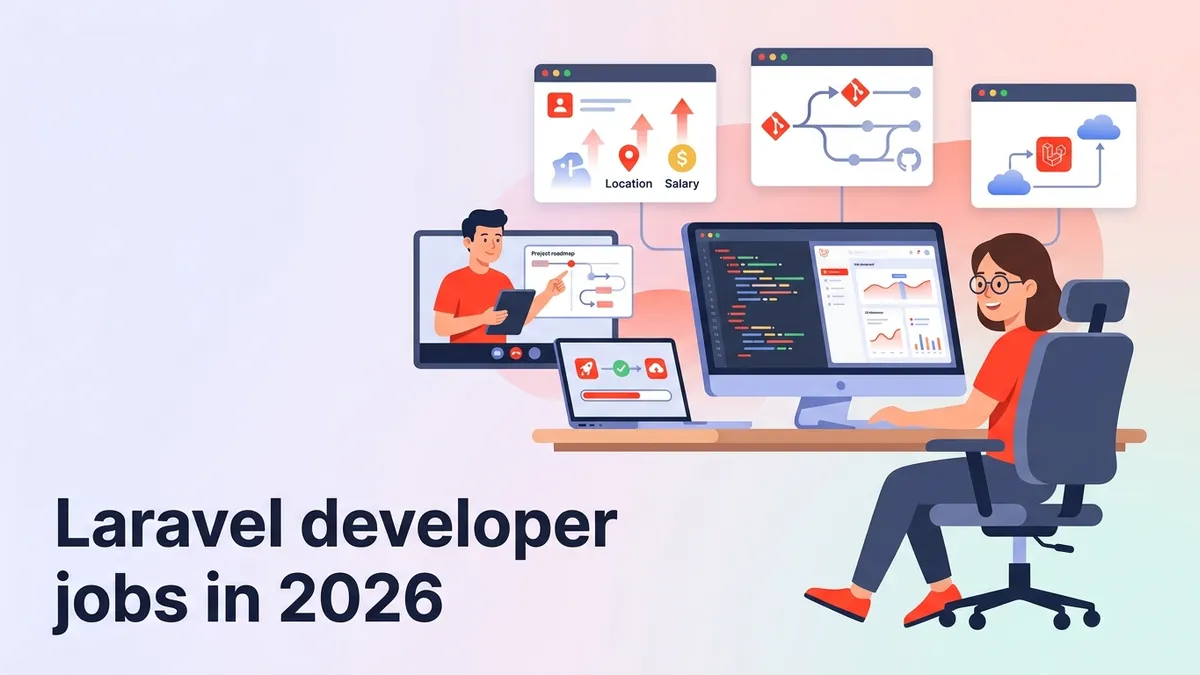
Laravel Developer Jobs in 2026: Where to Look, Salary Ranges, How to Prepare
Laravel developer jobs in 2026: 91 active positions, 46% remote, median salary 72,990 EUR. Where to find listings, what employers want, and how to prepare for interviews.
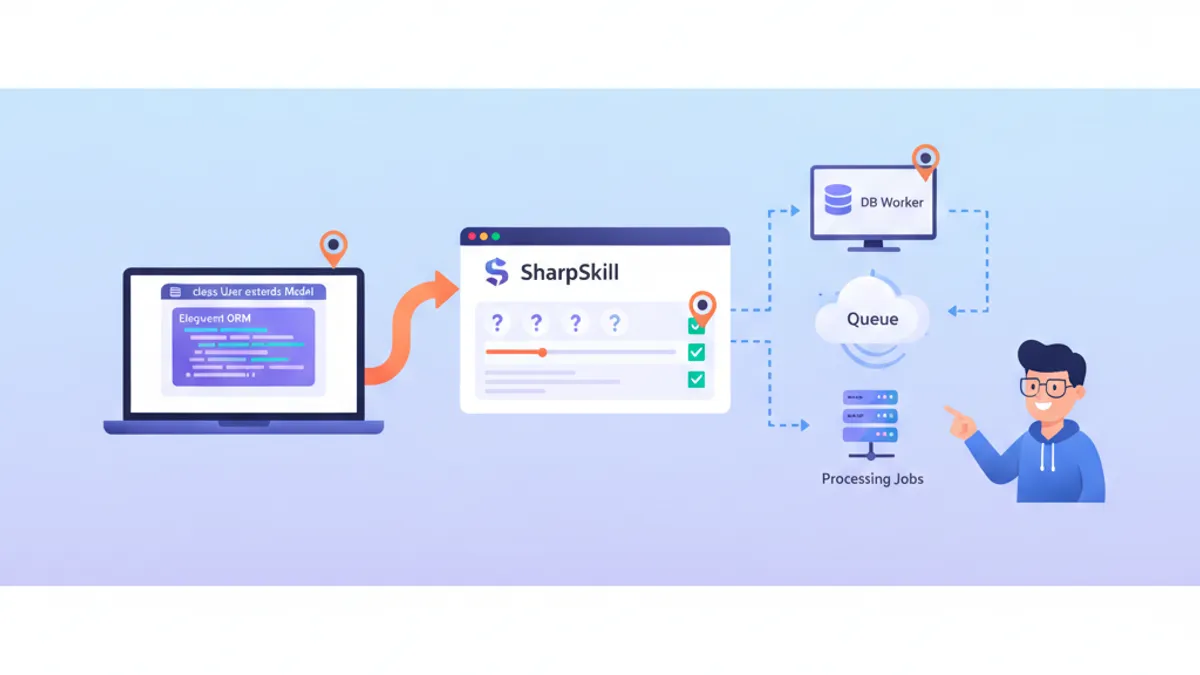
PHP Laravel Framework Interview Questions 2026: Eloquent, Queues and Architecture Patterns
Master Laravel 13 interview questions covering Eloquent ORM relationships, queue architecture, service container patterns, and real-world coding challenges that senior developers face in 2026.

Laravel Octane in 2026: Swoole, RoadRunner and Performance Optimization
Master Laravel Octane 2.19 with FrankenPHP, Swoole and RoadRunner. Learn server selection, memory leak prevention, concurrent tasks, and production deployment patterns for high-performance PHP applications.