คำถามสัมภาษณ์ Symfony: 25 อันดับแรกในปี 2026
25 คำถามสัมภาษณ์ Symfony ที่ถูกถามบ่อยที่สุด สถาปัตยกรรม, Doctrine ORM, บริการ, ความปลอดภัย, ฟอร์มและการทดสอบ พร้อมคำตอบละเอียดและตัวอย่างโค้ด

การสัมภาษณ์ Symfony ประเมินความเชี่ยวชาญในเฟรมเวิร์ก PHP มืออาชีพอ้างอิง ความเข้าใจสถาปัตยกรรมแบบเน้นคอมโพเนนต์ Doctrine ORM และความสามารถในการสร้างแอปพลิเคชันที่แข็งแรงและขยายได้ คู่มือนี้ครอบคลุม 25 คำถามที่ถูกถามมากที่สุด ตั้งแต่พื้นฐาน Symfony ไปจนถึงรูปแบบการใช้งานจริงระดับสูง
ผู้สรรหาบุคลากรชื่นชอบผู้สมัครที่เข้าใจปรัชญาของ Symfony ได้แก่ การแยกงานผ่านเซอร์วิส การกำหนดค่าอย่างชัดเจน และการปฏิบัติตามมาตรฐาน PSR การอธิบายการตัดสินใจทางสถาปัตยกรรมของเฟรมเวิร์กได้คือสิ่งที่สร้างความแตกต่าง
พื้นฐาน Symfony
คำถามที่ 1: อธิบายวงจรชีวิตของ Request ใน Symfony
วงจรชีวิตของ request ใน Symfony ผ่าน HTTP Kernel และใช้ระบบ event เพื่อให้สามารถขยายได้ในแต่ละขั้น ความเข้าใจนี้สำคัญสำหรับการดีบักและปรับแต่งพฤติกรรมของแอปพลิเคชัน
// จุดเข้าของทุก request HTTP
use App\Kernel;

require_once dirname(__DIR__).'/vendor/autoload_runtime.php';

// Symfony Runtime จัดการ bootstrap
return function (array $context) {
    return new Kernel($context['APP_ENV'], (bool) $context['APP_DEBUG']);
};// Kernel ควบคุมการประมวลผล request
namespace App;
use Symfony\Bundle\FrameworkBundle\Kernel\MicroKernelTrait;
use Symfony\Component\HttpKernel\Kernel as BaseKernel;
class Kernel extends BaseKernel
{
use MicroKernelTrait;
// Kernel โหลด bundle และตั้งค่า container
// เหตุการณ์สำคัญในวงจรชีวิต:
// 1. kernel.request - ก่อนการ routing
// 2. kernel.controller - หลัง resolve controller แล้ว
// 3. kernel.view - เมื่อ controller ไม่คืน Response
// 4. kernel.response - ก่อนส่ง response
// 5. kernel.terminate - หลังส่งแล้ว (งาน async)
}วงจรเต็ม: index.php → Runtime → Kernel → HttpKernel → EventDispatcher (kernel.request) → Router → Controller → EventDispatcher (kernel.response) → Response แต่ละขั้นสามารถถูกดักผ่าน Event Subscribers ได้
คำถามที่ 2: Service Container และ Dependency Injection ใน Symfony คืออะไร
Service Container (หรือ DIC, Dependency Injection Container) คือหัวใจของ Symfony ทำหน้าที่จัดการการสร้างอินสแตนซ์ การกำหนดค่า และการ inject ของบริการทั้งหมดในแอปพลิเคชัน
// บริการที่มี dependency ถูก inject อัตโนมัติ
namespace App\Service;

use App\Repository\OrderRepository;
use Psr\Log\LoggerInterface;
use Symfony\Contracts\HttpClient\HttpClientInterface;

class PaymentService
{
    public function __construct(
        private readonly HttpClientInterface $stripeClient, // HTTP client ที่ตั้งค่าไว้
        private readonly OrderRepository $orderRepository,   // Repository ของ Doctrine
        private readonly LoggerInterface $logger,            // Logger PSR-3
        private readonly string $stripeApiKey,               // พารามิเตอร์ที่ inject
    ) {}

    public function processPayment(int $orderId, float $amount): bool
    {
        $order = $this->orderRepository->find($orderId);

        try {
            $response = $this->stripeClient->request('POST', '/charges', [
                'body' => [
                    'amount' => $amount * 100,
                    'currency' => 'eur',
                    'source' => $order->getPaymentToken(),
                ],
            ]);

            $order->markAsPaid($response->toArray()['id']);
            $this->orderRepository->save($order, true);

            return true;
        } catch (\Exception $e) {
            $this->logger->error('Payment failed', [
                'order' => $orderId,
                'error' => $e->getMessage(),
            ]);
            return false;
        }
    }
}# config/services.yaml
# การกำหนดค่าบริการ
services:
_defaults:
autowire: true # Inject อัตโนมัติตาม type-hint
autoconfigure: true # ตั้ง tag อัตโนมัติ
App\:
resource: '../src/'
exclude:
- '../src/DependencyInjection/'
- '../src/Entity/'
- '../src/Kernel.php'
# การตั้งค่าโดยชัดแจ้งพร้อมพารามิเตอร์
App\Service\PaymentService:
arguments:
$stripeClient: '@stripe.client'
$stripeApiKey: '%env(STRIPE_API_KEY)%'Autowiring จะแก้ dependency อัตโนมัติตาม type-hint พารามิเตอร์ประเภทสเกลาร์ต้องตั้งค่าโดยชัดแจ้ง
คำถามที่ 3: Bundle กับคอมโพเนนต์ Symfony ต่างกันอย่างไร
Bundle คือชุดที่ใช้ซ้ำได้ที่ผสานฟีเจอร์เข้าไปในแอปพลิเคชัน Symfony ส่วนคอมโพเนนต์เป็นไลบรารี PHP อิสระที่ใช้ได้โดยไม่ต้องมี Symfony
// โครงสร้างของ Bundle ที่กำหนดเอง
namespace App\MyBundle;

use Symfony\Component\DependencyInjection\ContainerBuilder;
use Symfony\Component\DependencyInjection\Loader\Configurator\ContainerConfigurator;
use Symfony\Component\HttpKernel\Bundle\AbstractBundle;

class MyBundle extends AbstractBundle
{
    // โหลดการตั้งค่า bundle
    public function loadExtension(
        array $config,
        ContainerConfigurator $container,
        ContainerBuilder $builder
    ): void {
        // โหลดบริการของ bundle
        $container->import('../config/services.yaml');

        // การกำหนดค่าตามเงื่อนไข
        if ($config['feature_enabled']) {
            $container->services()
                ->set('my_bundle.feature_service', FeatureService::class)
                ->autowire();
        }
    }

    // การตั้งค่าเริ่มต้นของ bundle
    public function configure(DefinitionConfigurator $definition): void
    {
        $definition->rootNode()
            ->children()
                ->booleanNode('feature_enabled')->defaultTrue()->end()
                ->scalarNode('api_key')->isRequired()->end()
            ->end();
    }
}// การใช้คอมโพเนนต์โดยไม่มี Symfony
// คอมโพเนนต์เป็นไลบรารี PHP อิสระ
use Symfony\Component\HttpFoundation\Request;
use Symfony\Component\HttpFoundation\Response;
// ใช้ในโปรเจกต์ PHP อะไรก็ได้
$request = Request::createFromGlobals();
$response = new Response('Hello World', 200);
$response->send();Bundle ห่อหุ้มการกำหนดค่า บริการ และทรัพยากร ส่วนคอมโพเนนต์เป็นเครื่องมือระดับล่างที่ใช้ซ้ำได้ทุกที่
คำถามที่ 4: Event Subscribers ใน Symfony ทำงานอย่างไร
Event Subscribers ช่วยให้ตอบสนองต่อ event ของเฟรมเวิร์กหรือแอปพลิเคชัน แยกตรรกะธุรกิจออกจากโค้ดหลักได้
namespace App\EventSubscriber;

use Symfony\Component\EventDispatcher\EventSubscriberInterface;
use Symfony\Component\HttpFoundation\JsonResponse;
use Symfony\Component\HttpKernel\Event\ExceptionEvent;
use Symfony\Component\HttpKernel\Exception\HttpExceptionInterface;
use Symfony\Component\HttpKernel\KernelEvents;

class ApiExceptionSubscriber implements EventSubscriberInterface
{
    // ประกาศ event ที่สมัครและลำดับความสำคัญ
    public static function getSubscribedEvents(): array
    {
        return [
            // ลำดับความสำคัญสูง (ทำงานก่อนตัวอื่น)
            KernelEvents::EXCEPTION => ['onKernelException', 100],
            KernelEvents::RESPONSE => ['onKernelResponse', 0],
        ];
    }

    public function onKernelException(ExceptionEvent $event): void
    {
        $exception = $event->getThrowable();
        $request = $event->getRequest();

        // จัดการเฉพาะ request API
        if (!str_starts_with($request->getPathInfo(), '/api')) {
            return;
        }

        $statusCode = $exception instanceof HttpExceptionInterface
            ? $exception->getStatusCode()
            : 500;

        $response = new JsonResponse([
            'error' => true,
            'message' => $exception->getMessage(),
            'code' => $statusCode,
        ], $statusCode);

        // แทนที่ response ด้วย JSON ของเรา
        $event->setResponse($response);
    }

    public function onKernelResponse(\Symfony\Component\HttpKernel\Event\ResponseEvent $event): void
    {
        // เพิ่ม header แบบกำหนดเอง
        $event->getResponse()->headers->set('X-Api-Version', '1.0');
    }
}
Event Subscribers ถูกค้นพบอัตโนมัติด้วย autoconfigure ลำดับความสำคัญกำหนดลำดับการทำงาน (ค่าสูงกว่า = ทำงานก่อน)
Doctrine ORM
คำถามที่ 5: อธิบายความสัมพันธ์ของ Doctrine และความแตกต่าง
Doctrine มีหลายประเภทความสัมพันธ์เพื่อจำลองการเชื่อมโยงระหว่าง entity แต่ละประเภทมีผลต่อ query และประสิทธิภาพ
namespace App\Entity;

use Doctrine\Common\Collections\ArrayCollection;
use Doctrine\Common\Collections\Collection;
use Doctrine\ORM\Mapping as ORM;

#[ORM\Entity(repositoryClass: UserRepository::class)]
class User
{
    #[ORM\Id]
    #[ORM\GeneratedValue]
    #[ORM\Column]
    private ?int $id = null;

    // ความสัมพันธ์ OneToOne: ผู้ใช้หนึ่งคนมีหนึ่งโปรไฟล์
    #[ORM\OneToOne(mappedBy: 'user', cascade: ['persist', 'remove'])]
    private ?Profile $profile = null;

    // ความสัมพันธ์ OneToMany: ผู้ใช้หนึ่งคนมีหลายบทความ
    #[ORM\OneToMany(mappedBy: 'author', targetEntity: Article::class, orphanRemoval: true)]
    private Collection $articles;

    // ความสัมพันธ์ ManyToMany: ผู้ใช้หลายคนมีหลายบทบาท
    #[ORM\ManyToMany(targetEntity: Role::class, inversedBy: 'users')]
    #[ORM\JoinTable(name: 'user_roles')]
    private Collection $roles;

    public function __construct()
    {
        // ต้อง initialize collection
        $this->articles = new ArrayCollection();
        $this->roles = new ArrayCollection();
    }

    public function addArticle(Article $article): static
    {
        if (!$this->articles->contains($article)) {
            $this->articles->add($article);
            $article->setAuthor($this); // การซิงก์สองทาง
        }
        return $this;
    }

    public function removeArticle(Article $article): static
    {
        if ($this->articles->removeElement($article)) {
            if ($article->getAuthor() === $this) {
                $article->setAuthor(null);
            }
        }
        return $this;
    }
}#[ORM\Entity(repositoryClass: ArticleRepository::class)]
class Article
{
// ความสัมพันธ์ ManyToOne: บทความหลายบทความเป็นของผู้แต่งเดียว
#[ORM\ManyToOne(inversedBy: 'articles')]
#[ORM\JoinColumn(nullable: false)]
private ?User $author = null;
// ManyToMany พร้อมแอตทริบิวต์เพิ่มเติมผ่านอีนทิตี้พิวอท
#[ORM\OneToMany(mappedBy: 'article', targetEntity: ArticleTag::class)]
private Collection $articleTags;
}ความสัมพันธ์สองทางต้องซิงก์ด้วยมือ ฝั่ง "owning" (ที่มี JoinColumn/JoinTable) ควบคุมการบันทึก
คำถามที่ 6: ปัญหา N+1 คืออะไร และแก้ด้วย Doctrine อย่างไร
ปัญหา N+1 เกิดเมื่อ query หลักทำให้เกิด N query เพิ่มเพื่อโหลดความสัมพันธ์ เป็นสาเหตุของความช้าที่พบบ่อยที่สุดในแอปพลิเคชัน Symfony
namespace App\Repository;

use App\Entity\Article;
use Doctrine\Bundle\DoctrineBundle\Repository\ServiceEntityRepository;
use Doctrine\Persistence\ManagerRegistry;

class ArticleRepository extends ServiceEntityRepository
{
    public function __construct(ManagerRegistry $registry)
    {
        parent::__construct($registry, Article::class);
    }

    // แย่: เกิด N+1 query เมื่อเข้าถึงผู้แต่ง
    public function findAllBad(): array
    {
        return $this->findAll();
        // + 1 query ต่อบทความเพื่อโหลดผู้แต่ง
    }

    // ดี: JOIN พร้อม eager fetch
    public function findAllWithAuthor(): array
    {
        return $this->createQueryBuilder('a')
            ->addSelect('u')              // SELECT ผู้แต่งด้วย
            ->leftJoin('a.author', 'u')   // JOIN กับความสัมพันธ์
            ->orderBy('a.publishedAt', 'DESC')
            ->getQuery()
            ->getResult();
    }

    // ดี: หลาย JOIN สำหรับหลายความสัมพันธ์
    public function findAllWithDetails(): array
    {
        return $this->createQueryBuilder('a')
            ->addSelect('u', 'c', 't')    // SELECT ทุกความสัมพันธ์
            ->leftJoin('a.author', 'u')
            ->leftJoin('a.comments', 'c')
            ->leftJoin('a.tags', 't')
            ->where('a.status = :status')
            ->setParameter('status', 'published')
            ->orderBy('a.publishedAt', 'DESC')
            ->getQuery()
            ->getResult();
    }

    // ดี: โหลดเป็นชุดสำหรับลิสต์ขนาดใหญ่
    public function findAllOptimized(): array
    {
        $query = $this->createQueryBuilder('a')
            ->getQuery();

        // โหลดความสัมพันธ์เป็นชุดละ 100
        $query->setFetchMode(Article::class, 'author', ClassMetadata::FETCH_BATCH);

        return $query->getResult();
    }
}
Symfony Profiler พร้อมแผง Doctrine ช่วยตรวจปัญหา N+1 จำนวน query ปรากฏใน Web Debug Toolbar
คำถามที่ 7: สร้าง Query Extensions และฟิลเตอร์ Doctrine อย่างไร
Query Extensions และฟิลเตอร์ Doctrine ทำให้ใช้เงื่อนไขกับทุก query โดยอัตโนมัติได้ — เหมาะกับ multi-tenancy หรือ soft delete
// Extension ของ API Platform เพื่อกรองตามผู้ใช้อัตโนมัติ
namespace App\Doctrine\Extension;

use ApiPlatform\Doctrine\Orm\Extension\QueryCollectionExtensionInterface;
use ApiPlatform\Doctrine\Orm\Extension\QueryItemExtensionInterface;
use ApiPlatform\Doctrine\Orm\Util\QueryNameGeneratorInterface;
use ApiPlatform\Metadata\Operation;
use App\Entity\Article;
use Doctrine\ORM\QueryBuilder;
use Symfony\Bundle\SecurityBundle\Security;

final class CurrentUserExtension implements QueryCollectionExtensionInterface, QueryItemExtensionInterface
{
    public function __construct(
        private readonly Security $security,
    ) {}

    public function applyToCollection(
        QueryBuilder $queryBuilder,
        QueryNameGeneratorInterface $queryNameGenerator,
        string $resourceClass,
        ?Operation $operation = null,
        array $context = []
    ): void {
        $this->addWhere($queryBuilder, $resourceClass);
    }

    public function applyToItem(
        QueryBuilder $queryBuilder,
        QueryNameGeneratorInterface $queryNameGenerator,
        string $resourceClass,
        array $identifiers,
        ?Operation $operation = null,
        array $context = []
    ): void {
        $this->addWhere($queryBuilder, $resourceClass);
    }

    private function addWhere(QueryBuilder $queryBuilder, string $resourceClass): void
    {
        // ใช้กับ Article เท่านั้น
        if ($resourceClass !== Article::class) {
            return;
        }

        // แอดมินเห็นทุกอย่าง
        if ($this->security->isGranted('ROLE_ADMIN')) {
            return;
        }

        $user = $this->security->getUser();
        $rootAlias = $queryBuilder->getRootAliases()[0];

        // กรองอัตโนมัติตามผู้แต่ง
        $queryBuilder
            ->andWhere(sprintf('%s.author = :current_user', $rootAlias))
            ->setParameter('current_user', $user);
    }
}// ฟิลเตอร์ Doctrine ทั่วระบบเพื่อยกเว้นรายการที่ลบแล้ว
namespace App\Doctrine\Filter;
use Doctrine\ORM\Mapping\ClassMetadata;
use Doctrine\ORM\Query\Filter\SQLFilter;
class SoftDeleteFilter extends SQLFilter
{
public function addFilterConstraint(ClassMetadata $targetEntity, string $targetTableAlias): string
{
// ตรวจว่า entity มีฟิลด์ deletedAt หรือไม่
if (!$targetEntity->hasField('deletedAt')) {
return '';
}
return sprintf('%s.deleted_at IS NULL', $targetTableAlias);
}
}# config/packages/doctrine.yaml
doctrine:
orm:
filters:
soft_delete:
class: App\Doctrine\Filter\SoftDeleteFilter
enabled: trueฟิลเตอร์ทำงานในระดับ SQL ส่วน extension ทำงานที่ระดับ QueryBuilder ปิดใช้ชั่วคราวด้วย $em->getFilters()->disable('soft_delete')
พร้อมที่จะพิชิตการสัมภาษณ์ Symfony แล้วหรือยังครับ?
ฝึกฝนด้วยตัวจำลองแบบโต้ตอบ, flashcards และแบบทดสอบเทคนิคครับ
ความปลอดภัยใน Symfony
คำถามที่ 8: ระบบความปลอดภัยของ Symfony ทำงานอย่างไร
คอมโพเนนต์ Security ของ Symfony จัดการการยืนยันตัวตน (ผู้ใช้คือใคร) และการอนุญาต (ทำอะไรได้) ผ่านสถาปัตยกรรมที่ขยายได้
# config/packages/security.yaml
security:
    password_hashers:
        Symfony\Component\Security\Core\User\PasswordAuthenticatedUserInterface: 'auto'

    providers:
        app_user_provider:
            entity:
                class: App\Entity\User
                property: email

    firewalls:
        dev:
            pattern: ^/(_(profiler|wdt)|css|images|js)/
            security: false

        api:
            pattern: ^/api
            stateless: true
            jwt: ~  # Lexik JWT Bundle

        main:
            lazy: true
            provider: app_user_provider
            form_login:
                login_path: app_login
                check_path: app_login
                enable_csrf: true
            logout:
                path: app_logout
            remember_me:
                secret: '%kernel.secret%'
                lifetime: 604800

    access_control:
        - { path: ^/api/login, roles: PUBLIC_ACCESS }
        - { path: ^/api, roles: ROLE_USER }
- { path: ^/admin, roles: ROLE_ADMIN }// Authenticator แบบกำหนดเองสำหรับตรรกะเฉพาะ
namespace App\Security;
use Symfony\Component\HttpFoundation\Request;
use Symfony\Component\HttpFoundation\Response;
use Symfony\Component\Security\Core\Authentication\Token\TokenInterface;
use Symfony\Component\Security\Core\Exception\AuthenticationException;
use Symfony\Component\Security\Http\Authenticator\AbstractAuthenticator;
use Symfony\Component\Security\Http\Authenticator\Passport\Badge\UserBadge;
use Symfony\Component\Security\Http\Authenticator\Passport\Passport;
use Symfony\Component\Security\Http\Authenticator\Passport\SelfValidatingPassport;
class ApiKeyAuthenticator extends AbstractAuthenticator
{
public function supports(Request $request): ?bool
{
// Authenticator นี้รองรับเฉพาะ request ที่มี X-API-KEY
return $request->headers->has('X-API-KEY');
}
public function authenticate(Request $request): Passport
{
$apiKey = $request->headers->get('X-API-KEY');
if (null === $apiKey) {
throw new AuthenticationException('No API key provided');
}
// UserBadge โหลดผู้ใช้จาก identifier
return new SelfValidatingPassport(
new UserBadge($apiKey, function (string $apiKey) {
// ตรรกะโหลดผู้ใช้จาก API key
return $this->userRepository->findByApiKey($apiKey);
})
);
}
public function onAuthenticationSuccess(Request $request, TokenInterface $token, string $firewallName): ?Response
{
// null = ดำเนินการ request ต่อตามปกติ
return null;
}
public function onAuthenticationFailure(Request $request, AuthenticationException $exception): ?Response
{
return new JsonResponse([
'error' => $exception->getMessage(),
], Response::HTTP_UNAUTHORIZED);
}
}สถาปัตยกรรมความปลอดภัยอาศัย Firewalls (การกำหนดค่า), Authenticators (การยืนยันตัวตน) และ Voters (การอนุญาต)
คำถามที่ 9: นำ Voters มาใช้สำหรับการอนุญาตแบบละเอียดอย่างไร
Voters ช่วยให้เขียนตรรกะการอนุญาตที่ซับซ้อนและนำกลับมาใช้ใหม่ได้ แยกกฎทางธุรกิจออกจากโค้ด controller
namespace App\Security\Voter;

use App\Entity\Article;
use App\Entity\User;
use Symfony\Component\Security\Core\Authentication\Token\TokenInterface;
use Symfony\Component\Security\Core\Authorization\Voter\Voter;

class ArticleVoter extends Voter
{
    public const VIEW = 'ARTICLE_VIEW';
    public const EDIT = 'ARTICLE_EDIT';
    public const DELETE = 'ARTICLE_DELETE';

    protected function supports(string $attribute, mixed $subject): bool
    {
        // Voter นี้รองรับเฉพาะ Article และแอตทริบิวต์เหล่านี้
        return in_array($attribute, [self::VIEW, self::EDIT, self::DELETE])
            && $subject instanceof Article;
    }

    protected function voteOnAttribute(string $attribute, mixed $subject, TokenInterface $token): bool
    {
        $user = $token->getUser();
        $article = $subject;

        // บทความที่เผยแพร่แล้วทุกคนเห็นได้
        if ($attribute === self::VIEW && $article->isPublished()) {
            return true;
        }

        // การกระทำอื่น ๆ ต้องการผู้ใช้ที่ยืนยันตัวตนแล้ว
        if (!$user instanceof User) {
            return false;
        }

        return match ($attribute) {
            self::VIEW => $this->canView($article, $user),
            self::EDIT => $this->canEdit($article, $user),
            self::DELETE => $this->canDelete($article, $user),
            default => false,
        };
    }

    private function canView(Article $article, User $user): bool
    {
        // ฉบับร่างมองเห็นได้เฉพาะผู้แต่งหรือแอดมิน
        return $article->getAuthor() === $user
            || in_array('ROLE_ADMIN', $user->getRoles());
    }

    private function canEdit(Article $article, User $user): bool
    {
        // เฉพาะผู้แต่งเท่านั้นที่แก้ไขได้
        return $article->getAuthor() === $user;
    }

    private function canDelete(Article $article, User $user): bool
    {
        // ผู้แต่งหรือแอดมินสามารถลบได้
        return $article->getAuthor() === $user
            || in_array('ROLE_ADMIN', $user->getRoles());
    }
}// การใช้ Voter ใน controller
use Symfony\Component\Security\Http\Attribute\IsGranted;
class ArticleController extends AbstractController
{
#[Route('/articles/{id}/edit', name: 'article_edit')]
#[IsGranted(ArticleVoter::EDIT, subject: 'article')]
public function edit(Article $article): Response
{
// การอนุญาตจะถูกตรวจอัตโนมัติ
// 403 ถ้า voter ปฏิเสธการเข้าถึง
}
// ทางเลือกแบบโปรแกรม
#[Route('/articles/{id}', name: 'article_show')]
public function show(Article $article): Response
{
$this->denyAccessUnlessGranted(ArticleVoter::VIEW, $article);
// หรือพร้อมเงื่อนไข
if (!$this->isGranted(ArticleVoter::EDIT, $article)) {
// ซ่อนปุ่มแก้ไข
}
}
}{# ใน Twig #}
{% if is_granted('ARTICLE_EDIT', article) %}
<a href="{{ path('article_edit', {id: article.id}) }}">แก้ไข</a>
{% endif %}Voters ถูกค้นพบอัตโนมัติและถูกเรียกเมื่อใช้ isGranted() กลยุทธ์เริ่มต้นจะอนุญาตหากมี Voter อย่างน้อยหนึ่งตัวลงคะแนนยอมรับ
คำถามที่ 10: ป้องกัน API ด้วย JWT ใน Symfony อย่างไร
การยืนยันตัวตนด้วย JWT (JSON Web Token) เป็นทางออกมาตรฐานสำหรับ API แบบ stateless โดยทั่วไป Symfony ใช้ LexikJWTAuthenticationBundle
# config/packages/lexik_jwt_authentication.yaml
lexik_jwt_authentication:
    secret_key: '%env(resolve:JWT_SECRET_KEY)%'
    public_key: '%env(resolve:JWT_PUBLIC_KEY)%'
    pass_phrase: '%env(JWT_PASSPHRASE)%'
token_ttl: 3600 # 1 ชั่วโมงnamespace App\Controller\Api;
use App\Entity\User;
use Lexik\Bundle\JWTAuthenticationBundle\Services\JWTTokenManagerInterface;
use Symfony\Bundle\FrameworkBundle\Controller\AbstractController;
use Symfony\Component\HttpFoundation\JsonResponse;
use Symfony\Component\HttpFoundation\Request;
use Symfony\Component\PasswordHasher\Hasher\UserPasswordHasherInterface;
use Symfony\Component\Routing\Attribute\Route;
#[Route('/api')]
class AuthController extends AbstractController
{
#[Route('/login', name: 'api_login', methods: ['POST'])]
public function login(
Request $request,
UserPasswordHasherInterface $passwordHasher,
JWTTokenManagerInterface $jwtManager,
): JsonResponse {
$data = json_decode($request->getContent(), true);
$user = $this->userRepository->findOneBy(['email' => $data['email']]);
if (!$user || !$passwordHasher->isPasswordValid($user, $data['password'])) {
return new JsonResponse(['error' => 'Invalid credentials'], 401);
}
// สร้างโทเคน JWT
$token = $jwtManager->create($user);
return new JsonResponse([
'token' => $token,
'user' => [
'id' => $user->getId(),
'email' => $user->getEmail(),
'roles' => $user->getRoles(),
],
]);
}
#[Route('/refresh-token', name: 'api_refresh_token', methods: ['POST'])]
public function refreshToken(): JsonResponse
{
// bundle จัดการอัตโนมัติเมื่อกำหนดค่าไว้
// คืนโทเคนใหม่จาก refresh token
}
}// ปรับแต่ง payload ของ JWT
namespace App\EventListener;
use Lexik\Bundle\JWTAuthenticationBundle\Event\JWTCreatedEvent;
class JWTCreatedListener
{
public function onJWTCreated(JWTCreatedEvent $event): void
{
$user = $event->getUser();
$payload = $event->getData();
// เพิ่มข้อมูลกำหนดเองในโทเคน
$payload['user_id'] = $user->getId();
$payload['email'] = $user->getEmail();
$payload['permissions'] = $user->getPermissions();
$event->setData($payload);
}
}โทเคน JWT ส่งใน header Authorization: Bearer <token> bundle จะตรวจสอบลายเซ็นและวันหมดอายุอัตโนมัติ
ฟอร์มของ Symfony
คำถามที่ 11: สร้างฟอร์มขั้นสูงพร้อม validation อย่างไร
คอมโพเนนต์ Form ของ Symfony สร้างฟอร์ม HTML จัดการการส่งและ validate ข้อมูลด้วย constraint
namespace App\Form;

use App\Entity\Article;
use App\Entity\Category;
use Symfony\Bridge\Doctrine\Form\Type\EntityType;
use Symfony\Component\Form\AbstractType;
use Symfony\Component\Form\Extension\Core\Type\DateTimeType;
use Symfony\Component\Form\Extension\Core\Type\FileType;
use Symfony\Component\Form\Extension\Core\Type\TextareaType;
use Symfony\Component\Form\Extension\Core\Type\TextType;
use Symfony\Component\Form\FormBuilderInterface;
use Symfony\Component\Form\FormEvent;
use Symfony\Component\Form\FormEvents;
use Symfony\Component\OptionsResolver\OptionsResolver;
use Symfony\Component\Validator\Constraints as Assert;

class ArticleType extends AbstractType
{
    public function buildForm(FormBuilderInterface $builder, array $options): void
    {
        $builder
            ->add('title', TextType::class, [
                'label' => 'ชื่อบทความ',
                'attr' => ['placeholder' => 'พิมพ์ชื่อบทความ...'],
                'constraints' => [
                    new Assert\NotBlank(message: 'ต้องระบุชื่อบทความ'),
                    new Assert\Length(
                        min: 10,
                        max: 255,
                        minMessage: 'ชื่อบทความต้องมีอย่างน้อย {{ limit }} ตัวอักษร',
                    ),
                ],
            ])
            ->add('content', TextareaType::class, [
                'label' => 'เนื้อหา',
                'constraints' => [
                    new Assert\NotBlank(),
                    new Assert\Length(min: 100),
                ],
            ])
            ->add('category', EntityType::class, [
                'class' => Category::class,
                'choice_label' => 'name',
                'placeholder' => 'เลือกหมวดหมู่',
                'query_builder' => function ($repo) {
                    return $repo->createQueryBuilder('c')
                        ->where('c.active = true')
                        ->orderBy('c.name', 'ASC');
                },
            ])
            ->add('coverImage', FileType::class, [
                'label' => 'ภาพปก',
                'mapped' => false,  // ไม่ผูกกับ entity
                'required' => false,
                'constraints' => [
                    new Assert\Image(
                        maxSize: '5M',
                        mimeTypes: ['image/jpeg', 'image/png', 'image/webp'],
                        mimeTypesMessage: 'รูปแบบรูปภาพไม่รองรับ',
                    ),
                ],
            ])
            ->add('publishedAt', DateTimeType::class, [
                'widget' => 'single_text',
                'required' => false,
                'label' => 'วันที่เผยแพร่',
            ]);

        // event listener เพื่อปรับฟอร์มแบบไดนามิก
        $builder->addEventListener(FormEvents::PRE_SET_DATA, function (FormEvent $event) {
            $article = $event->getData();
            $form = $event->getForm();

            // เพิ่มฟิลด์เฉพาะตอนแก้ไข
            if ($article && $article->getId()) {
                $form->add('slug', TextType::class, [
                    'disabled' => true,
                    'help' => 'แก้ไข slug ไม่ได้',
                ]);
            }
        });
    }

    public function configureOptions(OptionsResolver $resolver): void
    {
        $resolver->setDefaults([
            'data_class' => Article::class,
            'validation_groups' => ['Default', 'article_creation'],
        ]);
    }
}#[Route('/articles/new', name: 'article_new')]
public function new(Request $request, SluggerInterface $slugger): Response
{
$article = new Article();
$form = $this->createForm(ArticleType::class, $article);
$form->handleRequest($request);
if ($form->isSubmitted() && $form->isValid()) {
// จัดการการอัปโหลดไฟล์
$coverImage = $form->get('coverImage')->getData();
if ($coverImage) {
$filename = $slugger->slug($article->getTitle()).'-'.uniqid().'.'.$coverImage->guessExtension();
$coverImage->move($this->getParameter('covers_directory'), $filename);
$article->setCoverImageFilename($filename);
}
$this->entityManager->persist($article);
$this->entityManager->flush();
$this->addFlash('success', 'สร้างบทความสำเร็จ!');
return $this->redirectToRoute('article_show', ['id' => $article->getId()]);
}
return $this->render('article/new.html.twig', [
'form' => $form,
]);
}FormEvents (PRE_SET_DATA, POST_SUBMIT ฯลฯ) ช่วยปรับฟิลด์ตามบริบทแบบไดนามิก
คำถามที่ 12: สร้าง validation แบบกำหนดเองด้วย constraint อย่างไร
Symfony อนุญาตให้สร้าง constraint การ validate แบบกำหนดเองสำหรับกฎทางธุรกิจที่ซับซ้อน
// constraint แบบกำหนดเอง
namespace App\Validator;

use Symfony\Component\Validator\Constraint;

#[\Attribute(\Attribute::TARGET_PROPERTY)]
class UniqueEmail extends Constraint
{
    public string $message = 'อีเมล "{{ value }}" ถูกใช้งานแล้ว';
    public ?int $excludeId = null;  // เพื่อยกเว้นผู้ใช้ปัจจุบันเมื่ออัปเดต
}// Validator ที่จับคู่กับ constraint
namespace App\Validator;
use App\Repository\UserRepository;
use Symfony\Component\Validator\Constraint;
use Symfony\Component\Validator\ConstraintValidator;
use Symfony\Component\Validator\Exception\UnexpectedTypeException;
class UniqueEmailValidator extends ConstraintValidator
{
public function __construct(
private readonly UserRepository $userRepository,
) {}
public function validate(mixed $value, Constraint $constraint): void
{
if (!$constraint instanceof UniqueEmail) {
throw new UnexpectedTypeException($constraint, UniqueEmail::class);
}
if (null === $value || '' === $value) {
return; // NotBlank จัดการค่าว่าง
}
$existingUser = $this->userRepository->findOneBy(['email' => $value]);
// ตรวจว่ามีผู้ใช้ที่มีอีเมลนี้หรือไม่
// และไม่ใช่ผู้ใช้ปัจจุบัน (ตอนอัปเดต)
if ($existingUser && $existingUser->getId() !== $constraint->excludeId) {
$this->context->buildViolation($constraint->message)
->setParameter('{{ value }}', $value)
->addViolation();
}
}
}// ใช้ constraint บน entity
use App\Validator as AppAssert;
use Symfony\Component\Validator\Constraints as Assert;
class User
{
#[Assert\NotBlank]
#[Assert\Email]
#[AppAssert\UniqueEmail]
private ?string $email = null;
#[Assert\NotBlank]
#[Assert\Length(min: 8)]
#[Assert\Regex(
pattern: '/^(?=.*[a-z])(?=.*[A-Z])(?=.*\d)/',
message: 'รหัสผ่านต้องมีตัวพิมพ์ใหญ่ ตัวพิมพ์เล็ก และตัวเลข'
)]
private ?string $plainPassword = null;
}// constraint ระดับคลาสสำหรับ validation หลายฟิลด์
// src/Validator/PasswordMatch.php
#[\Attribute(\Attribute::TARGET_CLASS)]
class PasswordMatch extends Constraint
{
public string $message = 'รหัสผ่านไม่ตรงกัน';
public function getTargets(): string
{
return self::CLASS_CONSTRAINT;
}
}constraint แบบกำหนดเองถูกค้นพบอัตโนมัติ ส่วนต่อท้าย Validator จำเป็นสำหรับ validator
Messenger และการสื่อสารแบบอะซิงโครนัส
คำถามที่ 13: ทำการประมวลผลแบบอะซิงโครนัสด้วย Messenger อย่างไร
Symfony Messenger ส่งข้อความเข้า queue เพื่อประมวลผลแบบอะซิงโครนัส ช่วยให้แอปพลิเคชันตอบสนองได้ดียิ่งขึ้น
// ข้อความ (DTO ที่บรรจุข้อมูล)
namespace App\Message;

final class SendWelcomeEmail
{
    public function __construct(
        public readonly int $userId,
        public readonly string $locale = 'en',
    ) {}
}// handler ที่ประมวลผลข้อความ
namespace App\MessageHandler;
use App\Message\SendWelcomeEmail;
use App\Repository\UserRepository;
use Symfony\Bridge\Twig\Mime\TemplatedEmail;
use Symfony\Component\Mailer\MailerInterface;
use Symfony\Component\Messenger\Attribute\AsMessageHandler;
#[AsMessageHandler]
final class SendWelcomeEmailHandler
{
public function __construct(
private readonly UserRepository $userRepository,
private readonly MailerInterface $mailer,
) {}
public function __invoke(SendWelcomeEmail $message): void
{
$user = $this->userRepository->find($message->userId);
if (!$user) {
return; // ผู้ใช้ถูกลบไประหว่างนี้
}
$email = (new TemplatedEmail())
->to($user->getEmail())
->subject('ยินดีต้อนรับสู่แพลตฟอร์มของเรา!')
->htmlTemplate('emails/welcome.html.twig')
->context([
'user' => $user,
'locale' => $message->locale,
]);
$this->mailer->send($email);
}
}# config/packages/messenger.yaml
framework:
messenger:
failure_transport: failed
transports:
async:
dsn: '%env(MESSENGER_TRANSPORT_DSN)%'
retry_strategy:
max_retries: 3
delay: 1000
multiplier: 2
failed:
dsn: 'doctrine://default?queue_name=failed'
routing:
# ส่งข้อความไปยัง transport async
App\Message\SendWelcomeEmail: async
App\Message\ProcessImage: async
App\Message\GenerateReport: async// ส่งข้อความ
use Symfony\Component\Messenger\MessageBusInterface;
class RegistrationController extends AbstractController
{
#[Route('/register', name: 'app_register', methods: ['POST'])]
public function register(
Request $request,
MessageBusInterface $bus,
): Response {
// ... สร้างผู้ใช้
// ส่งแบบอะซิงโครนัส - อีเมลจะถูกส่งในเบื้องหลัง
$bus->dispatch(new SendWelcomeEmail(
userId: $user->getId(),
locale: $request->getLocale(),
));
// ตอบกลับผู้ใช้ทันที
return $this->redirectToRoute('app_login');
}
}เริ่ม worker ด้วย php bin/console messenger:consume async -vv ในระบบ production ใช้ Supervisor เพื่อให้ worker ทำงานต่อเนื่อง
คำถามที่ 14: จัดการข้อผิดพลาดและ retry ใน Messenger อย่างไร
Messenger มีกลไกที่แข็งแรงสำหรับจัดการความล้มเหลว: retry อัตโนมัติ, dead letter queue และการจัดการข้อความที่ล้มเหลวด้วยตนเอง
namespace App\MessageHandler;

use App\Exception\PaymentFailedException;
use App\Exception\PaymentRetryableException;
use App\Message\ProcessPayment;
use Symfony\Component\Messenger\Attribute\AsMessageHandler;
use Symfony\Component\Messenger\Exception\RecoverableMessageHandlingException;
use Symfony\Component\Messenger\Exception\UnrecoverableMessageHandlingException;

#[AsMessageHandler]
final class ProcessPaymentHandler
{
    public function __invoke(ProcessPayment $message): void
    {
        try {
            $this->paymentGateway->process($message->orderId);
        } catch (PaymentRetryableException $e) {
            // ข้อผิดพลาดชั่วคราว (timeout, rate limit) → ลองใหม่
            throw new RecoverableMessageHandlingException(
                $e->getMessage(),
                previous: $e
            );
        } catch (PaymentFailedException $e) {
            // ข้อผิดพลาดถาวร (บัตรไม่ถูกต้อง) → ไม่ลองใหม่
            throw new UnrecoverableMessageHandlingException(
                $e->getMessage(),
                previous: $e
            );
        }
    }
}// การตั้งค่า retry ระดับข้อความ
namespace App\Message;
use Symfony\Component\Messenger\Stamp\DelayStamp;
final class ProcessPayment
{
public function __construct(
public readonly int $orderId,
public readonly int $attempt = 1,
) {}
// ระยะเวลาการ retry แบบกำหนดเองตามจำนวนครั้ง
public function getRetryDelay(): int
{
return match ($this->attempt) {
1 => 5000, // 5 วินาที
2 => 30000, // 30 วินาที
3 => 300000, // 5 นาที
default => 600000,
};
}
}# คำสั่งจัดการข้อความล้มเหลว
php bin/console messenger:failed:show # แสดงข้อความที่ล้มเหลว
php bin/console messenger:failed:retry # ลองส่งใหม่ทุกข้อความ
php bin/console messenger:failed:retry 123 # ลองส่งใหม่เฉพาะข้อความ
php bin/console messenger:failed:remove 123 # ลบข้อความกลยุทธ์ retry และ transport "failed" ทำให้แน่ใจว่าไม่มีข้อความสูญหาย ข้อความสามารถวิเคราะห์และส่งใหม่ด้วยตนเองได้
พร้อมที่จะพิชิตการสัมภาษณ์ Symfony แล้วหรือยังครับ?
ฝึกฝนด้วยตัวจำลองแบบโต้ตอบ, flashcards และแบบทดสอบเทคนิคครับ
การทดสอบใน Symfony
คำถามที่ 15: จัดโครงสร้างการทดสอบใน Symfony อย่างไร
Symfony ให้ PHPUnit พร้อมเฮลเปอร์เฉพาะสำหรับทดสอบเลเยอร์ต่าง ๆ ของแอปพลิเคชัน: unit test, functional test และ integration test
// Unit test: ทดสอบคลาสที่แยกออกมา
namespace App\Tests\Unit\Service;

use App\Service\PriceCalculator;
use PHPUnit\Framework\TestCase;

class PriceCalculatorTest extends TestCase
{
    private PriceCalculator $calculator;

    protected function setUp(): void
    {
        $this->calculator = new PriceCalculator();
    }

    public function testCalculateTotalWithoutDiscount(): void
    {
        $total = $this->calculator->calculateTotal(100.00, 0);

        $this->assertEquals(100.00, $total);
    }

    public function testCalculateTotalWithPercentageDiscount(): void
    {
        $total = $this->calculator->calculateTotal(100.00, 20);

        $this->assertEquals(80.00, $total);
    }

    /**
     * @dataProvider discountProvider
     */
    public function testCalculateTotalWithVariousDiscounts(
        float $price,
        int $discount,
        float $expected
    ): void {
        $total = $this->calculator->calculateTotal($price, $discount);

        $this->assertEquals($expected, $total);
    }

    public static function discountProvider(): array
    {
        return [
            'no discount' => [100.00, 0, 100.00],
            '10% discount' => [100.00, 10, 90.00],
            '50% discount' => [200.00, 50, 100.00],
            'max discount' => [100.00, 100, 0.00],
        ];
    }
}// Functional test: ทดสอบ controller ผ่าน HTTP
namespace App\Tests\Functional\Controller;
use App\Entity\Article;
use App\Entity\User;
use Doctrine\ORM\EntityManagerInterface;
use Symfony\Bundle\FrameworkBundle\Test\WebTestCase;
class ArticleControllerTest extends WebTestCase
{
private $client;
private EntityManagerInterface $entityManager;
protected function setUp(): void
{
$this->client = static::createClient();
$this->entityManager = static::getContainer()->get(EntityManagerInterface::class);
}
public function testListArticlesReturnsOk(): void
{
$this->client->request('GET', '/articles');
$this->assertResponseIsSuccessful();
$this->assertSelectorExists('h1');
}
public function testCreateArticleRequiresAuthentication(): void
{
$this->client->request('GET', '/articles/new');
$this->assertResponseRedirects('/login');
}
public function testAuthenticatedUserCanCreateArticle(): void
{
// ยืนยันตัวตน
$user = $this->createUser();
$this->client->loginUser($user);
// เข้าใช้งานฟอร์ม
$crawler = $this->client->request('GET', '/articles/new');
$this->assertResponseIsSuccessful();
// ส่งฟอร์ม
$form = $crawler->selectButton('สร้าง')->form([
'article[title]' => 'Test Article Title',
'article[content]' => 'นี่คือเนื้อหาบทความทดสอบที่มีตัวอักษรเพียงพอ',
]);
$this->client->submit($form);
// ตรวจสอบ
$this->assertResponseRedirects();
$this->client->followRedirect();
$this->assertSelectorTextContains('h1', 'Test Article Title');
// ตรวจในฐานข้อมูล
$article = $this->entityManager->getRepository(Article::class)
->findOneBy(['title' => 'Test Article Title']);
$this->assertNotNull($article);
}
private function createUser(): User
{
$user = new User();
$user->setEmail('test@example.com');
$user->setPassword('$2y$13$hashedpassword');
$this->entityManager->persist($user);
$this->entityManager->flush();
return $user;
}
protected function tearDown(): void
{
// ล้างฐานข้อมูลทดสอบ
$this->entityManager->getConnection()->executeStatement('DELETE FROM article');
$this->entityManager->getConnection()->executeStatement('DELETE FROM user');
parent::tearDown();
}
}ควรแยก unit test (ไม่มี kernel), functional test (มี kernel) และ integration test (ใช้บริการจริง)
คำถามที่ 16: ใช้ fixtures และ DatabaseResetter อย่างไร
Fixtures เติมข้อมูลทดสอบที่สมจริงลงในฐานข้อมูล คอมโพเนนต์ DoctrineTestBundle ช่วยให้รีเซตระหว่างเทสต์ได้ง่าย
namespace App\DataFixtures;

use App\Entity\Article;
use App\Entity\User;
use Doctrine\Bundle\FixturesBundle\Fixture;
use Doctrine\Common\DataFixtures\DependentFixtureInterface;
use Doctrine\Persistence\ObjectManager;

class ArticleFixtures extends Fixture implements DependentFixtureInterface
{
    public function load(ObjectManager $manager): void
    {
        for ($i = 1; $i <= 20; $i++) {
            $article = new Article();
            $article->setTitle("Test Article Number $i");
            $article->setSlug("test-article-$i");
            $article->setContent("เนื้อหาละเอียดของบทความหมายเลข $i...");
            $article->setStatus($i <= 15 ? 'published' : 'draft');
            $article->setPublishedAt($i <= 15 ? new \DateTimeImmutable("-$i days") : null);

            // อ้างอิงผู้ใช้ที่ UserFixtures สร้าง
            $article->setAuthor($this->getReference('user-'.($i % 3), User::class));

            $manager->persist($article);

            // สร้าง reference ให้ fixtures อื่น
            $this->addReference("article-$i", $article);
        }

        $manager->flush();
    }

    public function getDependencies(): array
    {
        // UserFixtures ต้องโหลดก่อน ArticleFixtures
        return [
            UserFixtures::class,
        ];
    }
}namespace App\DataFixtures;
use App\Entity\User;
use Doctrine\Bundle\FixturesBundle\Fixture;
use Doctrine\Bundle\FixturesBundle\FixtureGroupInterface;
use Doctrine\Persistence\ObjectManager;
use Symfony\Component\PasswordHasher\Hasher\UserPasswordHasherInterface;
class UserFixtures extends Fixture implements FixtureGroupInterface
{
public function __construct(
private readonly UserPasswordHasherInterface $passwordHasher,
) {}
public function load(ObjectManager $manager): void
{
$users = [
['email' => 'admin@example.com', 'roles' => ['ROLE_ADMIN'], 'ref' => 'user-0'],
['email' => 'author@example.com', 'roles' => ['ROLE_AUTHOR'], 'ref' => 'user-1'],
['email' => 'user@example.com', 'roles' => ['ROLE_USER'], 'ref' => 'user-2'],
];
foreach ($users as $userData) {
$user = new User();
$user->setEmail($userData['email']);
$user->setRoles($userData['roles']);
$user->setPassword($this->passwordHasher->hashPassword($user, 'password123'));
$manager->persist($user);
$this->addReference($userData['ref'], $user);
}
$manager->flush();
}
public static function getGroups(): array
{
return ['test', 'dev'];
}
}// ใช้ DAMADoctrineTestBundle เพื่อรีเซตอัตโนมัติ
namespace App\Tests\Functional;
use App\Entity\Article;
use Doctrine\ORM\EntityManagerInterface;
use Symfony\Bundle\FrameworkBundle\Test\WebTestCase;
class ArticleControllerTest extends WebTestCase
{
use \DAMA\DoctrineTestBundle\Doctrine\DBAL\StaticDriver;
public function testPublishedArticlesCount(): void
{
$client = static::createClient();
$em = static::getContainer()->get(EntityManagerInterface::class);
$count = $em->getRepository(Article::class)
->count(['status' => 'published']);
$this->assertEquals(15, $count); // ตามที่ fixtures กำหนด
}
}# โหลด fixtures
php bin/console doctrine:fixtures:load
php bin/console doctrine:fixtures:load --group=test
php bin/console doctrine:fixtures:load --env=testDAMADoctrineTestBundle ห่อหุ้มเทสต์แต่ละครั้งใน transaction ที่ rollback หลีกเลี่ยงการโหลด fixtures ใหม่ระหว่างเทสต์
สถาปัตยกรรมและรูปแบบขั้นสูง
คำถามที่ 17: ทำ CQRS ด้วย Symfony อย่างไร
CQRS (Command Query Responsibility Segregation) แยกการอ่านออกจากการเขียน ทำให้ปรับแต่งแยกกันได้
// Command: แสดงเจตนาในการแก้ไข
namespace App\Message\Command;

final class CreateArticleCommand
{
    public function __construct(
        public readonly string $title,
        public readonly string $content,
        public readonly int $authorId,
        public readonly array $tagIds = [],
    ) {}
}// CommandHandler: ดำเนินการแก้ไข
namespace App\MessageHandler\Command;
use App\Entity\Article;
use App\Message\Command\CreateArticleCommand;
use App\Repository\TagRepository;
use App\Repository\UserRepository;
use Doctrine\ORM\EntityManagerInterface;
use Symfony\Component\Messenger\Attribute\AsMessageHandler;
use Symfony\Component\String\Slugger\SluggerInterface;
#[AsMessageHandler]
final class CreateArticleCommandHandler
{
public function __construct(
private readonly EntityManagerInterface $entityManager,
private readonly UserRepository $userRepository,
private readonly TagRepository $tagRepository,
private readonly SluggerInterface $slugger,
) {}
public function __invoke(CreateArticleCommand $command): Article
{
$author = $this->userRepository->find($command->authorId)
?? throw new \InvalidArgumentException('Author not found');
$article = new Article();
$article->setTitle($command->title);
$article->setSlug($this->slugger->slug($command->title)->lower());
$article->setContent($command->content);
$article->setAuthor($author);
foreach ($command->tagIds as $tagId) {
$tag = $this->tagRepository->find($tagId);
if ($tag) {
$article->addTag($tag);
}
}
$this->entityManager->persist($article);
$this->entityManager->flush();
return $article;
}
}// Query: แสดงคำขออ่านข้อมูล
namespace App\Message\Query;
final class GetArticleBySlugQuery
{
public function __construct(
public readonly string $slug,
public readonly bool $withComments = false,
) {}
}// QueryHandler: ดึงข้อมูล (สามารถใช้ read model ที่ปรับแต่งแล้ว)
namespace App\MessageHandler\Query;
use App\DTO\ArticleDTO;
use App\Message\Query\GetArticleBySlugQuery;
use App\Repository\ArticleRepository;
use Symfony\Component\Messenger\Attribute\AsMessageHandler;
#[AsMessageHandler]
final class GetArticleBySlugQueryHandler
{
public function __construct(
private readonly ArticleRepository $repository,
) {}
public function __invoke(GetArticleBySlugQuery $query): ?ArticleDTO
{
$qb = $this->repository->createQueryBuilder('a')
->select('a', 'u')
->leftJoin('a.author', 'u')
->where('a.slug = :slug')
->setParameter('slug', $query->slug);
if ($query->withComments) {
$qb->addSelect('c')
->leftJoin('a.comments', 'c');
}
$article = $qb->getQuery()->getOneOrNullResult();
return $article ? ArticleDTO::fromEntity($article) : null;
}
}// ใช้ Command Bus และ Query Bus
use Symfony\Component\Messenger\MessageBusInterface;
use Symfony\Component\Messenger\Stamp\HandledStamp;
class ArticleController extends AbstractController
{
public function __construct(
private readonly MessageBusInterface $commandBus,
private readonly MessageBusInterface $queryBus,
) {}
#[Route('/articles', methods: ['POST'])]
public function create(Request $request): Response
{
$data = json_decode($request->getContent(), true);
$envelope = $this->commandBus->dispatch(new CreateArticleCommand(
title: $data['title'],
content: $data['content'],
authorId: $this->getUser()->getId(),
));
$article = $envelope->last(HandledStamp::class)->getResult();
return $this->json($article, 201);
}
#[Route('/articles/{slug}', methods: ['GET'])]
public function show(string $slug): Response
{
$envelope = $this->queryBus->dispatch(new GetArticleBySlugQuery(
slug: $slug,
withComments: true,
));
$article = $envelope->last(HandledStamp::class)->getResult();
return $this->json($article);
}
}CQRS ช่วยให้ปรับแต่งการอ่าน (caching, projection) และการเขียน (validation, event) แยกกันได้
คำถามที่ 18: นำ Repository Pattern มาใช้อย่างถูกต้องใน Symfony อย่างไร
Repository Pattern มีอยู่แล้วใน Symfony ผ่าน Doctrine แต่สามารถเพิ่ม interface และเมธอดทางธุรกิจให้สมบูรณ์ขึ้นได้
// interface เพื่อแยกส่วนและทดสอบได้ง่าย
namespace App\Repository\Contract;

use App\Entity\Article;
use Doctrine\Common\Collections\Collection;

interface ArticleRepositoryInterface
{
    public function find(int $id): ?Article;
    public function findBySlug(string $slug): ?Article;
    public function findPublished(int $limit = 20, int $offset = 0): array;
    public function findByAuthor(int $authorId): array;
    public function save(Article $article, bool $flush = false): void;
    public function remove(Article $article, bool $flush = false): void;
}// การ implement repository ของ Doctrine
namespace App\Repository;
use App\Entity\Article;
use App\Repository\Contract\ArticleRepositoryInterface;
use Doctrine\Bundle\DoctrineBundle\Repository\ServiceEntityRepository;
use Doctrine\Persistence\ManagerRegistry;
class ArticleRepository extends ServiceEntityRepository implements ArticleRepositoryInterface
{
public function __construct(ManagerRegistry $registry)
{
parent::__construct($registry, Article::class);
}
public function findBySlug(string $slug): ?Article
{
return $this->createQueryBuilder('a')
->addSelect('u', 't')
->leftJoin('a.author', 'u')
->leftJoin('a.tags', 't')
->where('a.slug = :slug')
->setParameter('slug', $slug)
->getQuery()
->getOneOrNullResult();
}
public function findPublished(int $limit = 20, int $offset = 0): array
{
return $this->createQueryBuilder('a')
->addSelect('u')
->leftJoin('a.author', 'u')
->where('a.status = :status')
->setParameter('status', 'published')
->orderBy('a.publishedAt', 'DESC')
->setMaxResults($limit)
->setFirstResult($offset)
->getQuery()
->getResult();
}
public function findByAuthor(int $authorId): array
{
return $this->createQueryBuilder('a')
->where('a.author = :authorId')
->setParameter('authorId', $authorId)
->orderBy('a.createdAt', 'DESC')
->getQuery()
->getResult();
}
public function save(Article $article, bool $flush = false): void
{
$this->getEntityManager()->persist($article);
if ($flush) {
$this->getEntityManager()->flush();
}
}
public function remove(Article $article, bool $flush = false): void
{
$this->getEntityManager()->remove($article);
if ($flush) {
$this->getEntityManager()->flush();
}
}
// เมธอด query ที่ซับซ้อน
public function findPopularByCategory(int $categoryId, int $limit = 5): array
{
return $this->createQueryBuilder('a')
->addSelect('u')
->leftJoin('a.author', 'u')
->where('a.category = :categoryId')
->andWhere('a.status = :status')
->setParameter('categoryId', $categoryId)
->setParameter('status', 'published')
->orderBy('a.viewCount', 'DESC')
->setMaxResults($limit)
->getQuery()
->getResult();
}
}# config/services.yaml
# ผูก interface กับการ implement
services:
App\Repository\Contract\ArticleRepositoryInterface:
alias: App\Repository\ArticleRepositoryinterface ช่วยให้สร้าง implementation ทดสอบ (InMemoryArticleRepository) หรือเปลี่ยนแหล่งข้อมูลโดยไม่ต้องแก้โค้ดทางธุรกิจ
คำถามที่ 19: จัดการคอนฟิกูเรชันและสภาพแวดล้อมใน Symfony อย่างไร
Symfony ใช้ระบบกำหนดค่าที่ยืดหยุ่นซึ่งรองรับ environment variable, secret และไฟล์ YAML ตามแต่ละสภาพแวดล้อม
# config/packages/framework.yaml
# คอนฟิกค่าเริ่มต้น
framework:
    secret: '%env(APP_SECRET)%'
    http_method_override: false
    handle_all_throwables: true

    session:
        handler_id: null
        cookie_secure: auto
        cookie_samesite: lax
        storage_factory_id: session.storage.factory.native

    php_errors:
log: true# config/packages/prod/framework.yaml
# Override สำหรับ production
framework:
session:
handler_id: '%env(REDIS_URL)%'
cookie_secure: true
when@prod:
framework:
router:
strict_requirements: null// จัดการ secret ที่อ่อนไหว (เข้ารหัส)
// php bin/console secrets:set DATABASE_URL --env=prod
// php bin/console secrets:list --reveal --env=prod// คอนฟิกแบบกำหนดเองสำหรับ bundle
namespace App\DependencyInjection;
use Symfony\Component\Config\Definition\Builder\TreeBuilder;
use Symfony\Component\Config\Definition\ConfigurationInterface;
class Configuration implements ConfigurationInterface
{
public function getConfigTreeBuilder(): TreeBuilder
{
$treeBuilder = new TreeBuilder('my_app');
$treeBuilder->getRootNode()
->children()
->scalarNode('api_key')
->isRequired()
->cannotBeEmpty()
->end()
->integerNode('cache_ttl')
->defaultValue(3600)
->min(0)
->end()
->arrayNode('features')
->addDefaultsIfNotSet()
->children()
->booleanNode('dark_mode')->defaultTrue()->end()
->booleanNode('beta_features')->defaultFalse()->end()
->end()
->end()
->end();
return $treeBuilder;
}
}// Inject ค่าคอนฟิก
namespace App\Service;
use Symfony\Component\DependencyInjection\Attribute\Autowire;
class ConfigurableService
{
public function __construct(
#[Autowire('%env(API_KEY)%')]
private readonly string $apiKey,
#[Autowire('%kernel.project_dir%')]
private readonly string $projectDir,
#[Autowire('%my_app.cache_ttl%')]
private readonly int $cacheTtl,
) {}
}Secret ของ Symfony ถูกเข้ารหัสและเก็บในระบบเวอร์ชัน ใช้ %env(...)% สำหรับตัวแปรในรันไทม์ ใช้พารามิเตอร์สำหรับค่าคงที่
ประสิทธิภาพและการขึ้นใช้งานจริง
คำถามที่ 20: ปรับประสิทธิภาพแอปพลิเคชัน Symfony อย่างไร
การปรับแต่งครอบคลุมหลายระดับ: opcache, การกำหนดค่า, แคชแอปพลิเคชัน และคิวรีของ Doctrine
# คอนฟิก Doctrine ที่ปรับแต่งสำหรับ production
doctrine:
    orm:
        auto_generate_proxy_classes: false
        metadata_cache_driver:
            type: pool
            pool: doctrine.system_cache_pool
        query_cache_driver:
            type: pool
            pool: doctrine.system_cache_pool
        result_cache_driver:
            type: pool
pool: doctrine.result_cache_pool# config/packages/cache.yaml
# คอนฟิกแคชด้วย Redis
framework:
cache:
app: cache.adapter.redis
system: cache.adapter.system
pools:
doctrine.result_cache_pool:
adapter: cache.adapter.redis
default_lifetime: 3600
doctrine.system_cache_pool:
adapter: cache.adapter.system
services:
Redis:
class: Redis
calls:
- connect:
- '%env(REDIS_HOST)%'
- '%env(int:REDIS_PORT)%'
Symfony\Component\Cache\Adapter\RedisAdapter:
arguments:
- '@Redis'// ใช้ result cache ของ Doctrine
public function findPopularCached(): array
{
return $this->createQueryBuilder('a')
->addSelect('u')
->leftJoin('a.author', 'u')
->where('a.status = :status')
->setParameter('status', 'published')
->orderBy('a.viewCount', 'DESC')
->setMaxResults(10)
->getQuery()
->enableResultCache(3600, 'popular_articles') // แคช 1 ชั่วโมง
->getResult();
}# คำสั่งปรับแต่งสำหรับ production
php bin/console cache:clear --env=prod
php bin/console cache:warmup --env=prod
php bin/console doctrine:cache:clear-metadata --env=prod
php bin/console doctrine:cache:clear-query --env=prod
# สร้าง proxy ของ Doctrine
php bin/console doctrine:proxy:create-proxy-classes
# คอมไพล์ autoloader ที่ปรับแต่งแล้ว
composer install --no-dev --optimize-autoloader --classmap-authoritativeOPcache ต้องเปิดใช้งานใน production พร้อมการตั้งค่าที่เหมาะสม warmup จะสร้างแคช container และ router
คำถามที่ 21: ตั้งค่า logging และ monitoring ใน Symfony อย่างไร
Logging แบบมีโครงสร้างและ monitoring ที่เหมาะสมเป็นสิ่งจำเป็นต่อการวินิจฉัยปัญหาใน production
# config/packages/prod/monolog.yaml
monolog:
    handlers:
        main:
            type: fingers_crossed
            action_level: error
            handler: nested
            excluded_http_codes: [404, 405]
            buffer_size: 50

        nested:
            type: stream
            path: '%kernel.logs_dir%/%kernel.environment%.log'
            level: debug
            formatter: monolog.formatter.json

        console:
            type: console
            process_psr_3_messages: false
            channels: ['!event', '!doctrine']

        slack:
            type: slack
            token: '%env(SLACK_TOKEN)%'
            channel: '#alerts'
            level: critical
bot_name: 'SymfonyBot'// Logging แบบมีโครงสร้างพร้อมบริบท
namespace App\Service;
use Psr\Log\LoggerInterface;
class PaymentService
{
public function __construct(
private readonly LoggerInterface $logger,
) {}
public function processPayment(Order $order): bool
{
$this->logger->info('Payment processing started', [
'order_id' => $order->getId(),
'amount' => $order->getTotal(),
'currency' => $order->getCurrency(),
'user_id' => $order->getUser()->getId(),
]);
try {
$result = $this->gateway->charge($order);
$this->logger->info('Payment successful', [
'order_id' => $order->getId(),
'transaction_id' => $result->getTransactionId(),
]);
return true;
} catch (\Exception $e) {
$this->logger->error('Payment failed', [
'order_id' => $order->getId(),
'error' => $e->getMessage(),
'exception' => $e,
]);
return false;
}
}
}// บันทึก log ของ request HTTP
namespace App\EventSubscriber;
use Psr\Log\LoggerInterface;
use Symfony\Component\EventDispatcher\EventSubscriberInterface;
use Symfony\Component\HttpKernel\Event\TerminateEvent;
use Symfony\Component\HttpKernel\KernelEvents;
class RequestLoggerSubscriber implements EventSubscriberInterface
{
public function __construct(
private readonly LoggerInterface $logger,
) {}
public static function getSubscribedEvents(): array
{
return [
KernelEvents::TERMINATE => 'onKernelTerminate',
];
}
public function onKernelTerminate(TerminateEvent $event): void
{
$request = $event->getRequest();
$response = $event->getResponse();
$this->logger->info('Request completed', [
'method' => $request->getMethod(),
'uri' => $request->getRequestUri(),
'status' => $response->getStatusCode(),
'duration_ms' => round((microtime(true) - $request->server->get('REQUEST_TIME_FLOAT')) * 1000),
'memory_mb' => round(memory_get_peak_usage(true) / 1024 / 1024, 2),
]);
}
}รูปแบบ JSON ช่วยให้เครื่องมือ monitoring (ELK, Datadog) อ่านข้อมูลได้ง่าย channel ช่วยกรองตามประเภท log
คำถามที่ 22: deploy แอปพลิเคชัน Symfony สู่ production อย่างไร
การ deploy Symfony ที่แข็งแรงรวมการเตรียม build, migration ที่ปลอดภัย และการสลับแบบ atomic
#!/bin/bash
# deploy.sh - สคริปต์ deploy
set -e

RELEASE_DIR="/var/www/releases/$(date +%Y%m%d%H%M%S)"
SHARED_DIR="/var/www/shared"
CURRENT_LINK="/var/www/current"

echo "สร้างไดเรกทอรี release..."
mkdir -p $RELEASE_DIR

echo "Clone repository..."
git clone --depth 1 --branch main git@github.com:org/repo.git $RELEASE_DIR

echo "ติดตั้ง dependency..."
cd $RELEASE_DIR
composer install --no-dev --optimize-autoloader --classmap-authoritative

echo "เชื่อมไฟล์ที่ใช้ร่วมกัน..."
ln -sf $SHARED_DIR/.env.local $RELEASE_DIR/.env.local
ln -sf $SHARED_DIR/var/log $RELEASE_DIR/var/log
ln -sf $SHARED_DIR/public/uploads $RELEASE_DIR/public/uploads

echo "รัน migration..."
php bin/console doctrine:migrations:migrate --no-interaction --allow-no-migration

echo "อุ่นแคช..."
php bin/console cache:clear --env=prod --no-debug
php bin/console cache:warmup --env=prod --no-debug

echo "ตั้งค่าสิทธิ์..."
chown -R www-data:www-data $RELEASE_DIR

echo "สลับไป release ใหม่..."
ln -sfn $RELEASE_DIR $CURRENT_LINK

echo "รีสตาร์ต PHP-FPM..."
sudo systemctl reload php8.3-fpm

echo "รีสตาร์ต worker Messenger..."
php bin/console messenger:stop-workers

echo "ลบ release เก่า..."
ls -dt /var/www/releases/*/ | tail -n +6 | xargs rm -rf

echo "Deploy เสร็จสมบูรณ์!"# .github/workflows/deploy.yml
# Deploy CI/CD ด้วย GitHub Actions
name: Deploy
on:
push:
branches: [main]
jobs:
deploy:
runs-on: ubuntu-latest
steps:
- uses: actions/checkout@v4
- name: Setup PHP
uses: shivammathur/setup-php@v2
with:
php-version: '8.3'
extensions: intl, pdo_pgsql, redis
- name: Install dependencies
run: composer install --no-dev --optimize-autoloader
- name: Run tests
run: php bin/phpunit
- name: Deploy to production
uses: appleboy/ssh-action@master
with:
host: ${{ secrets.PROD_HOST }}
username: ${{ secrets.PROD_USER }}
key: ${{ secrets.PROD_SSH_KEY }}
script: |
cd /var/www/app
./deploy.shการ deploy แบบ atomic ผ่าน symlink ทำให้ rollback ได้ทันที worker Messenger ต้องรีสตาร์ตเพื่อโหลดโค้ดใหม่
API Platform และ REST
คำถามที่ 23: สร้าง REST API ด้วย API Platform อย่างไร
API Platform เป็นทางออกมาตรฐานสำหรับสร้าง REST และ GraphQL API ด้วย Symfony พร้อมเอกสารอัตโนมัติและมาตรฐาน HTTP
// คอนฟิก resource ของ API Platform
namespace App\Entity;

use ApiPlatform\Metadata\ApiResource;
use ApiPlatform\Metadata\Delete;
use ApiPlatform\Metadata\Get;
use ApiPlatform\Metadata\GetCollection;
use ApiPlatform\Metadata\Patch;
use ApiPlatform\Metadata\Post;
use ApiPlatform\Metadata\Put;
use Doctrine\ORM\Mapping as ORM;
use Symfony\Component\Serializer\Attribute\Groups;
use Symfony\Component\Validator\Constraints as Assert;

#[ORM\Entity(repositoryClass: ArticleRepository::class)]
#[ApiResource(
    operations: [
        new GetCollection(
            normalizationContext: ['groups' => ['article:list']],
        ),
        new Get(
            normalizationContext: ['groups' => ['article:read']],
        ),
        new Post(
            security: "is_granted('ROLE_AUTHOR')",
            denormalizationContext: ['groups' => ['article:write']],
        ),
        new Put(
            security: "is_granted('ARTICLE_EDIT', object)",
        ),
        new Patch(
            security: "is_granted('ARTICLE_EDIT', object)",
        ),
        new Delete(
            security: "is_granted('ARTICLE_DELETE', object)",
        ),
    ],
    order: ['publishedAt' => 'DESC'],
    paginationItemsPerPage: 20,
)]
class Article
{
    #[ORM\Id]
    #[ORM\GeneratedValue]
    #[ORM\Column]
    #[Groups(['article:list', 'article:read'])]
    private ?int $id = null;

    #[ORM\Column(length: 255)]
    #[Assert\NotBlank]
    #[Assert\Length(min: 10, max: 255)]
    #[Groups(['article:list', 'article:read', 'article:write'])]
    private ?string $title = null;

    #[ORM\Column(type: 'text')]
    #[Assert\NotBlank]
    #[Groups(['article:read', 'article:write'])]
    private ?string $content = null;

    #[ORM\ManyToOne(inversedBy: 'articles')]
    #[ORM\JoinColumn(nullable: false)]
    #[Groups(['article:list', 'article:read'])]
    private ?User $author = null;

    #[ORM\Column(nullable: true)]
    #[Groups(['article:list', 'article:read'])]
    private ?\DateTimeImmutable $publishedAt = null;
}// processor แบบกำหนดเองสำหรับตรรกะธุรกิจ
namespace App\State;
use ApiPlatform\Metadata\Operation;
use ApiPlatform\State\ProcessorInterface;
use App\Entity\Article;
use Symfony\Bundle\SecurityBundle\Security;
use Symfony\Component\String\Slugger\SluggerInterface;
final class ArticleProcessor implements ProcessorInterface
{
public function __construct(
private readonly ProcessorInterface $persistProcessor,
private readonly Security $security,
private readonly SluggerInterface $slugger,
) {}
public function process(
mixed $data,
Operation $operation,
array $uriVariables = [],
array $context = []
): Article {
if ($data instanceof Article && !$data->getId()) {
// บทความใหม่: กำหนดผู้แต่งและ slug
$data->setAuthor($this->security->getUser());
$data->setSlug($this->slugger->slug($data->getTitle())->lower());
}
return $this->persistProcessor->process($data, $operation, $uriVariables, $context);
}
}# config/packages/api_platform.yaml
api_platform:
title: 'My API'
version: '1.0.0'
formats:
jsonld: ['application/ld+json']
json: ['application/json']
docs_formats:
jsonld: ['application/ld+json']
jsonopenapi: ['application/vnd.openapi+json']
html: ['text/html']
defaults:
pagination_items_per_page: 20
pagination_client_items_per_page: true
pagination_maximum_items_per_page: 100
swagger:
versions: [3]API Platform สร้างเอกสาร OpenAPI อัตโนมัติและรองรับ filter, pagination, validation
คำถามที่ 24: ปรับแต่ง operation ของ API Platform อย่างไร
API Platform อนุญาตให้สร้าง operation แบบกำหนดเองด้วย controller หรือ State Provider/Processor
// operation แบบกำหนดเอง
#[ApiResource(
    operations: [
        // operation มาตรฐาน
        new GetCollection(),
        new Get(),

        // operation แบบกำหนดเองพร้อม controller
        new Post(
            uriTemplate: '/articles/{id}/publish',
            controller: PublishArticleController::class,
            openapi: new Model\Operation(
                summary: 'เผยแพร่บทความ',
                description: 'เปลี่ยนสถานะบทความเป็น "published"',
            ),
            security: "is_granted('ARTICLE_EDIT', object)",
        ),

        // operation พร้อม State Provider แบบกำหนดเอง
        new GetCollection(
            uriTemplate: '/articles/trending',
            provider: TrendingArticlesProvider::class,
            openapiContext: ['summary' => 'บทความที่กำลังเป็นกระแส'],
        ),
    ],
)]
class Article
{
    // ...
}// controller สำหรับ operation แบบกำหนดเอง
namespace App\Controller;
use App\Entity\Article;
use Doctrine\ORM\EntityManagerInterface;
use Symfony\Bundle\FrameworkBundle\Controller\AbstractController;
use Symfony\Component\HttpKernel\Attribute\AsController;
#[AsController]
class PublishArticleController extends AbstractController
{
public function __construct(
private readonly EntityManagerInterface $entityManager,
) {}
public function __invoke(Article $article): Article
{
if ($article->getStatus() === 'published') {
throw $this->createNotFoundException('บทความถูกเผยแพร่แล้ว');
}
$article->setStatus('published');
$article->setPublishedAt(new \DateTimeImmutable());
$this->entityManager->flush();
return $article;
}
}// State Provider สำหรับตรรกะการอ่านแบบกำหนดเอง
namespace App\State;
use ApiPlatform\Metadata\Operation;
use ApiPlatform\State\ProviderInterface;
use App\Repository\ArticleRepository;
final class TrendingArticlesProvider implements ProviderInterface
{
public function __construct(
private readonly ArticleRepository $repository,
) {}
public function provide(Operation $operation, array $uriVariables = [], array $context = []): array
{
// ตรรกะแบบกำหนดเองสำหรับบทความที่เป็นกระแส
return $this->repository->createQueryBuilder('a')
->where('a.status = :status')
->andWhere('a.publishedAt > :date')
->setParameter('status', 'published')
->setParameter('date', new \DateTimeImmutable('-7 days'))
->orderBy('a.viewCount', 'DESC')
->setMaxResults(10)
->getQuery()
->getResult();
}
}State Provider จัดการการอ่าน State Processor จัดการการเขียน controller ยังคงใช้ได้ในกรณีซับซ้อน
คำถามที่ 25: จัดการ migration ฐานข้อมูลใน production อย่างไร
Migration ของ Doctrine ต้องออกแบบเพื่อทำงานโดยไม่มี downtime และสามารถ rollback ได้ง่าย
// Migration ปลอดภัย: เพิ่มคอลัมน์ nullable
declare(strict_types=1);

namespace DoctrineMigrations;

use Doctrine\DBAL\Schema\Schema;
use Doctrine\Migrations\AbstractMigration;

final class Version20260202100000 extends AbstractMigration
{
    public function getDescription(): string
    {
        return 'Add role column to users table (nullable first)';
    }

    public function up(Schema $schema): void
    {
        // ขั้นที่ 1: เพิ่มคอลัมน์ nullable
        $this->addSql('ALTER TABLE users ADD role VARCHAR(50) DEFAULT NULL');

        // สร้าง index แบบ CONCURRENTLY (PostgreSQL - ไม่ block)
        $this->addSql('CREATE INDEX CONCURRENTLY IF NOT EXISTS idx_users_role ON users (role)');
    }

    public function down(Schema $schema): void
    {
        $this->addSql('DROP INDEX IF EXISTS idx_users_role');
        $this->addSql('ALTER TABLE users DROP COLUMN role');
    }
}// Migration ข้อมูล (แยกออก)
final class Version20260202100001 extends AbstractMigration
{
public function getDescription(): string
{
return 'Populate role column with default value';
}
public function up(Schema $schema): void
{
// Migration เป็นชุดสำหรับตารางขนาดใหญ่
$this->addSql("UPDATE users SET role = 'ROLE_USER' WHERE role IS NULL");
}
public function down(Schema $schema): void
{
// ไม่ต้อง rollback ข้อมูล
}
}// Migration ขั้นสุดท้าย: ปรับคอลัมน์เป็น NOT NULL
final class Version20260202100002 extends AbstractMigration
{
public function getDescription(): string
{
return 'Make role column NOT NULL';
}
public function up(Schema $schema): void
{
// ตรวจก่อน
$count = $this->connection->fetchOne('SELECT COUNT(*) FROM users WHERE role IS NULL');
if ($count > 0) {
throw new \RuntimeException("$count users still have NULL role");
}
$this->addSql('ALTER TABLE users ALTER COLUMN role SET NOT NULL');
$this->addSql("ALTER TABLE users ALTER COLUMN role SET DEFAULT 'ROLE_USER'");
}
public function down(Schema $schema): void
{
$this->addSql('ALTER TABLE users ALTER COLUMN role DROP NOT NULL');
$this->addSql('ALTER TABLE users ALTER COLUMN role DROP DEFAULT');
}
}# คำสั่งจัดการ migration
php bin/console doctrine:migrations:status # สถานะ migration
php bin/console doctrine:migrations:migrate # รัน migration
php bin/console doctrine:migrations:migrate prev # rollback migration ล่าสุด
php bin/console doctrine:migrations:diff # สร้าง migration จาก schema
php bin/console doctrine:migrations:execute --down # rollback เฉพาะที่ระบุกลยุทธ์ expand-contract (deploy 3 ครั้ง) รับประกันการ deploy แบบ zero-downtime: เพิ่ม nullable → migrate ข้อมูล → เพิ่มข้อจำกัด
บทสรุป
คำถาม 25 ข้อนี้ครอบคลุมเนื้อหาสำคัญของการสัมภาษณ์ Symfony — ตั้งแต่พื้นฐานของ Service Container ไปจนถึงรูปแบบการใช้งานจริงระดับสูง
รายการสำหรับการเตรียมตัว:
- ✅ Service Container และ dependency injection
- ✅ Doctrine ORM: ความสัมพันธ์, query, ฟิลเตอร์
- ✅ ความปลอดภัย: การยืนยันตัวตน, voter, JWT
- ✅ ฟอร์มและ validation แบบกำหนดเอง
- ✅ Messenger: การประมวลผลแบบอะซิงโครนัสและการจัดการข้อผิดพลาด
- ✅ การทดสอบ: unit, functional, fixtures
- ✅ สถาปัตยกรรม: CQRS, Repository Pattern
- ✅ API Platform: REST, operation แบบกำหนดเอง
- ✅ Production: ประสิทธิภาพ, logging, deploy
แต่ละคำถามคุ้มค่าที่จะศึกษาเพิ่มเติมจากเอกสารทางการของ Symfony ผู้สรรหาให้ความสำคัญกับผู้สมัครที่เข้าใจการตัดสินใจทางสถาปัตยกรรมของเฟรมเวิร์กและสามารถอธิบายเหตุผลในการตัดสินใจทางเทคนิค
เริ่มฝึกซ้อมเลย!
ทดสอบความรู้ของคุณด้วยตัวจำลองสัมภาษณ์และแบบทดสอบเทคนิคครับ
คุณหาบั๊กใน Symfony เจอไหม
โค้ดจริงหนึ่งชิ้น บั๊กที่ซ่อนอยู่หนึ่งจุด วันละหนึ่งครั้ง ลองได้โดยไม่ต้องมีบัญชี

เขียนโดย
Anthony Fillion-Mailletผู้ก่อตั้ง SharpSkill
เป็นนักพัฒนาฟูลสแตกมากว่า 10 ปี ดูแล SharpSkill และรับผิดชอบทุกสิ่งที่เผยแพร่ที่นี่
อัปเดตเมื่อ 27 เมษายน 2569
แท็ก
แชร์
บทความที่เกี่ยวข้อง
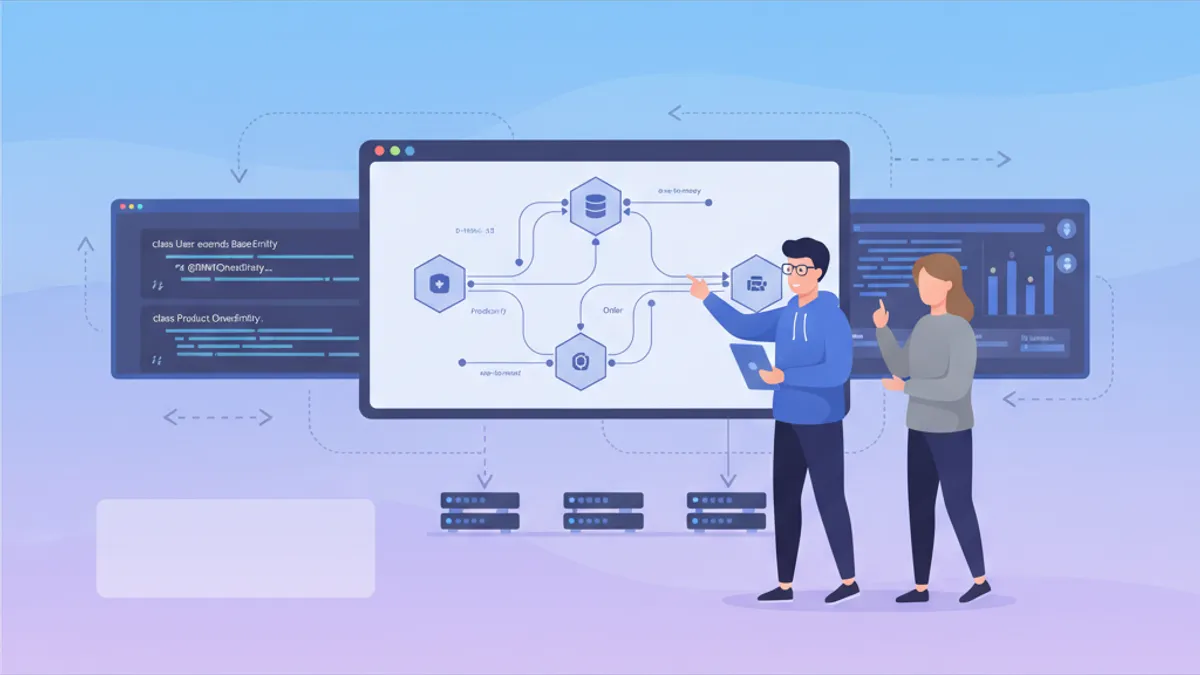
Doctrine ORM: เชี่ยวชาญความสัมพันธ์ใน Symfony
คู่มือฉบับสมบูรณ์เกี่ยวกับความสัมพันธ์ Doctrine ORM ใน Symfony OneToMany, ManyToMany, กลยุทธ์การโหลดและการเพิ่มประสิทธิภาพพร้อมตัวอย่างจริง
ระบบความปลอดภัย Symfony ปี 2026: Voters, Firewalls และคำถามสัมภาษณ์งานเทคนิค
คู่มือเชิงลึกระบบความปลอดภัย Symfony: firewalls, voters, IsGranted attribute, กลยุทธ์การตัดสินใจ, การ debug ผ่าน Twig ใน Symfony 7.4 และคำถามสัมภาษณ์งานสำหรับนักพัฒนา PHP
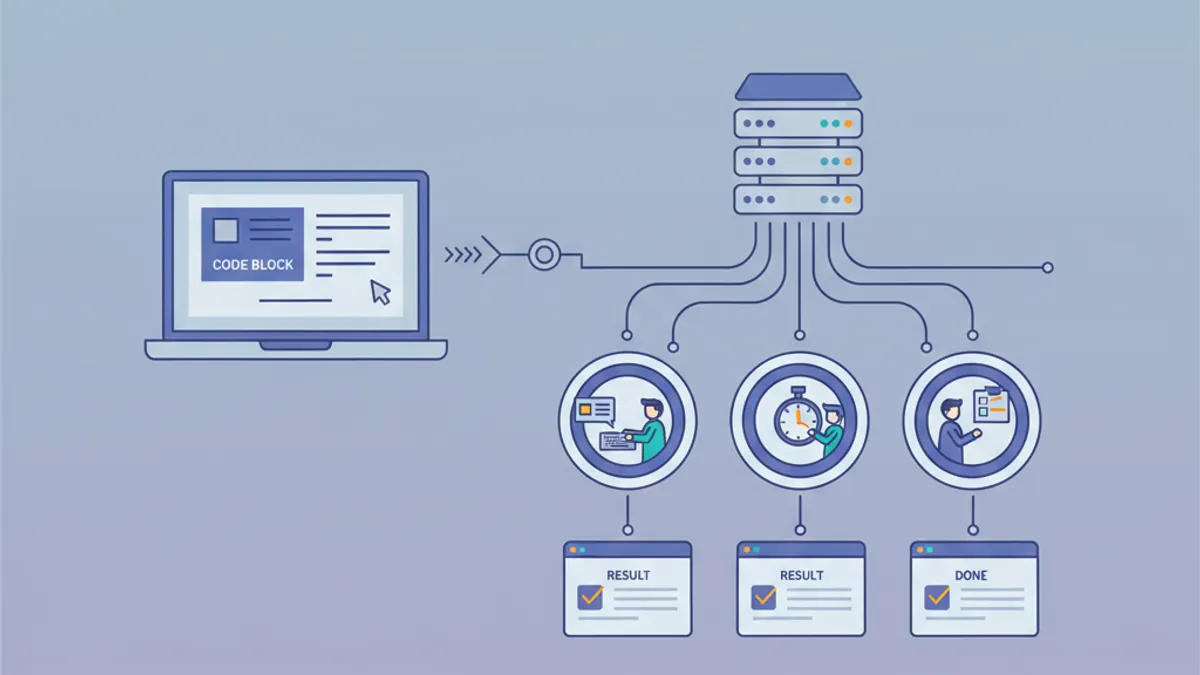
Symfony Messenger: คิว, Worker และสถาปัตยกรรม Async สำหรับสัมภาษณ์งาน 2026
คู่มือเชิงลึก Symfony Messenger: message bus, transport, worker, middleware ป้องกันข้อความซ้ำ, กลยุทธ์ retry และ streaming AMQP ใน Symfony 7.3+