การทำงานพร้อมกันใน Go: Goroutines และ Channels - คู่มือฉบับสมบูรณ์
เชี่ยวชาญการทำงานพร้อมกันใน Go ด้วย goroutines และ channels รูปแบบขั้นสูง การซิงโครไนซ์ คำสั่ง select และแนวทางปฏิบัติที่ดีที่สุดพร้อมตัวอย่างโค้ดโดยละเอียด

การทำงานพร้อมกันถือเป็นจุดแข็งที่ยิ่งใหญ่ที่สุดของ Go แตกต่างจากภาษาอื่นที่มัลติเธรดยังคงซับซ้อน Go มอบโมเดลที่สง่างามบนพื้นฐานของ goroutines และ channels ที่ทำให้การพัฒนาแอปพลิเคชันที่ทำงานพร้อมกันง่ายขึ้นอย่างมีนัยสำคัญ
"อย่าสื่อสารโดยการแชร์หน่วยความจำ; ให้แชร์หน่วยความจำโดยการสื่อสาร" หลักการพื้นฐานนี้ชี้นำการออกแบบการทำงานพร้อมกันทั้งหมดใน Go
ทำความเข้าใจ Goroutines
Goroutines เป็นเธรดน้ำหนักเบาที่จัดการโดย Go runtime ใช้พื้นที่ stack ประมาณ 2 KB (เทียบกับหลาย MB สำหรับเธรดของระบบปฏิบัติการ) และช่วยให้สามารถดำเนินงานพร้อมกันได้หลายพันงานโดยไม่ทำให้ระบบโอเวอร์โหลด
การเรียกใช้ goroutine ต้องการเพียงการวางคีย์เวิร์ด go ก่อนการเรียกใช้ฟังก์ชัน Runtime จัดการการกำหนดเวลาและการกระจายระหว่างเธรดที่มีอยู่
package main

import (
    "fmt"
    "time"
)

// fetchData simulates a network request
func fetchData(id int) {
    // Simulates network delay
    time.Sleep(100 * time.Millisecond)
    fmt.Printf("Data %d fetched\n", id)
}

func main() {
    // Sequential execution - 500ms total
    start := time.Now()
    for i := 1; i <= 5; i++ {
        fetchData(i)
    }
    fmt.Printf("Sequential: %v\n", time.Since(start))

    // Concurrent execution - ~100ms total
    start = time.Now()
    for i := 1; i <= 5; i++ {
        go fetchData(i) // Execute as goroutine
    }
    time.Sleep(150 * time.Millisecond) // Wait for completion
    fmt.Printf("Concurrent: %v\n", time.Since(start))
}
การดำเนินการแบบพร้อมกันลดเวลาทั้งหมดจาก 500ms เหลือประมาณ 100ms อย่างไรก็ตาม การใช้ time.Sleep เพื่อซิงโครไนซ์ goroutines ไม่ใช่แนวทางปฏิบัติที่ดี Channels เสนอวิธีแก้ไขที่สง่างาม
Channels: การสื่อสารระหว่าง Goroutines
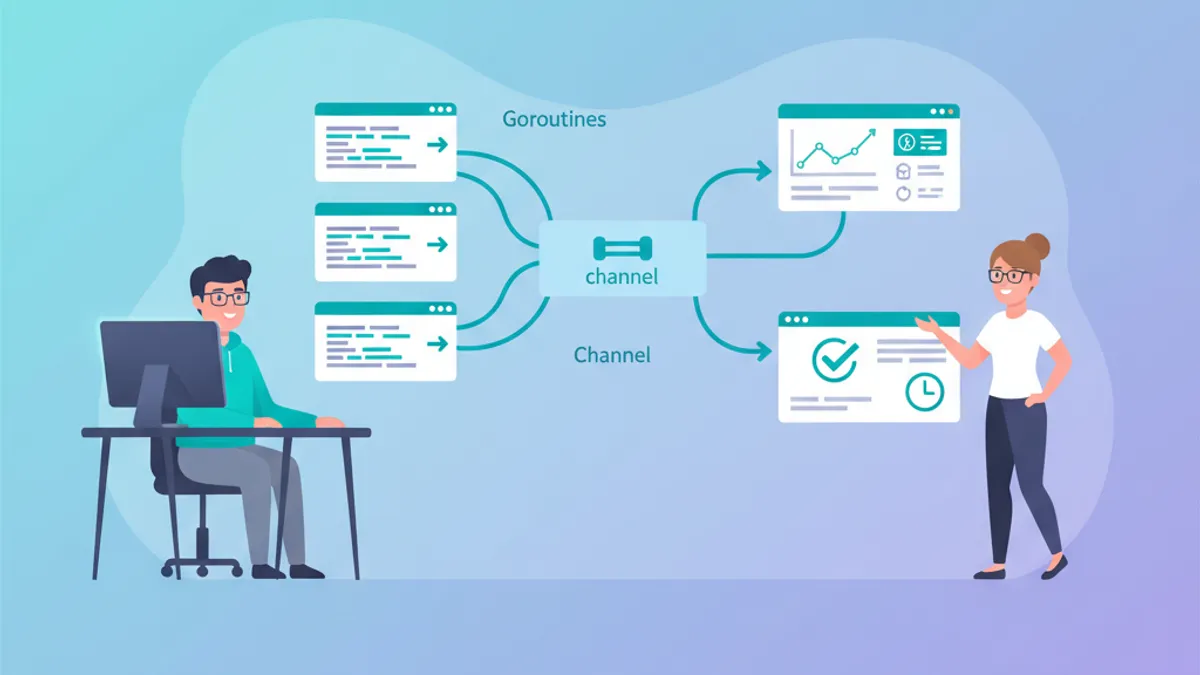
Channel คือท่อนำส่งที่มีประเภทสำหรับส่งและรับค่าระหว่าง goroutines Channels รับประกันการซิงโครไนซ์: goroutine ที่ส่งจะรอจนกว่าอีกตัวจะรับ และในทางกลับกัน
การสร้าง channel ใช้ฟังก์ชัน make ตัวดำเนินการ <- ส่งและรับข้อมูลขึ้นอยู่กับตำแหน่งที่สัมพันธ์กับ channel
package main

import "fmt"

// worker performs computation and returns result via channel
func worker(id int, jobs <-chan int, results chan<- int) {
    // Receives jobs until channel closes
    for job := range jobs {
        result := job * 2 // Processing
        results <- result // Send result
    }
}

func main() {
    // Create channels
    jobs := make(chan int, 10)    // Buffered channel
    results := make(chan int, 10)

    // Start 3 workers
    for w := 1; w <= 3; w++ {
        go worker(w, jobs, results)
    }

    // Send 5 jobs
    for j := 1; j <= 5; j++ {
        jobs <- j
    }
    close(jobs) // Signal end of jobs

    // Collect results
    for r := 1; r <= 5; r++ {
        result := <-results
        fmt.Printf("Result: %d\n", result)
    }
}
Channels แบบมีทิศทาง (<-chan สำหรับการรับ, chan<- สำหรับการส่ง) เสริมความปลอดภัยของโค้ดโดยจำกัดการดำเนินการที่เป็นไปได้
Channels แบบมี Buffer vs ไม่มี Buffer
ความแตกต่างระหว่างประเภท channel เหล่านี้ส่งผลโดยตรงต่อพฤติกรรมการซิงโครไนซ์ระหว่าง goroutines
Channels ที่ไม่มี buffer จะบล็อกผู้ส่งจนกว่าผู้รับจะพร้อม Channels ที่มี buffer อนุญาตให้ส่งได้ถึง N ค่าโดยไม่บล็อก โดย N แทนความจุของ buffer
package main

import "fmt"

func main() {
    // Unbuffered channel - strict synchronization
    unbuffered := make(chan string)

    go func() {
        unbuffered <- "message" // Blocks until received
    }()

    msg := <-unbuffered // Unblocks the send
    fmt.Println(msg)

    // Buffered channel - capacity of 2
    buffered := make(chan int, 2)

    // These sends don't block
    buffered <- 1
    buffered <- 2
    // buffered <- 3 // Would block because buffer is full

    fmt.Println(<-buffered) // 1
    fmt.Println(<-buffered) // 2

    // Check capacity
    fmt.Printf("Length: %d, Capacity: %d\n",
        len(buffered), cap(buffered))
}
Channels ที่มี buffer แยกผู้ผลิตและผู้บริโภคออกจากกัน ในขณะที่ที่ไม่มี buffer รับประกันการซิงโครไนซ์แบบจุดต่อจุด
Deadlock เกิดขึ้นเมื่อ goroutines ทั้งหมดถูกบล็อกรออยู่ Go runtime ตรวจพบและยุติโปรแกรมพร้อมข้อความข้อผิดพลาดที่ชัดเจน
Select: การมัลติเพล็กซ์ Channel
คำสั่ง select รอการดำเนินการพร้อมกันบนหลาย channel มีลักษณะคล้ายคำสั่ง switch สำหรับการสื่อสารพร้อมกัน
โครงสร้างนี้จำเป็นสำหรับการจัดการ timeout การยกเลิก และการสื่อสารหลายรายการโดยไม่บล็อกอย่างไม่มีกำหนดบน channel เดียว
package main

import (
    "fmt"
    "time"
)

// fetchAPI simulates an API call with variable delay
func fetchAPI(name string, delay time.Duration, ch chan<- string) {
    time.Sleep(delay)
    ch <- fmt.Sprintf("%s: data received", name)
}

func main() {
    api1 := make(chan string)
    api2 := make(chan string)

    // Launch two API calls in parallel
    go fetchAPI("API-1", 100*time.Millisecond, api1)
    go fetchAPI("API-2", 200*time.Millisecond, api2)

    // Global timeout of 150ms
    timeout := time.After(150 * time.Millisecond)

    // Collect results with timeout
    for i := 0; i < 2; i++ {
        select {
        case result := <-api1:
            fmt.Println(result)
        case result := <-api2:
            fmt.Println(result)
        case <-timeout:
            fmt.Println("Timeout - operation cancelled")
            return
        }
    }
}
select เลือก channel ตัวแรกที่พร้อม หากหลายตัวพร้อม การเลือกเป็นแบบสุ่มเทียมเพื่อป้องกันการอดอาหาร
พร้อมที่จะพิชิตการสัมภาษณ์ Go แล้วหรือยังครับ?
ฝึกฝนด้วยตัวจำลองแบบโต้ตอบ, flashcards และแบบทดสอบเทคนิคครับ
รูปแบบ Worker Pool
รูปแบบ worker pool กระจายงานระหว่าง worker หลายตัว จำกัดการทำงานพร้อมกันและเพิ่มประสิทธิภาพการใช้ทรัพยากร รูปแบบนี้พิสูจน์แล้วว่าจำเป็นสำหรับการประมวลผลข้อมูลจำนวนมาก
การนำไปใช้งานอาศัย channel งานที่แชร์ระหว่าง worker และ channel ผลลัพธ์สำหรับการรวบรวม
package main

import (
    "fmt"
    "sync"
    "time"
)

// Task represents a unit of work
type Task struct {
    ID   int
    Data string
}

// Result contains the processing result
type Result struct {
    TaskID int
    Output string
}

// worker processes received tasks
func worker(id int, tasks <-chan Task, results chan<- Result, wg *sync.WaitGroup) {
    defer wg.Done()

    for task := range tasks {
        // Simulate processing
        time.Sleep(50 * time.Millisecond)

        results <- Result{
            TaskID: task.ID,
            Output: fmt.Sprintf("Worker %d processed: %s", id, task.Data),
        }
    }
}

func main() {
    const numWorkers = 3
    const numTasks = 10

    tasks := make(chan Task, numTasks)
    results := make(chan Result, numTasks)

    var wg sync.WaitGroup

    // Start workers
    for w := 1; w <= numWorkers; w++ {
        wg.Add(1)
        go worker(w, tasks, results, &wg)
    }

    // Send tasks
    for i := 1; i <= numTasks; i++ {
        tasks <- Task{ID: i, Data: fmt.Sprintf("task-%d", i)}
    }
    close(tasks)

    // Close results channel after workers finish
    go func() {
        wg.Wait()
        close(results)
    }()

    // Collect results
    for result := range results {
        fmt.Printf("Task %d: %s\n", result.TaskID, result.Output)
    }
}
sync.WaitGroup ประสานการรอ worker ทั้งหมดให้เสร็จสิ้นก่อนปิด channel ผลลัพธ์
รูปแบบ Fan-Out/Fan-In
รูปแบบนี้กระจายงานระหว่าง goroutines หลายตัว (fan-out) จากนั้นรวมผลลัพธ์ (fan-in) มันเพิ่มความขนานสูงสุดในขณะที่ทำให้การรวบรวมผลลัพธ์ง่ายขึ้น
package main

import (
    "fmt"
    "sync"
)

// generate produces numbers on a channel
func generate(nums ...int) <-chan int {
    out := make(chan int)
    go func() {
        for _, n := range nums {
            out <- n
        }
        close(out)
    }()
    return out
}

// square computes the square of received numbers
func square(in <-chan int) <-chan int {
    out := make(chan int)
    go func() {
        for n := range in {
            out <- n * n
        }
        close(out)
    }()
    return out
}

// merge combines multiple channels into one (fan-in)
func merge(channels ...<-chan int) <-chan int {
    out := make(chan int)
    var wg sync.WaitGroup

    // Output function for each channel
    output := func(c <-chan int) {
        defer wg.Done()
        for n := range c {
            out <- n
        }
    }

    // Launch a goroutine per channel
    wg.Add(len(channels))
    for _, c := range channels {
        go output(c)
    }

    // Close after all goroutines finish
    go func() {
        wg.Wait()
        close(out)
    }()

    return out
}

func main() {
    // Generate data
    numbers := generate(1, 2, 3, 4, 5, 6, 7, 8)

    // Fan-out: distribute to 3 workers
    sq1 := square(numbers)
    sq2 := square(numbers)
    sq3 := square(numbers)

    // Fan-in: aggregate results
    for result := range merge(sq1, sq2, sq3) {
        fmt.Println(result)
    }
}
รูปแบบนี้โดดเด่นสำหรับการดำเนินการที่ผูกกับ CPU ที่สามารถกระจายได้และไปป์ไลน์การประมวลผลข้อมูล
Context สำหรับการยกเลิกและกำหนดเวลา
แพ็คเกจ context ทำให้การจัดการการยกเลิก กำหนดเวลา และค่าระหว่าง goroutines เป็นมาตรฐาน goroutine ที่ทำงานนานควรยอมรับ context เป็นพารามิเตอร์แรก
package main

import (
    "context"
    "fmt"
    "time"
)

// fetchWithContext simulates a cancellable request
func fetchWithContext(ctx context.Context, url string) (string, error) {
    // Simulates a long operation
    select {
    case <-time.After(2 * time.Second):
        return fmt.Sprintf("Data from %s", url), nil
    case <-ctx.Done():
        return "", ctx.Err() // context.Canceled or context.DeadlineExceeded
    }
}

func main() {
    // Context with 500ms timeout
    ctx, cancel := context.WithTimeout(context.Background(), 500*time.Millisecond)
    defer cancel() // Release resources

    result, err := fetchWithContext(ctx, "https://api.example.com")
    if err != nil {
        fmt.Printf("Error: %v\n", err)
        return
    }
    fmt.Println(result)

    // Context with manual cancellation
    ctx2, cancel2 := context.WithCancel(context.Background())

    go func() {
        time.Sleep(100 * time.Millisecond)
        cancel2() // Explicit cancellation
    }()

    result, err = fetchWithContext(ctx2, "https://api2.example.com")
    if err != nil {
        fmt.Printf("Request cancelled: %v\n", err)
    }
}เรียก defer cancel() ทันทีหลังจากสร้าง context เสมอเพื่อหลีกเลี่ยงการรั่วไหลของทรัพยากร
การซิงโครไนซ์ด้วย sync.Mutex
แม้ว่า channels จะเป็นที่นิยมสำหรับการสื่อสาร แพ็คเกจ sync ยังคงจำเป็นสำหรับการปกป้องการเข้าถึงพร้อมกันไปยังโครงสร้างข้อมูลที่แชร์
package main

import (
    "fmt"
    "sync"
)

// SafeCounter is a thread-safe counter
type SafeCounter struct {
    mu    sync.Mutex
    value map[string]int
}

// Increment increments the value for a given key
func (c *SafeCounter) Increment(key string) {
    c.mu.Lock()         // Exclusive lock
    defer c.mu.Unlock() // Guaranteed unlock
    c.value[key]++
}

// Value returns the current value
func (c *SafeCounter) Value(key string) int {
    c.mu.Lock()
    defer c.mu.Unlock()
    return c.value[key]
}

func main() {
    counter := SafeCounter{value: make(map[string]int)}

    var wg sync.WaitGroup

    // 1000 concurrent increments
    for i := 0; i < 1000; i++ {
        wg.Add(1)
        go func() {
            defer wg.Done()
            counter.Increment("visits")
        }()
    }

    wg.Wait()
    fmt.Printf("Total: %d\n", counter.Value("visits")) // 1000
}
sync.RWMutex เพิ่มประสิทธิภาพการอ่านพร้อมกันด้วย RLock()/RUnlock() สำหรับการดำเนินการอ่านอย่างเดียว
ข้อผิดพลาดทั่วไปและแนวทางแก้ไข
การทำงานพร้อมกันใน Go มีกับดักคลาสสิก นี่คือข้อผิดพลาดที่พบบ่อยที่สุดและวิธีหลีกเลี่ยง
package main

import (
    "fmt"
    "sync"
)

func main() {
    // ERROR: Loop variable capture
    // All goroutines would print the same value
    for i := 0; i < 3; i++ {
        go func() {
            fmt.Println(i) // Capture by reference - BUG
        }()
    }

    // SOLUTION: Pass value as parameter
    var wg sync.WaitGroup
    for i := 0; i < 3; i++ {
        wg.Add(1)
        go func(n int) {
            defer wg.Done()
            fmt.Println(n) // Local copy - CORRECT
        }(i)
    }
    wg.Wait()

    // ERROR: Send on nil channel
    var ch chan int
    // ch <- 1 // Blocks forever

    // SOLUTION: Always initialize with make
    ch = make(chan int, 1)
    ch <- 1
    fmt.Println(<-ch)

    // ERROR: Send on closed channel
    done := make(chan bool)
    close(done)
    // done <- true // Panic!

    // SOLUTION: Check before send or use sync.Once
    select {
    case done <- true:
        fmt.Println("Sent")
    default:
        fmt.Println("Channel closed or full")
    }
}
การตรวจจับ race condition ใช้ flag -race ในระหว่างการคอมไพล์หรือการทดสอบ: go test -race ./....
เริ่มฝึกซ้อมเลย!
ทดสอบความรู้ของคุณด้วยตัวจำลองสัมภาษณ์และแบบทดสอบเทคนิคครับ
บทสรุป
การเชี่ยวชาญการทำงานพร้อมกันใน Go อาศัยแนวคิดสำคัญไม่กี่ประการที่เมื่อเข้าใจดีแล้ว จะช่วยให้สร้างแอปพลิเคชันที่มีประสิทธิภาพสูงได้
ประเด็นสำคัญ:
✅ Goroutines มีน้ำหนักเบาและราคาถูก - การสร้างหลายพันยังคงเป็นที่ยอมรับได้
✅ Channels ซิงโครไนซ์และถ่ายโอนข้อมูลระหว่าง goroutines
✅ คำสั่ง select จัดการการสื่อสารหลายรายการและ timeout
✅ รูปแบบ worker pool จำกัดการทำงานพร้อมกันและเพิ่มประสิทธิภาพทรัพยากร
✅ แพ็คเกจ context ทำให้การยกเลิกและกำหนดเวลาเป็นมาตรฐาน
✅ Mutex ปกป้องข้อมูลที่แชร์เมื่อ channels ไม่เพียงพอ
✅ Flag -race ตรวจจับ race condition ในระหว่างการทดสอบ
ปรัชญา "แชร์หน่วยความจำโดยการสื่อสาร" นำไปสู่การออกแบบที่ปลอดภัยและบำรุงรักษาได้ง่ายกว่ามัลติเธรดแบบดั้งเดิมที่มีการล็อก
คุณหาบั๊กใน Go เจอไหม
โค้ดจริงหนึ่งชิ้น บั๊กที่ซ่อนอยู่หนึ่งจุด วันละหนึ่งครั้ง ลองได้โดยไม่ต้องมีบัญชี

เขียนโดย
Anthony Fillion-Mailletผู้ก่อตั้ง SharpSkill
เป็นนักพัฒนาฟูลสแตกมากว่า 10 ปี ดูแล SharpSkill และรับผิดชอบทุกสิ่งที่เผยแพร่ที่นี่
อัปเดตเมื่อ 29 เมษายน 2569
แท็ก
แชร์
บทความที่เกี่ยวข้อง
สัมภาษณ์เทคนิค Go: Goroutine, Channel และ Concurrency
คำถามสัมภาษณ์เทคนิค Go เกี่ยวกับ goroutine, channel และ concurrency pattern ต่างๆ ตัวอย่างโค้ด ข้อผิดพลาดที่พบบ่อย และคำตอบระดับผู้เชี่ยวชาญสำหรับเตรียมสัมภาษณ์เทคนิค Go ปี 2026
25 คำถามสัมภาษณ์ Go ยอดนิยม: คู่มือฉบับสมบูรณ์สำหรับนักพัฒนา
พิชิตการสัมภาษณ์ Go ด้วย 25 คำถามที่ถูกถามบ่อย goroutine, channel, interface และรูปแบบการทำงานพร้อมกันพร้อมตัวอย่างโค้ด
Go: พื้นฐานสำหรับนักพัฒนา Java/Python ในปี 2026
เรียนรู้ Go อย่างรวดเร็วโดยใช้ประสบการณ์จาก Java หรือ Python Goroutine, channel, interface และ pattern สำคัญสำหรับการเปลี่ยนผ่านอย่างราบรื่น