Cau hoi phong van Django va Python: Top 25 nam 2026
25 cau hoi phong van Django va Python thuong gap nhat. ORM, views, middleware, DRF, signals va toi uu hoa voi dap an chi tiet va vi du code.

Phong van Django danh gia kha nang lam viec voi framework web pho bien nhat cua Python, hieu biet ve ORM, kien truc MVT va kha nang xay dung REST API vung chac. Huong dan nay bao gom 25 cau hoi thuong gap nhat, tu nhung kien thuc co ban cua Django den cac pattern nang cao cua Django REST Framework.
Nguoi phong van danh gia cao ung vien co kha nang giai thich cac quyet dinh kien truc cua Django. Hieu duoc ly do framework ap dung nhung quy uoc nhat dinh (convention over configuration) tao ra su khac biet thuc su trong phong van.
Nhung Kien Thuc Co Ban Ve Django
Cau hoi 1: Mo ta Kien Truc MVT Cua Django
Kien truc Model-View-Template (MVT) la phien ban cua pattern MVC trong Django. Framework tu dong xu ly phan controller, giup don gian hoa qua trinh phat trien.
# models.py
# The Model represents data structure and business logic
from django.db import models

class Article(models.Model):
    title = models.CharField(max_length=200)
    content = models.TextField()
    published_at = models.DateTimeField(auto_now_add=True)
    author = models.ForeignKey(
        "auth.User",
        on_delete=models.CASCADE,  # Deletes articles when author is deleted
        related_name="articles"     # Reverse access: user.articles.all()
    )

    class Meta:
        ordering = ["-published_at"]  # Default ordering

    def __str__(self):
return self.title# views.py
# View chua logic xu ly request
from django.shortcuts import render, get_object_or_404
def article_detail(request, pk):
# get_object_or_404 tra ve Http404 neu doi tuong khong ton tai
article = get_object_or_404(Article, pk=pk)
return render(request, "blog/article_detail.html", {"article": article})Trong MVT, Django dong vai tro la controller bang cach dinh tuyen URL den view tuong ung thong qua urls.py. Template dam nhan viec trinh bay HTML.
Cau hoi 2: Su Khac Biet Giua Project va App Trong Django La Gi?
Mot project la cau hinh tong the (settings, root URL, WSGI/ASGI). Mot app la module co the tai su dung voi mot trach nhiem duy nhat. Mot project bao gom nhieu app.
# Creating a project and an app
# django-admin startproject myproject
# python manage.py startapp blog

# settings.py
# Registering apps in the project
INSTALLED_APPS = [
    "django.contrib.admin",       # Admin interface
    "django.contrib.auth",        # Authentication
    "django.contrib.contenttypes",
    "django.contrib.sessions",
    "django.contrib.messages",
    "django.contrib.staticfiles",
    # Custom apps
    "blog.apps.BlogConfig",       # Blog app
    "users.apps.UsersConfig",     # Users app
]
Moi app tuan theo nguyen tac single responsibility va co the duoc tai su dung trong nhieu project khac nhau.
Cau hoi 3: Giai Thich Vong Doi Request Trong Django
Request di qua nhieu lop truoc khi den view. Hieu duoc vong doi nay la dieu thiet yeu cho viec debug va toi uu hoa.
# middleware.py
# Middlewares intercept every request/response
class RequestTimingMiddleware:
    """Middleware that measures processing time."""

    def __init__(self, get_response):
        self.get_response = get_response  # Reference to the next middleware

    def __call__(self, request):
        import time
        start = time.time()

        # Request phase: before the view
        response = self.get_response(request)

        # Response phase: after the view
        duration = time.time() - start
        response["X-Request-Duration"] = f"{duration:.3f}s"
        return response
Vong doi day du: HTTP request -> WSGI/ASGI -> middlewares (process_request) -> URL resolver -> view -> middlewares (process_response) -> HTTP response.
ORM va Co So Du Lieu
Cau hoi 4: QuerySet Cua Django Hoat Dong Nhu The Nao va Lazy Loading La Gi?
QuerySet duoc danh gia theo kieu lazy: khong co truy van SQL nao duoc thuc thi cho den khi du lieu thuc su duoc su dung.
# queryset_lazy.py
# Demonstrating QuerySet lazy loading

# No SQL query executed here
qs = Article.objects.filter(published=True)  # No query
qs = qs.exclude(title="Draft")               # Still none
qs = qs.order_by("-created_at")              # Still none

# The SQL query runs ONLY here
for article in qs:  # ONE combined SQL query
    print(article.title)

# Other evaluation triggers
list(qs)        # Converting to list
qs[0]           # Index access
len(qs)         # Counting (prefer qs.count())
bool(qs)        # Existence check (prefer qs.exists())
Danh gia lazy cho phep chuoi cac filter ma khong co overhead, chi thuc thi mot truy van duy nhat da duoc toi uu hoa.
Cau hoi 5: Van De N+1 La Gi va Cach Giai Quyet?
Van de N+1 xay ra khi mot truy van chinh tao ra N truy van bo sung de tai cac moi quan he. Day la nguyen nhan pho bien nhat gay cham ung dung Django.
# n_plus_one.py
# N+1 problem and solutions

# ❌ PROBLEM: N+1 queries
# 1 query for articles + 1 query PER article for the author
articles = Article.objects.all()
for article in articles:
    print(article.author.username)  # SQL query on every iteration!

# ✅ SOLUTION 1: select_related (ForeignKey, OneToOne)
# Joins tables in ONE SQL query (JOIN)
articles = Article.objects.select_related("author").all()
for article in articles:
    print(article.author.username)  # No additional query

# ✅ SOLUTION 2: prefetch_related (ManyToMany, reverse FK)
# Executes 2 separate queries + Python assembly
articles = Article.objects.prefetch_related("tags").all()
for article in articles:
    print(article.tags.all())  # Data already cached

# ✅ SOLUTION 3: Custom Prefetch with filtering
from django.db.models import Prefetch

articles = Article.objects.prefetch_related(
    Prefetch(
        "comments",
        queryset=Comment.objects.filter(approved=True).select_related("user"),
        to_attr="approved_comments"  # Custom attribute
    )
)
Su dung select_related cho cac quan he ForeignKey/OneToOne (SQL JOIN) va prefetch_related cho cac quan he ManyToMany hoac reverse (truy van rieng biet).
Cau hoi 6: Cach Tao Custom Manager va Khi Nao Nen Su Dung?
Custom Manager dong goi cac truy van thuong dung o cap model, giup code de doc va tai su dung hon.
# managers.py
# Custom Managers and QuerySets

class PublishedQuerySet(models.QuerySet):
    """Reusable QuerySet for published articles."""

    def published(self):
        return self.filter(status="published", published_at__lte=timezone.now())

    def by_author(self, user):
        return self.filter(author=user)

    def popular(self):
        return self.annotate(
            comment_count=models.Count("comments")
        ).order_by("-comment_count")


class PublishedManager(models.Manager):
    """Manager that exposes only published articles."""

    def get_queryset(self):
        return PublishedQuerySet(self.model, using=self._db).published()


class Article(models.Model):
    # ...
    objects = models.Manager()          # Default manager (all articles)
    published = PublishedManager()      # Custom manager (published only)

    # Usage:
    # Article.objects.all()             → All articles
    # Article.published.all()           → Published articles only
    # Article.published.popular()       → Published articles sorted by popularity
Custom Manager tuan theo nguyen tac DRY va tap trung logic truy van tai mot noi.
Sẵn sàng chinh phục phỏng vấn Django?
Luyện tập với mô phỏng tương tác, flashcards và bài kiểm tra kỹ thuật.
Views va URL
Cau hoi 7: Khi Nao Nen Dung Class-Based Views va Function-Based Views?
Function-Based Views (FBVs) mang lai su don gian va kiem soat ro rang. Class-Based Views (CBVs) cung cap kha nang tai su dung va cau truc thong qua ke thua.
# views_comparison.py
# FBV: Explicit, simple, easy to understand
from django.http import JsonResponse
from django.views.decorators.http import require_http_methods

@require_http_methods(["GET", "POST"])
def article_list(request):
    if request.method == "GET":
        articles = Article.published.all()
        return render(request, "articles/list.html", {"articles": articles})

    # POST: article creation
    form = ArticleForm(request.POST)
    if form.is_valid():
        form.save()
        return redirect("article-list")
return render(request, "articles/list.html", {"form": form})# views_cbv.py
# CBV: Reusable, extensible via mixins
from django.views.generic import ListView, CreateView
from django.contrib.auth.mixins import LoginRequiredMixin
class ArticleListView(LoginRequiredMixin, ListView):
model = Article
template_name = "articles/list.html"
context_object_name = "articles" # Variable name in the template
paginate_by = 20 # Automatic pagination
def get_queryset(self):
# Override to filter published articles
return Article.published.all()
class ArticleCreateView(LoginRequiredMixin, CreateView):
model = Article
form_class = ArticleForm
success_url = reverse_lazy("article-list")
def form_valid(self, form):
form.instance.author = self.request.user # Assign the author
return super().form_valid(form)Quy tac thuc te: su dung FBV cho logic don gian hoac khong tieu chuan, CBV cho cac thao tac CRUD tieu chuan.
Cau hoi 8: Middleware Hoat Dong Nhu The Nao Trong Django?
Middleware la cac hook xu ly moi request/response. Moi middleware co the can thiep o cac giai doan khac nhau trong vong doi xu ly.
# auth_middleware.py
# Custom authentication middleware
import jwt
from django.conf import settings
from django.http import JsonResponse

class JWTAuthenticationMiddleware:
    """Verifies JWT token on protected endpoints."""

    EXEMPT_PATHS = ["/api/auth/login", "/api/auth/register", "/health"]

    def __init__(self, get_response):
        self.get_response = get_response

    def __call__(self, request):
        # Skip exempt paths
        if any(request.path.startswith(p) for p in self.EXEMPT_PATHS):
            return self.get_response(request)

        # Extract and verify the token
        auth_header = request.headers.get("Authorization", "")
        if not auth_header.startswith("Bearer "):
            return JsonResponse({"error": "Missing token"}, status=401)

        try:
            token = auth_header.split(" ")[1]
            payload = jwt.decode(token, settings.SECRET_KEY, algorithms=["HS256"])
            request.user_id = payload["user_id"]  # Attach to request
        except jwt.ExpiredSignatureError:
            return JsonResponse({"error": "Token expired"}, status=401)
        except jwt.InvalidTokenError:
            return JsonResponse({"error": "Invalid token"}, status=401)

        return self.get_response(request)
Thu tu middleware trong MIDDLEWARE rat quan trong: chung thuc thi tu tren xuong duoi cho request va tu duoi len tren cho response.
Django REST Framework
Cau hoi 9: Su Khac Biet Giua Serializer va ModelSerializer La Gi?
Serializer dinh nghia tung field thu cong, trong khi ModelSerializer tu dong tao cac field tu model.
# serializers.py
from rest_framework import serializers

# Manual Serializer: full control over each field
class ArticleSerializer(serializers.Serializer):
    id = serializers.IntegerField(read_only=True)
    title = serializers.CharField(max_length=200)
    content = serializers.CharField()
    author_name = serializers.SerializerMethodField()

    def get_author_name(self, obj):
        return obj.author.get_full_name()

    def create(self, validated_data):
        return Article.objects.create(**validated_data)

    def update(self, instance, validated_data):
        instance.title = validated_data.get("title", instance.title)
        instance.content = validated_data.get("content", instance.content)
        instance.save()
        return instance


# ModelSerializer: automatic field generation
class ArticleModelSerializer(serializers.ModelSerializer):
    author_name = serializers.SerializerMethodField()
    comment_count = serializers.IntegerField(read_only=True)

    class Meta:
        model = Article
        fields = ["id", "title", "content", "author", "author_name",
                  "comment_count", "published_at"]
        read_only_fields = ["published_at"]

    def get_author_name(self, obj):
        return obj.author.get_full_name()
Nen su dung ModelSerializer cho cac truong hop tieu chuan va Serializer khi bieu dien du lieu khac biet dang ke so voi model.
Cau hoi 10: Cach Trien Khai Phan Trang Trong DRF?
DRF cung cap nhieu chien luoc phan trang co the cau hinh toan cuc hoac theo tung view.
# settings.py
# Global pagination configuration
REST_FRAMEWORK = {
    "DEFAULT_PAGINATION_CLASS": "rest_framework.pagination.PageNumberPagination",
    "PAGE_SIZE": 20,
}

# pagination.py
# Custom pagination per view
from rest_framework.pagination import CursorPagination, LimitOffsetPagination

class ArticleCursorPagination(CursorPagination):
    """Cursor pagination: performant for large datasets."""
    page_size = 20
    ordering = "-published_at"  # Indexed field required
    cursor_query_param = "cursor"

class ArticleLimitOffsetPagination(LimitOffsetPagination):
    """Offset/limit pagination: flexible but less performant."""
    default_limit = 20
    max_limit = 100

# views.py
class ArticleViewSet(viewsets.ModelViewSet):
    queryset = Article.published.all()
    serializer_class = ArticleModelSerializer
    pagination_class = ArticleCursorPagination  # View-specific pagination
Cursor pagination duoc khuyen nghi cho dataset lon vi hieu suat on dinh bat ke so trang, khac voi OFFSET/LIMIT.
Cau hoi 11: Cach Bao Mat API Voi Permission Cua DRF?
DRF cung cap he thong permission module ket hop xac thuc va uy quyen chi tiet.
# permissions.py
from rest_framework.permissions import BasePermission, IsAuthenticated

class IsAuthorOrReadOnly(BasePermission):
    """Only the author can modify, everyone can read."""

    def has_object_permission(self, request, view, obj):
        # GET, HEAD, OPTIONS are always allowed
        if request.method in ("GET", "HEAD", "OPTIONS"):
            return True
        # Only the author can modify or delete
        return obj.author == request.user


class IsAdminOrManager(BasePermission):
    """Access restricted to admins and managers."""

    def has_permission(self, request, view):
        return (
            request.user.is_authenticated
            and request.user.role in ("admin", "manager")
        )


# views.py
from rest_framework.viewsets import ModelViewSet
from rest_framework.throttling import UserRateThrottle

class ArticleViewSet(ModelViewSet):
    permission_classes = [IsAuthenticated, IsAuthorOrReadOnly]
    throttle_classes = [UserRateThrottle]  # Rate limiting

    def get_permissions(self):
        # Dynamic permissions based on action
        if self.action == "destroy":
            return [IsAdminOrManager()]
        return super().get_permissions()
Ket hop permission_classes o cap view va has_object_permission de kiem soat chi tiet tung doi tuong.
Signals va Tac Vu Bat Dong Bo
Cau hoi 12: Django Signals Hoat Dong Nhu The Nao va Khi Nao Nen Su Dung?
Signals cho phep tach roi cac thanh phan bang cach phan ung voi cac su kien tu framework hoac ung dung.
# signals.py
from django.db.models.signals import post_save, pre_delete
from django.dispatch import receiver
from django.core.mail import send_mail

@receiver(post_save, sender=Article)
def notify_on_publish(sender, instance, created, **kwargs):
    """Sends a notification when an article is published."""
    if not created and instance.status == "published":
        # Triggered only on publication (not creation)
        subscribers = instance.author.subscribers.values_list("email", flat=True)
        send_mail(
            subject=f"New article: {instance.title}",
            message=f"Check out the latest article by {instance.author.username}",
            from_email="noreply@example.com",
            recipient_list=list(subscribers),
        )

@receiver(pre_delete, sender=Article)
def cleanup_article_files(sender, instance, **kwargs):
    """Deletes associated files before article deletion."""
    if instance.cover_image:
        instance.cover_image.delete(save=False)  # Deletes the physical file
Signals phu hop cho cac tac dung phu nhe (logging, vo hieu hoa cache). Cho cac tac vu nang, nen su dung Celery.
Cau hoi 13: Cach Tich Hop Celery Voi Django Cho Tac Vu Bat Dong Bo?
Celery cho phep thuc thi tac vu o background, thiet yeu cho cac thao tac mat thoi gian nhu gui email hoac xu ly file.
# celery_config.py
# Celery configuration in the Django project
import os
from celery import Celery

os.environ.setdefault("DJANGO_SETTINGS_MODULE", "myproject.settings")

app = Celery("myproject")
app.config_from_object("django.conf:settings", namespace="CELERY")
app.autodiscover_tasks()  # Discovers tasks.py in each app

# tasks.py
from celery import shared_task
from django.core.mail import send_mass_mail

@shared_task(bind=True, max_retries=3, default_retry_delay=60)
def send_newsletter(self, article_id):
    """Sends newsletter asynchronously."""
    try:
        article = Article.objects.get(id=article_id)
        subscribers = User.objects.filter(newsletter=True)

        messages = [
            (f"New: {article.title}", article.content[:200],
             "noreply@example.com", [sub.email])
            for sub in subscribers
        ]
        send_mass_mail(messages, fail_silently=False)
    except Article.DoesNotExist:
        pass  # Article was deleted in the meantime
    except Exception as exc:
        self.retry(exc=exc)  # Automatic retry on error

# Calling from a view
# send_newsletter.delay(article.id)  # Async execution
# send_newsletter.apply_async(args=[article.id], countdown=300)  # 5-min delay
Celery thiet yeu trong moi truong production cho bat ky thao tac nao khong nen chan phan hoi HTTP.
Bao Mat va Xac Thuc
Cau hoi 14: Django Bao Ve Khoi Tan Cong CSRF Nhu The Nao?
Django tich hop bao ve CSRF thong qua middleware xac minh token duy nhat tren moi request POST.
# CSRF protection in forms
# The {% csrf_token %} template tag generates a hidden field

# For APIs (DRF), CSRF is often disabled in favor of tokens
# settings.py
REST_FRAMEWORK = {
    "DEFAULT_AUTHENTICATION_CLASSES": [
        "rest_framework.authentication.SessionAuthentication",  # Includes CSRF
        "rest_framework.authentication.TokenAuthentication",     # No CSRF
    ],
}

# For AJAX views with session auth
# The csrftoken cookie must be sent in the X-CSRFToken header# csrf_exemption.py
# Exempting a specific view (use with caution)
from django.views.decorators.csrf import csrf_exempt, ensure_csrf_cookie
@ensure_csrf_cookie
def get_csrf_token(request):
"""Endpoint that forces sending the CSRF cookie to the client."""
return JsonResponse({"detail": "CSRF cookie set"})
@csrf_exempt # ⚠️ Use only for external webhooks
def stripe_webhook(request):
"""Stripe webhook - authenticated by signature, not CSRF."""
payload = request.body
sig_header = request.headers.get("Stripe-Signature")
# Verified by Stripe signature insteadKhong bao gio tat CSRF toan cuc. Chi su dung csrf_exempt tren cac endpoint duoc xac thuc bang cach khac (webhooks, API token).
Cau hoi 15: Cach Trien Khai Xac Thuc Tuy Chinh Trong Django?
Django cho phep thay the model User mac dinh va tuy chinh backend xac thuc.
# models.py
from django.contrib.auth.models import AbstractBaseUser, BaseUserManager, PermissionsMixin

class CustomUserManager(BaseUserManager):
    """Manager for the custom User model."""

    def create_user(self, email, password=None, **extra_fields):
        if not email:
            raise ValueError("Email is required")
        email = self.normalize_email(email)  # Normalizes the domain
        user = self.model(email=email, **extra_fields)
        user.set_password(password)  # Hashes the password
        user.save(using=self._db)
        return user

    def create_superuser(self, email, password=None, **extra_fields):
        extra_fields.setdefault("is_staff", True)
        extra_fields.setdefault("is_superuser", True)
        return self.create_user(email, password, **extra_fields)


class CustomUser(AbstractBaseUser, PermissionsMixin):
    email = models.EmailField(unique=True)          # Login by email
    username = models.CharField(max_length=30, blank=True)
    is_active = models.BooleanField(default=True)
    is_staff = models.BooleanField(default=False)
    date_joined = models.DateTimeField(auto_now_add=True)

    objects = CustomUserManager()

    USERNAME_FIELD = "email"      # Field used for login
    REQUIRED_FIELDS = []          # Fields required in addition to USERNAME_FIELD

# settings.py
AUTH_USER_MODEL = "users.CustomUser"  # Before the first migration!
Xac dinh AUTH_USER_MODEL ngay tu dau du an. Thay doi no sau khi da migration la phuc tap va rui ro.
Toi Uu Hoa va Hieu Suat
Cau hoi 16: Cach Toi Uu Truy Van Django ORM?
Toi uu truy van la yeu to then chot cho hieu suat. Nhieu ky thuat giup giam so luong va chi phi cua cac truy van SQL.
# query_optimization.py
from django.db.models import F, Q, Count, Avg, Prefetch

# 1. Only/Defer: load only needed fields
articles = Article.objects.only("title", "published_at")  # SELECT title, published_at
heavy_articles = Article.objects.defer("content")          # Everything EXCEPT content

# 2. SQL-level aggregations (not Python)
stats = Article.objects.aggregate(
    total=Count("id"),
    avg_views=Avg("view_count"),
)

# 3. F() expressions: SQL-level operations
Article.objects.filter(published=True).update(
    view_count=F("view_count") + 1  # Atomic SQL increment
)

# 4. Q() objects: complex queries
results = Article.objects.filter(
    Q(title__icontains="django") | Q(tags__name="python"),
    ~Q(status="draft"),  # NOT draft
    published_at__year=2026
)

# 5. Bulk operations: reduce INSERT/UPDATE queries
articles = [Article(title=f"Article {i}") for i in range(100)]
Article.objects.bulk_create(articles, batch_size=50)  # 2 queries instead of 100

Article.objects.filter(status="draft").update(status="archived")  # 1 query
Su dung django-debug-toolbar trong moi truong phat trien de xac dinh truy van cham va van de N+1.
Cau hoi 17: Cach Trien Khai Caching Trong Django?
Django cung cap framework caching da cap: theo view, theo fragment template, hoac cho du lieu bat ky.
# settings.py
CACHES = {
    "default": {
        "BACKEND": "django.core.cache.backends.redis.RedisCache",
        "LOCATION": "redis://127.0.0.1:6379/1",
    }
}

# cache_strategies.py
from django.core.cache import cache
from django.views.decorators.cache import cache_page
from django.utils.decorators import method_decorator

# Per-view cache: caches the entire HTTP response
@cache_page(60 * 15)  # 15 minutes
def article_list(request):
    return render(request, "articles/list.html", {"articles": Article.published.all()})

# Data cache: granular control
def get_popular_articles():
    cache_key = "popular_articles_v1"
    articles = cache.get(cache_key)

    if articles is None:
        articles = list(
            Article.published.popular()[:10].values("id", "title", "view_count")
        )
        cache.set(cache_key, articles, timeout=60 * 30)  # 30 min

    return articles

# Cache invalidation
def invalidate_article_cache(article_id):
    cache.delete(f"article_{article_id}")
    cache.delete("popular_articles_v1")
    cache.delete_pattern("article_list_*")  # With django-redis
Nen su dung Redis lam backend cache production de co tinh ben vung va cac tinh nang nang cao (patterns, TTL).
Sẵn sàng chinh phục phỏng vấn Django?
Luyện tập với mô phỏng tương tác, flashcards và bài kiểm tra kỹ thuật.
Migration va Quan Ly Co So Du Lieu
Cau hoi 18: Cach Xu Ly Migration Phuc Tap Trong Django?
Django migration quan ly su tien hoa schema co so du lieu theo phien ban va co the tai tao.
# 0005_migrate_data.py
# Custom data migration
from django.db import migrations

def migrate_user_roles(apps, schema_editor):
    """Converts is_admin booleans to text roles."""
    User = apps.get_model("users", "CustomUser")
    # Use apps.get_model() to access the historical model
    User.objects.filter(is_admin=True).update(role="admin")
    User.objects.filter(is_admin=False, is_staff=True).update(role="manager")
    User.objects.filter(is_admin=False, is_staff=False).update(role="user")

def reverse_migrate(apps, schema_editor):
    """Reverse migration for rollback."""
    User = apps.get_model("users", "CustomUser")
    User.objects.filter(role="admin").update(is_admin=True)

class Migration(migrations.Migration):
    dependencies = [
        ("users", "0004_add_role_field"),
    ]

    operations = [
        migrations.RunPython(migrate_user_roles, reverse_migrate),
    ]
Luon cung cap ham reverse de cho phep rollback. Kiem tra migration tren ban sao co so du lieu production truoc khi deploy.
Cau hoi 19: Cach Tao Index Tuy Chinh De Toi Uu Hoa?
Index tang toc cac truy van thuong dung nhung lam tang chi phi ghi. Lua chon can than la dieu can thiet.
# models.py
class Article(models.Model):
    title = models.CharField(max_length=200)
    slug = models.SlugField(unique=True)
    status = models.CharField(max_length=20, db_index=True)  # Simple index
    published_at = models.DateTimeField(null=True)
    author = models.ForeignKey("auth.User", on_delete=models.CASCADE)

    class Meta:
        indexes = [
            # Composite index for frequent queries
            models.Index(fields=["status", "-published_at"], name="idx_status_date"),
            # Partial index: only published articles
            models.Index(
                fields=["published_at"],
                condition=models.Q(status="published"),
                name="idx_published_articles"
            ),
            # GIN index for full-text search (PostgreSQL)
            GinIndex(fields=["search_vector"], name="idx_search"),
        ]
Index ket hop tuan theo thu tu cot: truong co tinh chon loc cao nhat nen dat o vi tri dau tien.
Kiem Thu va Chat Luong
Cau hoi 20: Cach To Chuc Kiem Thu Trong Du An Django?
Django cung cap framework kiem thu manh me dua tren unittest, duoc tang cuong boi pytest-django de linh hoat hon.
# tests/test_views.py
from django.test import TestCase, Client
from django.urls import reverse
from rest_framework.test import APITestCase, APIClient

class ArticleViewTests(TestCase):
    """View tests with Django's test client."""

    def setUp(self):
        self.client = Client()
        self.user = CustomUser.objects.create_user(
            email="test@example.com", password="testpass123"
        )
        self.article = Article.objects.create(
            title="Test Article",
            content="Content here",
            author=self.user,
            status="published"
        )

    def test_article_list_returns_200(self):
        response = self.client.get(reverse("article-list"))
        self.assertEqual(response.status_code, 200)
        self.assertContains(response, "Test Article")

    def test_create_article_requires_auth(self):
        response = self.client.post(reverse("article-create"), {"title": "New"})
        self.assertEqual(response.status_code, 302)  # Redirects to login


class ArticleAPITests(APITestCase):
    """REST API tests with DRF."""

    def setUp(self):
        self.user = CustomUser.objects.create_user(
            email="api@example.com", password="testpass123"
        )
        self.client = APIClient()
        self.client.force_authenticate(user=self.user)

    def test_create_article_via_api(self):
        data = {"title": "API Article", "content": "Created via API"}
        response = self.client.post("/api/articles/", data, format="json")
        self.assertEqual(response.status_code, 201)
        self.assertEqual(Article.objects.count(), 1)
Phan tach kiem thu thanh cac file theo domain: test_models.py, test_views.py, test_serializers.py, test_services.py.
Cau hoi 21: Cach Su Dung Fixture va Factory Cho Kiem Thu?
Factory (voi factory_boy) duoc uu tien hon JSON fixture vi tinh linh hoat va de bao tri du lieu kiem thu.
# factories.py
import factory
from factory.django import DjangoModelFactory

class UserFactory(DjangoModelFactory):
    class Meta:
        model = CustomUser

    email = factory.Sequence(lambda n: f"user{n}@example.com")
    username = factory.Faker("user_name")
    is_active = True

class ArticleFactory(DjangoModelFactory):
    class Meta:
        model = Article

    title = factory.Faker("sentence", nb_words=5)
    content = factory.Faker("paragraphs", nb=3)
    author = factory.SubFactory(UserFactory)  # Creates a user automatically
    status = "published"

    class Params:
        draft = factory.Trait(status="draft", published_at=None)

# tests.py
def test_published_articles_count(self):
    ArticleFactory.create_batch(5)              # 5 published articles
    ArticleFactory.create_batch(3, draft=True)  # 3 drafts
    self.assertEqual(Article.published.count(), 5)
Factory dam bao du lieu kiem thu nhat quan va tranh su phu thuoc giua cac bai kiem thu.
Cac Pattern Nang Cao
Cau hoi 22: Cach Trien Khai WebSocket Voi Django Channels?
Django Channels mo rong Django vuot ra ngoai HTTP de ho tro WebSocket, cac giao thuc thoi gian thuc va tac vu background.
# consumers.py
import json
from channels.generic.websocket import AsyncWebsocketConsumer

class ChatConsumer(AsyncWebsocketConsumer):
    """WebSocket consumer for real-time chat."""

    async def connect(self):
        self.room_name = self.scope["url_route"]["kwargs"]["room_name"]
        self.room_group = f"chat_{self.room_name}"

        # Join the room group
        await self.channel_layer.group_add(self.room_group, self.channel_name)
        await self.accept()

    async def disconnect(self, close_code):
        # Leave the group
        await self.channel_layer.group_discard(self.room_group, self.channel_name)

    async def receive(self, text_data):
        data = json.loads(text_data)
        # Broadcast message to the entire group
        await self.channel_layer.group_send(
            self.room_group,
            {"type": "chat.message", "message": data["message"],
             "username": self.scope["user"].username}
        )

    async def chat_message(self, event):
        # Send message to the WebSocket client
        await self.send(text_data=json.dumps({
            "message": event["message"],
            "username": event["username"],
        }))
Django Channels su dung ASGI (thay vi WSGI) va can server tuong thich nhu Daphne hoac Uvicorn.
Cau hoi 23: Giai Thich Pattern Repository va Service Layer Trong Django
Pattern Service Layer tach biet logic nghiep vu khoi views va ORM, giup viec kiem thu va bao tri de dang hon.
# services/article_service.py
from django.db import transaction

class ArticleService:
    """Service encapsulating article business logic."""

    @staticmethod
    def publish_article(article_id: int, user) -> Article:
        """Publishes an article with all validations."""
        article = Article.objects.select_for_update().get(id=article_id)

        if article.author != user:
            raise PermissionError("Only the author can publish this article")
        if article.status == "published":
            raise ValueError("Article is already published")

        article.status = "published"
        article.published_at = timezone.now()
        article.save(update_fields=["status", "published_at"])

        # Side effects: notification, cache, analytics
        send_newsletter.delay(article.id)
        cache.delete("popular_articles_v1")

        return article

    @staticmethod
    @transaction.atomic
    def bulk_archive(article_ids: list[int], user) -> int:
        """Archives multiple articles in a transaction."""
        updated = Article.objects.filter(
            id__in=article_ids,
            author=user,
            status="published"
        ).update(status="archived", archived_at=timezone.now())
        return updated
Service Layer la diem vao cho tat ca logic nghiep vu. Views va serializer uy quyen cho service, khong bao gio truc tiep voi ORM.
Cau hoi 24: Cach Quan Ly Bien Moi Truong va Cau Hinh Da Moi Truong?
Quan ly cau hinh tuan theo nguyen tac 12-Factor App: tach biet nghiem ngat giua cau hinh va code.
# settings/base.py
# Shared configuration across all environments
import os
from pathlib import Path
from dotenv import load_dotenv

load_dotenv()  # Loads the .env file

BASE_DIR = Path(__file__).resolve().parent.parent.parent

SECRET_KEY = os.environ["DJANGO_SECRET_KEY"]  # Required, no default value
DEBUG = os.environ.get("DEBUG", "False").lower() == "true"
ALLOWED_HOSTS = os.environ.get("ALLOWED_HOSTS", "").split(",")

DATABASES = {
    "default": {
        "ENGINE": "django.db.backends.postgresql",
        "NAME": os.environ.get("DB_NAME", "myapp"),
        "USER": os.environ.get("DB_USER", "postgres"),
        "HOST": os.environ.get("DB_HOST", "localhost"),
        "PORT": os.environ.get("DB_PORT", "5432"),
    }
}

# settings/production.py
from .base import *

DEBUG = False
SECURE_SSL_REDIRECT = True
SESSION_COOKIE_SECURE = True
CSRF_COOKIE_SECURE = True
SECURE_HSTS_SECONDS = 31536000  # 1 year
Khong bao gio commit secret vao code. Su dung bien moi truong hoac secrets manager (Vault, AWS Secrets Manager).
Cau hoi 25: Cach Deploy Ung Dung Django Trong Moi Truong Production?
Deploy production doi hoi mot checklist toan dien bao gom bao mat, hieu suat va do tin cay.
# Django deployment checklist

# 1. Built-in verification command
# python manage.py check --deploy

# 2. WSGI/ASGI configuration for production
# gunicorn.conf.py
import multiprocessing

bind = "0.0.0.0:8000"
workers = multiprocessing.cpu_count() * 2 + 1  # Recommended formula
worker_class = "gthread"           # Threaded workers
threads = 4
max_requests = 1000                # Recycle workers to avoid memory leaks
max_requests_jitter = 50
timeout = 30
accesslog = "-"                    # Logs to stdout
errorlog = "-"# docker-compose.yml (typical configuration)
# Services: web (gunicorn), db (postgres), redis (cache/celery), worker (celery)
# 3. Static files
# python manage.py collectstatic --noinput
# Serve via nginx or CDN (WhiteNoise for simple cases)
# 4. Nginx configuration
# - Proxy to gunicorn on port 8000
# - Serve /static/ and /media/ directly
# - Enable gzip, HTTP/2, and security headersChay python manage.py check --deploy truoc moi lan phat hanh production. Lenh nay xac minh cac thiet lap bao mat thiet yeu.
Ket Luan
25 cau hoi nay bao gom nhung kien thuc thiet yeu cho phong van Django va Python, tu kien truc MVT co ban den cac pattern deploy production.
Checklist chuan bi:
- Kien truc MVT va vong doi request
- ORM: QuerySet, N+1, select_related, prefetch_related
- Django REST Framework: serializer, phan trang, permission
- Bao mat: CSRF, xac thuc, permission
- Hieu suat: toi uu ORM, caching, index
- Kiem thu: TestCase, APITestCase, factory
- Pattern nang cao: Channels, Service Layer, deployment
Moi cau hoi deu xung dang duoc kham pha sau hon voi tai lieu chinh thuc cua Django. Nguoi phong van danh gia cao ung vien hieu ro cac chi tiet tinh te cua framework va co the ly giai cac quyet dinh ky thuat cua minh.
Bắt đầu luyện tập!
Kiểm tra kiến thức với mô phỏng phỏng vấn và bài kiểm tra kỹ thuật.
Bạn có tìm ra lỗi trong Django không?
Một đoạn mã thật, một lỗi ẩn, mỗi ngày một lượt. Không cần tài khoản để thử.

Viết bởi
Anthony Fillion-MailletNgười sáng lập SharpSkill
Lập trình viên fullstack hơn 10 năm. Anh điều hành SharpSkill và chịu trách nhiệm về mọi nội dung đăng tại đây.
Cập nhật ngày 12 tháng 4, 2026
Thẻ
Chia sẻ
Bài viết liên quan
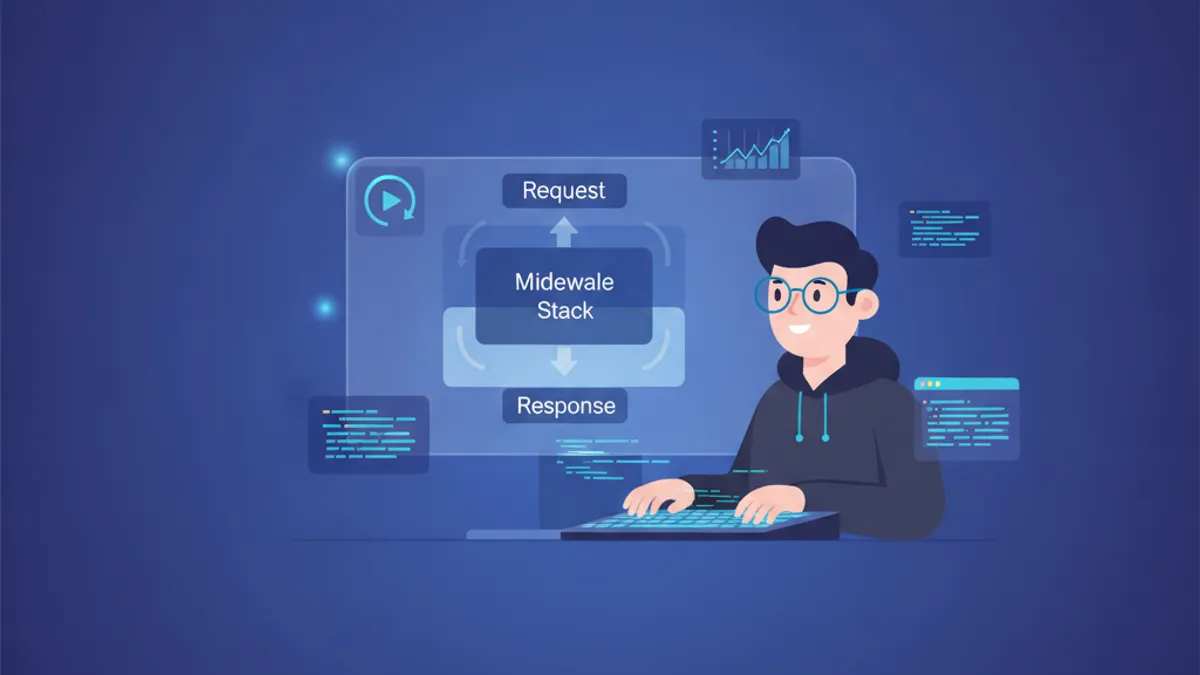
Django Middleware Nâng Cao 2026: Custom Middleware, Logging và Câu Hỏi Phỏng Vấn
Hướng dẫn toàn diện về Django middleware năm 2026 bao gồm cách tạo custom middleware, triển khai logging hiệu quả, và các câu hỏi phỏng vấn thường gặp dành cho lập trình viên Django cấp cao.
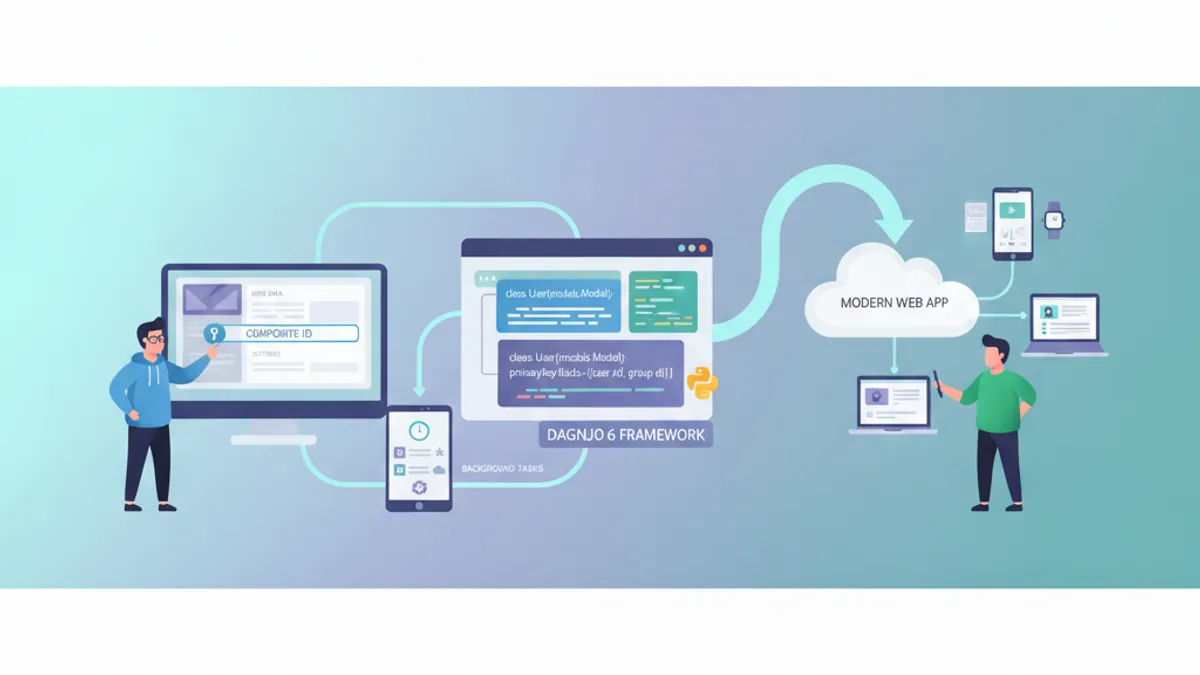
Django 6.0 năm 2026: Composite Primary Key, Background Task và Câu hỏi phỏng vấn
Hướng dẫn toàn diện về Django 6.0 bao gồm composite primary key, framework background task tích hợp, template partial, CSP middleware cùng ví dụ code thực tế và chuẩn bị phỏng vấn.
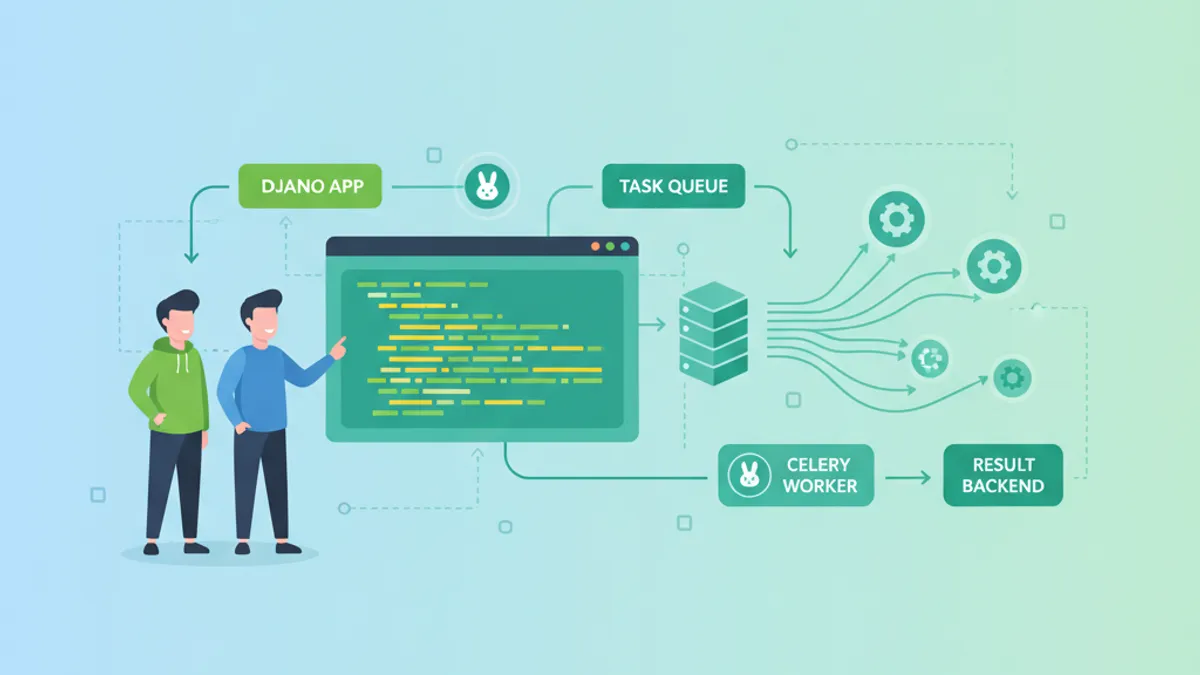
Django va Celery: Xu ly Tac vu Bat dong bo va Cau hoi Phong van 2026
Huong dan Django Celery day du voi ma code thuc te, task routing, lap lich Celery Beat, cau hinh production va cau hoi phong van ky thuat 2026.