Pytania na rozmowę Ruby on Rails: Top 25 w 2026
25 najczęściej zadawanych pytań na rozmowach Ruby on Rails. Architektura MVC, Active Record, migracje, testowanie RSpec, REST API ze szczegółowymi odpowiedziami i przykładami kodu.
Rozmowy kwalifikacyjne z Ruby on Rails sprawdzają znajomość najpopularniejszego frameworka Ruby, zrozumienie architektury MVC, ORM-a Active Record oraz umiejętność budowania solidnych aplikacji webowych zgodnie z filozofią "Convention over Configuration". Niniejszy przewodnik obejmuje 25 najczęściej zadawanych pytań, od podstaw Rails po zaawansowane wzorce produkcyjne.
Rekruterzy doceniają kandydatów rozumiejących filozofię Rails: "Convention over Configuration", DRY (Don't Repeat Yourself) i wzorce Rails Way. Wyjaśnienie, dlaczego Rails podejmuje określone decyzje architektoniczne, robi różnicę.
Podstawy Ruby on Rails
Pytanie 1: Wyjaśnij wzorzec MVC w Ruby on Rails
Wzorzec Model-View-Controller (MVC) stanowi rdzeń architektoniczny Rails. Rozdziela odpowiedzialności na trzy odrębne warstwy, co poprawia łatwość utrzymania i testowalność kodu.
# app/models/article.rb
# Model zarządza danymi i logiką biznesową
class Article < ApplicationRecord
  # Walidacje danych
  validates :title, presence: true, length: { minimum: 5 }
  validates :body, presence: true

  # Powiązania z innymi modelami
  belongs_to :author, class_name: 'User'
  has_many :comments, dependent: :destroy
  has_many :tags, through: :article_tags

  # Scope'y dla zapytań wielokrotnego użytku
  scope :published, -> { where(published: true) }
  scope :recent, -> { order(created_at: :desc).limit(10) }

  # Callbacki cyklu życia
  before_save :generate_slug

  private

  def generate_slug
    self.slug = title.parameterize if title_changed?
  end
end# app/controllers/articles_controller.rb
# Controller odbiera żądania i orkiestruje odpowiedź
class ArticlesController < ApplicationController
before_action :authenticate_user!, except: [:index, :show]
before_action :set_article, only: [:show, :edit, :update, :destroy]
def index
@articles = Article.published.recent.includes(:author)
end
def show
@comments = @article.comments.includes(:user)
end
def create
@article = current_user.articles.build(article_params)
if @article.save
redirect_to @article, notice: 'Artykuł został utworzony.'
else
render :new, status: :unprocessable_entity
end
end
private
def set_article
@article = Article.find(params[:id])
end
def article_params
params.require(:article).permit(:title, :body, :published, tag_ids: [])
end
end<%# app/views/articles/show.html.erb %>
<%# View wyświetla dane w formacie HTML %>
<article class="article-detail">
<header>
<h1><%= @article.title %></h1>
<p class="meta">
Autor: <%= @article.author.name %> •
<%= l @article.created_at, format: :long %>
</p>
</header>
<div class="content">
<%= simple_format @article.body %>
</div>
<%# Partial dla komentarzy %>
<%= render @comments %>
</article>Typowy przepływ: żądanie trafia do Routera, który kieruje je do odpowiedniego Controllera. Controller współpracuje z Modelem w celu pobrania lub modyfikacji danych, a następnie przekazuje te dane do View w celu wyrenderowania HTML.
Pytanie 2: Czym jest Active Record i jak działa ORM Rails?
Active Record to ORM (Object-Relational Mapping) Rails implementujący wzorzec Active Record. Każda klasa Modelu reprezentuje tabelę bazy danych, a każda instancja reprezentuje pojedynczy wiersz.
# app/models/user.rb
# Active Record automatycznie mapuje kolumny na atrybuty
class User < ApplicationRecord
  # Tabela 'users' jest powiązana automatycznie
  # Kolumny: id, email, name, created_at, updated_at

  has_secure_password # BCrypt dla hasła

  has_many :articles, foreign_key: :author_id
  has_one :profile, dependent: :destroy
  has_and_belongs_to_many :roles

  # Walidacje
  validates :email, presence: true,
                    uniqueness: { case_sensitive: false },
                    format: { with: URI::MailTo::EMAIL_REGEXP }

  # Callbacki
  before_save :normalize_email

  # Metody klasowe dla zapytań
  def self.admins
    joins(:roles).where(roles: { name: 'admin' })
  end

  private

  def normalize_email
    self.email = email.downcase.strip
  end
end# Przykłady zapytań Active Record
# Konsola Rails lub wnętrze serwisu
# Tworzenie
user = User.create!(email: 'dev@example.com', name: 'Alice', password: 'secret123')
# Odczyt z warunkami
active_users = User.where(active: true).order(:name)
user = User.find_by(email: 'dev@example.com')
# Zapytania łańcuchowe (lazy evaluation)
recent_admins = User.admins
.where('created_at > ?', 1.month.ago)
.includes(:profile)
.limit(10)
# Zapobieganie N+1 dzięki eager loading
articles = Article.includes(:author, :comments).published
# Aktualizacja
user.update!(name: 'Alice Martin')
# Transakcje
User.transaction do
user.debit_balance!(100)
recipient.credit_balance!(100)
Payment.create!(from: user, to: recipient, amount: 100)
endActive Record konwertuje metody Ruby na zoptymalizowane zapytania SQL. Metody takie jak where, joins, includes są leniwe: zapytanie wykonuje się dopiero przy iteracji lub wywołaniu to_a.
Pytanie 3: Wyjaśnij system migracji Rails
Migracje pozwalają wersjonować schemat bazy danych za pomocą Ruby. Są odwracalne i umożliwiają kontrolowaną ewolucję struktury danych.
# db/migrate/20260203100000_create_products.rb
# Migracja tworząca tabelę
class CreateProducts < ActiveRecord::Migration[7.1]
  def change
    create_table :products do |t|
      t.string :name, null: false
      t.text :description
      t.decimal :price, precision: 10, scale: 2, null: false
      t.integer :stock_quantity, default: 0
      t.references :category, null: false, foreign_key: true
      t.boolean :active, default: true

      t.timestamps # created_at i updated_at automatycznie
    end

    # Indeksy dla wydajności
    add_index :products, :name
    add_index :products, [:category_id, :active]
  end
end# db/migrate/20260203110000_add_slug_to_products.rb
# Migracja modyfikująca istniejącą tabelę
class AddSlugToProducts < ActiveRecord::Migration[7.1]
def change
add_column :products, :slug, :string
add_index :products, :slug, unique: true
# Wypełnienie istniejących slugów
reversible do |dir|
dir.up do
Product.find_each do |product|
product.update_column(:slug, product.name.parameterize)
end
end
end
# Ustawienie NOT NULL po wypełnieniu
change_column_null :products, :slug, false
end
end# Kluczowe komendy migracji
rails db:migrate # Wykonuje oczekujące migracje
rails db:rollback # Cofa ostatnią migrację
rails db:rollback STEP=3 # Cofa ostatnie 3 migracje
rails db:migrate:status # Pokazuje status migracji
rails db:seed # Uruchamia db/seeds.rb
rails db:reset # Drop, create, migrate, seedMigracje muszą być odwracalne. Metoda change jest inteligentna i potrafi automatycznie odwracać typowe operacje. Dla złożonych przypadków używać up i down osobno.
Zaawansowane Active Record
Pytanie 4: Jak optymalizować zapytania N+1 w Rails?
Problem N+1 występuje, gdy po początkowym zapytaniu następuje N dodatkowych zapytań do załadowania powiązań. Rails udostępnia kilka metod eager loading, aby rozwiązać ten problem.
# app/controllers/orders_controller.rb
class OrdersController < ApplicationController
  def index
    # ❌ PROBLEM N+1: 1 zapytanie + N zapytań na zamówienie
    # @orders = Order.all
    # W widoku: order.user.name generuje zapytanie na zamówienie

    # ✅ ROZWIĄZANIE z includes (eager loading)
    @orders = Order.includes(:user, :items)
                   .where(status: 'completed')
                   .order(created_at: :desc)
    # Generuje łącznie tylko 3 zapytania
  end

  def show
    # includes: ładuje powiązania osobno (2-3 zapytania)
    @order = Order.includes(items: :product).find(params[:id])

    # preload: wymusza osobne ładowanie
    @order = Order.preload(:items, :user).find(params[:id])

    # eager_load: wymusza LEFT OUTER JOIN (1 zapytanie)
    @order = Order.eager_load(:items).find(params[:id])
  end
end# app/models/order.rb
class Order < ApplicationRecord
belongs_to :user
has_many :items, class_name: 'OrderItem'
has_many :products, through: :items
# Scope z domyślnym includes
scope :with_details, -> { includes(:user, items: :product) }
# Counter cache, aby uniknąć zapytań COUNT
# Wymaga: add_column :users, :orders_count, :integer, default: 0
belongs_to :user, counter_cache: true
end# Wykrywanie N+1 z gemem Bullet (środowisko developerskie)
# config/environments/development.rb
config.after_initialize do
Bullet.enable = true
Bullet.alert = true
Bullet.bullet_logger = true
Bullet.rails_logger = true
end
# Bullet pokaże alerty, gdy:
# - Zostanie wykryte zapytanie N+1
# - Wystąpi niepotrzebne eager loading
# - Powinien zostać użyty counter cacheZasada: domyślnie używać includes (Rails wybiera optymalną strategię), preload gdy chcemy wymusić osobne zapytania, eager_load gdy filtrujemy po powiązaniach.
Pytanie 5: Wyjaśnij Scope'y i Query Objects w Rails
Scope'y enkapsulują wielokrotnego użytku warunki zapytań. Dla skomplikowanych zapytań Query Objects oferują lepszą organizację i testowalność.
# app/models/product.rb
class Product < ApplicationRecord
  # Proste scope'y
  scope :active, -> { where(active: true) }
  scope :in_stock, -> { where('stock_quantity > 0') }
  scope :featured, -> { where(featured: true) }

  # Scope'y z parametrami
  scope :cheaper_than, ->(price) { where('price < ?', price) }
  scope :in_category, ->(category) { where(category: category) }

  # Łączone scope'y
  scope :available, -> { active.in_stock }

  # Scope z joins
  scope :with_recent_orders, -> {
    joins(:order_items)
      .where('order_items.created_at > ?', 30.days.ago)
      .distinct
  }

  # Scope z podzapytaniem
  scope :bestsellers, -> {
    where(id: OrderItem.group(:product_id)
                       .order('COUNT(*) DESC')
                       .limit(10)
                       .select(:product_id))
  }
end# app/queries/products_search_query.rb
# Query Object dla złożonych wyszukiwań
class ProductsSearchQuery
def initialize(relation = Product.all)
@relation = relation
end
def call(params)
@relation = filter_by_category(params[:category])
@relation = filter_by_price_range(params[:min_price], params[:max_price])
@relation = filter_by_search(params[:q])
@relation = apply_sorting(params[:sort])
@relation
end
private
def filter_by_category(category)
return @relation if category.blank?
@relation.where(category_id: category)
end
def filter_by_price_range(min, max)
@relation = @relation.where('price >= ?', min) if min.present?
@relation = @relation.where('price <= ?', max) if max.present?
@relation
end
def filter_by_search(query)
return @relation if query.blank?
@relation.where('name ILIKE ? OR description ILIKE ?',
"%#{query}%", "%#{query}%")
end
def apply_sorting(sort)
case sort
when 'price_asc' then @relation.order(price: :asc)
when 'price_desc' then @relation.order(price: :desc)
when 'newest' then @relation.order(created_at: :desc)
else @relation.order(:name)
end
end
end
# Użycie w kontrolerze
@products = ProductsSearchQuery.new(Product.active).call(params)Scope'y są idealne dla prostych, wielokrotnego użytku warunków. Query Objects sprawdzają się przy złożonych wyszukiwaniach z wieloma opcjonalnymi filtrami i logiką kompozycji.
Gotowy na rozmowy o Ruby on Rails?
Ćwicz z naszymi interaktywnymi symulatorami, flashcards i testami technicznymi.
Routing i kontrolery
Pytanie 6: Jak działa routing RESTful w Rails?
Rails zachęca do tras RESTful, które mapują czasowniki HTTP na akcje CRUD. Router tłumaczy adresy URL na konkretne wywołania kontrolerów.
# config/routes.rb
Rails.application.routes.draw do
  # Standardowe trasy RESTful (7 akcji)
  resources :articles do
    # Trasy zagnieżdżone
    resources :comments, only: [:create, :destroy]

    # Trasy member (działają na instancji)
    member do
      post :publish
      delete :archive
    end

    # Trasy collection (działają na kolekcji)
    collection do
      get :drafts
      get :search
    end
  end

  # Trasy API z namespace
  namespace :api do
    namespace :v1 do
      resources :products, only: [:index, :show, :create, :update] do
        resources :reviews, shallow: true
      end
    end
  end

  # Trasa niestandardowa
  get 'dashboard', to: 'dashboard#index'

  # Ograniczenia tras
  constraints(SubdomainConstraint.new) do
    resources :admin_settings
  end

  # Trasa główna
  root 'home#index'
end# rails routes - Pokazuje wszystkie wygenerowane trasy
#
# Verb URI Pattern Controller#Action
# GET /articles articles#index
# POST /articles articles#create
# GET /articles/new articles#new
# GET /articles/:id/edit articles#edit
# GET /articles/:id articles#show
# PATCH /articles/:id articles#update
# DELETE /articles/:id articles#destroy
# POST /articles/:id/publish articles#publish
# GET /articles/drafts articles#draftsWygenerowane helpery tras (article_path(@article), new_article_path) pozwalają odwoływać się do URL-i w sposób dynamiczny i łatwy w utrzymaniu.
Pytanie 7: Wyjaśnij callbacki i filtry w kontrolerach
Callbacki (before_action, after_action, around_action) pozwalają wykonywać kod przed, po lub wokół akcji kontrolera.
# app/controllers/application_controller.rb
class ApplicationController < ActionController::Base
  # Ochrona CSRF włączona domyślnie
  protect_from_forgery with: :exception

  # Globalny callback uwierzytelniania
  before_action :authenticate_user!

  # Globalna obsługa błędów
  rescue_from ActiveRecord::RecordNotFound, with: :not_found
  rescue_from ActionController::ParameterMissing, with: :bad_request

  private

  def not_found
    render json: { error: 'Zasób nie został znaleziony' }, status: :not_found
  end

  def bad_request(exception)
    render json: { error: exception.message }, status: :bad_request
  end
end# app/controllers/admin/products_controller.rb
class Admin::ProductsController < ApplicationController
# Callbacki z opcjami
before_action :require_admin
before_action :set_product, only: [:show, :edit, :update, :destroy]
after_action :log_activity, only: [:create, :update, :destroy]
# Callback warunkowy
before_action :check_stock, only: [:update], if: :stock_changed?
def create
@product = Product.new(product_params)
if @product.save
redirect_to [:admin, @product], notice: 'Produkt utworzony.'
else
render :new, status: :unprocessable_entity
end
end
def update
if @product.update(product_params)
redirect_to [:admin, @product], notice: 'Produkt zaktualizowany.'
else
render :edit, status: :unprocessable_entity
end
end
private
def require_admin
redirect_to root_path unless current_user&.admin?
end
def set_product
@product = Product.find(params[:id])
end
def stock_changed?
params[:product][:stock_quantity].present?
end
def log_activity
ActivityLog.create!(
user: current_user,
action: action_name,
resource: @product
)
end
def product_params
params.require(:product).permit(:name, :price, :description, :stock_quantity)
end
endCallbacki wykonują się w kolejności deklaracji. Używać skip_before_action w podklasach, aby wyłączyć dziedziczone callbacki. Unikać callbacków z nadmiarem logiki biznesowej: preferować Service Objects.
Serwisy i architektura
Pytanie 8: Jak implementować Service Objects w Rails?
Service Objects enkapsulują skomplikowaną logikę biznesową, która nie należy ani do Modeli, ani do Kontrolerów. Poprawiają testowalność i przestrzegają zasady pojedynczej odpowiedzialności.
# app/services/order_processor.rb
# Service Object ze znormalizowanym interfejsem
class OrderProcessor
  def initialize(order, payment_method:)
    @order = order
    @payment_method = payment_method
  end

  def call
    return failure('Zamówienie już przetworzone') if @order.processed?

    ActiveRecord::Base.transaction do
      validate_stock!
      process_payment!
      update_inventory!
      send_confirmation!

      @order.update!(status: 'completed', processed_at: Time.current)
    end

    success(@order)
  rescue PaymentError => e
    failure("Płatność nie powiodła się: #{e.message}")
  rescue InsufficientStockError => e
    failure("Niewystarczający stan magazynowy: #{e.message}")
  end

  private

  def validate_stock!
    @order.items.each do |item|
      unless item.product.stock_quantity >= item.quantity
        raise InsufficientStockError, item.product.name
      end
    end
  end

  def process_payment!
    result = PaymentGateway.charge(
      amount: @order.total,
      method: @payment_method,
      description: "Zamówienie ##{@order.id}"
    )

    raise PaymentError, result.error unless result.success?
    @order.update!(payment_reference: result.transaction_id)
  end

  def update_inventory!
    @order.items.each do |item|
      item.product.decrement!(:stock_quantity, item.quantity)
    end
  end

  def send_confirmation!
    OrderMailer.confirmation(@order).deliver_later
  end

  def success(data)
    Result.new(success: true, data: data)
  end

  def failure(error)
    Result.new(success: false, error: error)
  end

  Result = Struct.new(:success, :data, :error, keyword_init: true) do
    def success? = success
    def failure? = !success
  end
end# app/controllers/orders_controller.rb
class OrdersController < ApplicationController
def create
@order = current_user.orders.build(order_params)
if @order.save
result = OrderProcessor.new(@order, payment_method: params[:payment_method]).call
if result.success?
redirect_to @order, notice: 'Zamówienie potwierdzone!'
else
@order.update!(status: 'payment_failed')
flash.now[:alert] = result.error
render :new, status: :unprocessable_entity
end
else
render :new, status: :unprocessable_entity
end
end
endWzorzec Service Object kieruje się prostą konwencją: jedna klasa, jedna odpowiedzialność, jedna publiczna metoda call. Zwracanie obiektu Result umożliwia czytelne obsługiwanie sukcesu i porażki.
Pytanie 9: Wyjaśnij Concerns w Rails
Concerns pozwalają wyodrębnić i współdzielić kod między Modelami lub Kontrolerami. Wykorzystują ActiveSupport::Concern, aby zapewnić czystą składnię włączania.
# app/models/concerns/sluggable.rb
# Concern wielokrotnego użytku do generowania slugów
module Sluggable
  extend ActiveSupport::Concern

  included do
    # Kod wykonywany przy włączeniu
    before_validation :generate_slug, if: :should_generate_slug?
    validates :slug, presence: true, uniqueness: true
  end

  # Metody klasowe
  class_methods do
    def find_by_slug!(slug)
      find_by!(slug: slug)
    end

    def sluggable_source(column = :title)
      @sluggable_source = column
    end

    def sluggable_source_column
      @sluggable_source || :title
    end
  end

  # Metody instancji
  def to_param
    slug
  end

  private

  def should_generate_slug?
    slug.blank? || send("#{self.class.sluggable_source_column}_changed?")
  end

  def generate_slug
    source = send(self.class.sluggable_source_column)
    return if source.blank?

    base_slug = source.parameterize
    self.slug = unique_slug(base_slug)
  end

  def unique_slug(base)
    slug = base
    counter = 1

    while self.class.where(slug: slug).where.not(id: id).exists?
      slug = "#{base}-#{counter}"
      counter += 1
    end

    slug
  end
end# app/models/article.rb
class Article < ApplicationRecord
include Sluggable
sluggable_source :title # Opcjonalne, :title domyślnie
end
# app/models/product.rb
class Product < ApplicationRecord
include Sluggable
sluggable_source :name
end# app/controllers/concerns/pagination.rb
# Concern dla kontrolerów
module Pagination
extend ActiveSupport::Concern
included do
helper_method :page_param, :per_page_param
end
private
def paginate(relation)
relation.page(page_param).per(per_page_param)
end
def page_param
params[:page]&.to_i || 1
end
def per_page_param
[params[:per_page]&.to_i || 25, 100].min
end
endConcerns są przydatne dla rzeczywiście współdzielonego kodu. Unikać tworzenia Concernów tylko po to, aby "skrócić" Model: ukrywa to złożoność, nie zmniejszając jej.
Testowanie z RSpec
Pytanie 10: Jak strukturyzować testy RSpec w Rails?
RSpec to standardowy framework testowy dla Rails. Dobra struktura testów obejmuje Model specs, Controller specs, Service specs i testy integracyjne.
# spec/models/user_spec.rb
require 'rails_helper'

RSpec.describe User, type: :model do
  # Fabryki z FactoryBot
  let(:user) { build(:user) }
  let(:admin) { build(:user, :admin) }

  describe 'validations' do
    it { is_expected.to validate_presence_of(:email) }
    it { is_expected.to validate_uniqueness_of(:email).case_insensitive }

    it 'sprawdza poprawność formatu email' do
      user.email = 'invalid'
      expect(user).not_to be_valid
      expect(user.errors[:email]).to include('is invalid')
    end
  end

  describe 'associations' do
    it { is_expected.to have_many(:articles).dependent(:destroy) }
    it { is_expected.to have_one(:profile) }
    it { is_expected.to belong_to(:organization).optional }
  end

  describe '#full_name' do
    it 'zwraca połączone imię i nazwisko' do
      user = build(:user, first_name: 'John', last_name: 'Doe')
      expect(user.full_name).to eq('John Doe')
    end

    it 'obsługuje brak nazwiska' do
      user = build(:user, first_name: 'John', last_name: nil)
      expect(user.full_name).to eq('John')
    end
  end

  describe '.active' do
    it 'zwraca tylko aktywnych użytkowników' do
      active = create(:user, active: true)
      inactive = create(:user, active: false)

      expect(User.active).to include(active)
      expect(User.active).not_to include(inactive)
    end
  end
end# spec/services/order_processor_spec.rb
require 'rails_helper'
RSpec.describe OrderProcessor do
let(:user) { create(:user) }
let(:product) { create(:product, stock_quantity: 10, price: 100) }
let(:order) { create(:order, user: user, items: [build(:order_item, product: product, quantity: 2)]) }
subject { described_class.new(order, payment_method: 'card') }
describe '#call' do
context 'gdy zamówienie jest poprawne' do
before do
allow(PaymentGateway).to receive(:charge).and_return(
OpenStruct.new(success?: true, transaction_id: 'txn_123')
)
end
it 'przetwarza zamówienie pomyślnie' do
result = subject.call
expect(result).to be_success
expect(order.reload.status).to eq('completed')
end
it 'zmniejsza stan magazynowy produktu' do
expect { subject.call }.to change { product.reload.stock_quantity }.by(-2)
end
it 'wysyła e-mail potwierdzający' do
expect { subject.call }
.to have_enqueued_mail(OrderMailer, :confirmation)
.with(order)
end
end
context 'gdy płatność nie powiedzie się' do
before do
allow(PaymentGateway).to receive(:charge).and_return(
OpenStruct.new(success?: false, error: 'Card declined')
)
end
it 'zwraca rezultat porażki' do
result = subject.call
expect(result).to be_failure
expect(result.error).to include('Card declined')
end
it 'nie aktualizuje statusu zamówienia' do
expect { subject.call }.not_to change { order.reload.status }
end
end
end
end# spec/requests/api/v1/products_spec.rb
require 'rails_helper'
RSpec.describe 'API V1 Products', type: :request do
let(:user) { create(:user) }
let(:headers) { { 'Authorization' => "Bearer #{user.api_token}" } }
describe 'GET /api/v1/products' do
let!(:products) { create_list(:product, 3, :active) }
it 'zwraca listę produktów' do
get '/api/v1/products', headers: headers
expect(response).to have_http_status(:ok)
expect(json_response['data'].size).to eq(3)
end
it 'filtruje po kategorii' do
category = create(:category)
categorized = create(:product, category: category)
get '/api/v1/products', params: { category_id: category.id }, headers: headers
expect(json_response['data'].map { |p| p['id'] }).to eq([categorized.id])
end
end
describe 'POST /api/v1/products' do
let(:valid_params) do
{ product: { name: 'Nowy Produkt', price: 99.99, category_id: create(:category).id } }
end
it 'tworzy nowy produkt' do
expect {
post '/api/v1/products', params: valid_params, headers: headers
}.to change(Product, :count).by(1)
expect(response).to have_http_status(:created)
end
end
endDobre praktyki: używać let dla danych, describe dla metod/kontekstów, context dla warunków oraz it dla konkretnych asercji. Jeden test powinien testować jedną rzecz.
Pytanie 11: Jak używać fabryk z FactoryBot?
FactoryBot pozwala tworzyć dane testowe deklaratywnie i z myślą o łatwym utrzymaniu. Fabryki zastępują statyczne fixtures.
# spec/factories/users.rb
FactoryBot.define do
  factory :user do
    # Sekwencje gwarantujące unikalność
    sequence(:email) { |n| "user#{n}@example.com" }
    first_name { Faker::Name.first_name }
    last_name { Faker::Name.last_name }
    password { 'password123' }
    confirmed_at { Time.current }

    # Traity dla wariantów
    trait :admin do
      role { 'admin' }
      after(:create) do |user|
        user.permissions.create!(name: 'admin_access')
      end
    end

    trait :unconfirmed do
      confirmed_at { nil }
    end

    trait :with_profile do
      after(:create) do |user|
        create(:profile, user: user)
      end
    end

    trait :with_articles do
      transient do
        articles_count { 3 }
      end

      after(:create) do |user, evaluator|
        create_list(:article, evaluator.articles_count, author: user)
      end
    end

    # Fabryka dziedziczona
    factory :admin_user do
      admin
      with_profile
    end
  end
end# spec/factories/orders.rb
FactoryBot.define do
factory :order do
user
status { 'pending' }
trait :with_items do
transient do
items_count { 2 }
end
after(:create) do |order, evaluator|
create_list(:order_item, evaluator.items_count, order: order)
order.recalculate_total!
end
end
trait :completed do
status { 'completed' }
processed_at { Time.current }
with_items
end
trait :high_value do
after(:create) do |order|
create(:order_item, order: order, quantity: 10, unit_price: 500)
order.recalculate_total!
end
end
end
end# Użycie w testach
RSpec.describe OrderProcessor do
# build: instancja niezapisana w bazie
let(:user) { build(:user) }
# create: zapisana w BD
let(:order) { create(:order, :with_items, user: user) }
# create_list: wiele instancji
let(:products) { create_list(:product, 5) }
# Łączenie traitów
let(:admin) { create(:user, :admin, :with_profile) }
# Nadpisanie atrybutów
let(:expensive_order) { create(:order, :with_items, items_count: 10) }
# build_stubbed: szybciej, dla testów jednostkowych
let(:stubbed_user) { build_stubbed(:user) }
endPreferować build lub build_stubbed zamiast create, gdy persistencja nie jest potrzebna: znacząco przyspiesza to testy.
Zadania w tle
Pytanie 12: Jak używać Active Job i Sidekiq w Rails?
Active Job zapewnia ujednolicony interfejs do zadań w tle, niezależnie od backendu (Sidekiq, Resque itp.). Sidekiq to popularny wybór ze względu na wydajność z Redisem.
# app/jobs/process_order_job.rb
class ProcessOrderJob < ApplicationJob
  queue_as :default

  # Konfiguracja ponawiania
  retry_on ActiveRecord::Deadlocked, wait: 5.seconds, attempts: 3
  retry_on Net::OpenTimeout, wait: :polynomially_longer, attempts: 10
  discard_on ActiveJob::DeserializationError

  # Opcje Sidekiq (gdy backend Sidekiq)
  sidekiq_options retry: 5, backtrace: true

  def perform(order_id)
    order = Order.find(order_id)

    OrderProcessor.new(order).call
  rescue ActiveRecord::RecordNotFound
    # Zamówienie usunięte między kolejkowaniem a wykonaniem
    Rails.logger.warn("Order #{order_id} not found, skipping job")
  end
end# app/jobs/batch_email_job.rb
class BatchEmailJob < ApplicationJob
queue_as :mailers
# Ograniczanie częstotliwości z Sidekiq Enterprise lub gemem throttle
sidekiq_options throttle: { threshold: 100, period: 1.minute }
def perform(user_ids, template_id)
template = EmailTemplate.find(template_id)
User.where(id: user_ids).find_each do |user|
UserMailer.custom_email(user, template).deliver_later
end
end
end# Kolejkowanie zadań
# Natychmiastowe
ProcessOrderJob.perform_later(order.id)
# Opóźnione
ProcessOrderJob.set(wait: 5.minutes).perform_later(order.id)
# O konkretnej godzinie
ProcessOrderJob.set(wait_until: Date.tomorrow.noon).perform_later(order.id)
# Konkretna kolejka
ProcessOrderJob.set(queue: :critical).perform_later(order.id)
# Synchronicznie (do testów lub debugowania)
ProcessOrderJob.perform_now(order.id)# config/sidekiq.yml
:concurrency: 10
:queues:
- [critical, 3] # Wysoki priorytet, waga 3
- [default, 2] # Średni priorytet, waga 2
- [mailers, 1] # Niski priorytet, waga 1
- [low, 1]
:schedule:
cleanup_job:
cron: '0 3 * * *' # Codziennie o 3:00
class: CleanupJobActive Job abstrahuje backend, ale dostęp do specyficznych funkcji (batches, rate limiting) zazwyczaj wymaga sprzężenia z wybranym backendem.
Gotowy na rozmowy o Ruby on Rails?
Ćwicz z naszymi interaktywnymi symulatorami, flashcards i testami technicznymi.
Tworzenie API
Pytanie 13: Jak zbudować RESTful API z Rails?
Rails ułatwia tworzenie API JSON dzięki kontrolerom API-only oraz serializatorom. Dobre API jest wersjonowane, udokumentowane i bezpieczne.
# app/controllers/api/v1/base_controller.rb
module Api
  module V1
    class BaseController < ActionController::API
      include ActionController::HttpAuthentication::Token::ControllerMethods

      before_action :authenticate_token!

      rescue_from ActiveRecord::RecordNotFound, with: :not_found
      rescue_from ActiveRecord::RecordInvalid, with: :unprocessable_entity
      rescue_from ActionController::ParameterMissing, with: :bad_request

      private

      def authenticate_token!
        authenticate_or_request_with_http_token do |token, options|
          @current_user = User.find_by(api_token: token)
        end
      end

      def current_user
        @current_user
      end

      def not_found(exception)
        render json: { error: 'Zasób nie znaleziony', details: exception.message },
               status: :not_found
      end

      def unprocessable_entity(exception)
        render json: { error: 'Walidacja nie powiodła się', details: exception.record.errors },
               status: :unprocessable_entity
      end

      def bad_request(exception)
        render json: { error: 'Nieprawidłowe żądanie', details: exception.message },
               status: :bad_request
      end
    end
  end
end# app/controllers/api/v1/products_controller.rb
module Api
module V1
class ProductsController < BaseController
before_action :set_product, only: [:show, :update, :destroy]
def index
@products = Product.active
.includes(:category)
.page(params[:page])
.per(params[:per_page] || 20)
render json: {
data: ProductSerializer.new(@products).serializable_hash,
meta: pagination_meta(@products)
}
end
def show
render json: ProductSerializer.new(@product, include: [:category, :reviews])
end
def create
@product = Product.new(product_params)
@product.save!
render json: ProductSerializer.new(@product), status: :created
end
def update
@product.update!(product_params)
render json: ProductSerializer.new(@product)
end
def destroy
@product.destroy!
head :no_content
end
private
def set_product
@product = Product.find(params[:id])
end
def product_params
params.require(:product).permit(:name, :description, :price, :category_id)
end
def pagination_meta(collection)
{
current_page: collection.current_page,
total_pages: collection.total_pages,
total_count: collection.total_count
}
end
end
end
end# app/serializers/product_serializer.rb
# Z gemem jsonapi-serializer
class ProductSerializer
include JSONAPI::Serializer
attributes :id, :name, :description, :price, :created_at
attribute :formatted_price do |product|
"$#{product.price.to_f.round(2)}"
end
belongs_to :category
has_many :reviews
link :self do |product|
Rails.application.routes.url_helpers.api_v1_product_url(product)
end
endDobre praktyki API: wersjonować przez namespace, używać odpowiednich kodów HTTP, paginować kolekcje i dostarczać czytelne komunikaty błędów.
Pytanie 14: Jak implementować uwierzytelnianie JWT w Rails?
JWT (JSON Web Tokens) to popularna metoda uwierzytelniania bezstanowego dla API. Token koduje tożsamość i ważność użytkownika.
# app/services/jwt_service.rb
class JwtService
  SECRET_KEY = Rails.application.credentials.secret_key_base
  ALGORITHM = 'HS256'.freeze

  class << self
    def encode(payload, exp = 24.hours.from_now)
      payload[:exp] = exp.to_i
      payload[:iat] = Time.current.to_i
      JWT.encode(payload, SECRET_KEY, ALGORITHM)
    end

    def decode(token)
      decoded = JWT.decode(token, SECRET_KEY, true, algorithm: ALGORITHM)
      HashWithIndifferentAccess.new(decoded.first)
    rescue JWT::ExpiredSignature
      raise AuthenticationError, 'Token wygasł'
    rescue JWT::DecodeError
      raise AuthenticationError, 'Nieprawidłowy token'
    end
  end
end# app/controllers/api/v1/auth_controller.rb
module Api
module V1
class AuthController < ActionController::API
def login
user = User.find_by(email: params[:email])
if user&.authenticate(params[:password])
token = JwtService.encode(user_id: user.id)
render json: {
token: token,
user: UserSerializer.new(user),
expires_at: 24.hours.from_now
}
else
render json: { error: 'Nieprawidłowe dane logowania' }, status: :unauthorized
end
end
def refresh
token = JwtService.encode(user_id: current_user.id)
render json: { token: token, expires_at: 24.hours.from_now }
end
end
end
end# app/controllers/concerns/jwt_authenticatable.rb
module JwtAuthenticatable
extend ActiveSupport::Concern
included do
before_action :authenticate_jwt!
end
private
def authenticate_jwt!
header = request.headers['Authorization']
token = header&.split(' ')&.last
raise AuthenticationError, 'Brak tokena' unless token
decoded = JwtService.decode(token)
@current_user = User.find(decoded[:user_id])
rescue AuthenticationError => e
render json: { error: e.message }, status: :unauthorized
rescue ActiveRecord::RecordNotFound
render json: { error: 'Użytkownik nie znaleziony' }, status: :unauthorized
end
def current_user
@current_user
end
endW produkcji rozważyć: refresh tokens, blacklisting tokenów po wylogowaniu i krótkie czasy wygaśnięcia. Gemy takie jak devise-jwt upraszczają implementację.
Cache i wydajność
Pytanie 15: Jak implementować cache w Rails?
Rails oferuje kilka poziomów cache: fragment caching, Russian Doll caching, low-level caching. Wybór zależy od przypadku użycia.
# config/environments/production.rb
config.action_controller.perform_caching = true
config.cache_store = :redis_cache_store, {
  url: ENV['REDIS_URL'],
  namespace: 'myapp:cache',
  expires_in: 1.day,
  race_condition_ttl: 10.seconds
}<%# app/views/products/index.html.erb %>
<%# Fragment caching z automatycznym kluczem cache %>
<% @products.each do |product| %>
<%# Cache oparty na updated_at produktu %>
<% cache product do %>
<%= render product %>
<% end %>
<% end %>
<%# Russian Doll caching - zagnieżdżony cache %>
<% cache ['v1', @category] do %>
<h2><%= @category.name %></h2>
<% @category.products.each do |product| %>
<% cache ['v1', product] do %>
<%= render product %>
<% end %>
<% end %>
<% end %>
<%# Cache warunkowy %>
<% cache_if current_user.nil?, @product do %>
<%= render @product %>
<% end %># app/models/product.rb
class Product < ApplicationRecord
# Touch rodzica, aby unieważnić Russian Doll cache
belongs_to :category, touch: true
# Niestandardowy klucz cache
def cache_key_with_version
"#{super}/#{reviews.maximum(:updated_at)&.to_i}"
end
end# Low-level caching w serwisach
class DashboardStatsService
def call
Rails.cache.fetch('dashboard:stats', expires_in: 15.minutes) do
{
total_users: User.count,
active_users: User.where('last_sign_in_at > ?', 30.days.ago).count,
total_orders: Order.completed.count,
revenue_mtd: Order.completed.where(created_at: Time.current.beginning_of_month..).sum(:total)
}
end
end
end
# Cache z ochroną przed wyścigami
Rails.cache.fetch('popular_products', expires_in: 1.hour, race_condition_ttl: 10.seconds) do
Product.bestsellers.limit(10).to_a
end
# Jawne unieważnianie
Rails.cache.delete('dashboard:stats')
Rails.cache.delete_matched('products:*')Russian Doll caching jest skuteczny, bo regenerowane są tylko zmodyfikowane fragmenty. Używać touch: true na powiązaniach, aby propagować unieważnienie.
Pytanie 16: Jak optymalizować wydajność aplikacji Rails?
Optymalizacja Rails obejmuje wiele aspektów: zapytania DB, cache, assety i architekturę. Niezbędne jest metodyczne podejście wraz z monitoringiem.
# Optymalizacja bazy danych
# config/database.yml
production:
  pool: <%= ENV.fetch("RAILS_MAX_THREADS") { 5 } %>
  prepared_statements: true
  advisory_locks: true

# app/models/order.rb
class Order < ApplicationRecord
  # Indeksy złożone dla częstych zapytań
  # add_index :orders, [:user_id, :status, :created_at]

  # Wybieranie tylko potrzebnych kolumn
  scope :summary, -> { select(:id, :status, :total, :created_at) }

  # Przetwarzanie wsadowe dla dużych wolumenów
  def self.process_pending
    pending.find_each(batch_size: 1000) do |order|
      ProcessOrderJob.perform_later(order.id)
    end
  end

  # Unikanie powtarzających się obliczeń
  def self.revenue_by_month
    completed
      .group("DATE_TRUNC('month', created_at)")
      .sum(:total)
  end
end# Optymalizacja pamięci
# config/puma.rb
workers ENV.fetch("WEB_CONCURRENCY") { 2 }
threads_count = ENV.fetch("RAILS_MAX_THREADS") { 5 }
threads threads_count, threads_count
preload_app!
before_fork do
ActiveRecord::Base.connection_pool.disconnect!
end
on_worker_boot do
ActiveRecord::Base.establish_connection
end# Profilowanie z rack-mini-profiler
# Gemfile
group :development do
gem 'rack-mini-profiler'
gem 'memory_profiler'
gem 'stackprof'
end
# config/initializers/mini_profiler.rb
if defined?(Rack::MiniProfiler)
Rack::MiniProfiler.config.position = 'bottom-right'
Rack::MiniProfiler.config.start_hidden = true
end# Lazy loading i paginacja
class ProductsController < ApplicationController
def index
@products = Product.active
.includes(:category, :primary_image)
.page(params[:page])
.per(24)
# Prefetch dla następnej strony
if @products.next_page
Rails.cache.fetch("products:page:#{@products.next_page}", expires_in: 5.minutes) do
Product.active.page(@products.next_page).per(24).to_a
end
end
end
endNiezbędne narzędzia: rack-mini-profiler do profilowania, bullet do wykrywania N+1, New Relic lub Scout do monitoringu produkcyjnego.
Bezpieczeństwo
Pytanie 17: Jakie są najlepsze praktyki bezpieczeństwa w Rails?
Rails zawiera domyślne zabezpieczenia przed typowymi podatnościami. Zrozumienie i właściwe skonfigurowanie tych zabezpieczeń jest kluczowe.
# Ochrona CSRF
# app/controllers/application_controller.rb
class ApplicationController < ActionController::Base
  # Włączona domyślnie, rzuca wyjątek przy nieprawidłowym tokenie
  protect_from_forgery with: :exception

  # Dla API używać :null_session
  # protect_from_forgery with: :null_session
end

# W widokach token jest automatycznie dołączany do formularzy
# <%= form_with ... %> zawiera authenticity_token

# Dla żądań AJAX
# Dodać nagłówek X-CSRF-Token z wartością z csrf_meta_tags# Zapobieganie SQL Injection
# ✅ Parametry interpolowane są automatycznie escape'owane
User.where('email = ?', params[:email])
User.where(email: params[:email])
# ❌ NIEBEZPIECZEŃSTWO - bezpośrednia interpolacja
User.where("email = '#{params[:email]}'")
# ✅ Dla dynamicznych klauzul ORDER
ALLOWED_SORTS = %w[name created_at price].freeze
sort_column = ALLOWED_SORTS.include?(params[:sort]) ? params[:sort] : 'name'
Product.order(sort_column)# Ochrona XSS
# Rails automatycznie escape'uje HTML w widokach
# ✅ Automatyczne escape'owanie
<%= user.name %>
# ❌ Niebezpieczne - treść bez escape
<%== user.bio %>
<%= raw user.bio %>
<%= user.bio.html_safe %>
# ✅ Dla bezpiecznego HTML użyj sanitize
<%= sanitize user.bio, tags: %w[p br strong em] %># Strong Parameters
class UsersController < ApplicationController
def update
@user.update!(user_params)
end
private
def user_params
# Jawna whitelist dozwolonych atrybutów
params.require(:user).permit(:name, :email, :avatar)
# Tylko dla administratorów
if current_user.admin?
params.require(:user).permit(:name, :email, :role, :active)
else
params.require(:user).permit(:name, :email)
end
end
end# Nagłówki bezpieczeństwa
# config/initializers/secure_headers.rb
Rails.application.config.action_dispatch.default_headers = {
'X-Frame-Options' => 'SAMEORIGIN',
'X-XSS-Protection' => '1; mode=block',
'X-Content-Type-Options' => 'nosniff',
'X-Download-Options' => 'noopen',
'X-Permitted-Cross-Domain-Policies' => 'none',
'Referrer-Policy' => 'strict-origin-when-cross-origin'
}
# Content Security Policy
Rails.application.config.content_security_policy do |policy|
policy.default_src :self
policy.script_src :self
policy.style_src :self, :unsafe_inline
policy.img_src :self, :data, 'https:'
endRegularnie audytować z brakeman (statyczna analiza bezpieczeństwa) i utrzymywać aktualne gemy z bundle audit.
Pytanie 18: Jak obsługiwać uwierzytelnianie i autoryzację w Rails?
Uwierzytelnianie weryfikuje tożsamość, autoryzacja kontroluje uprawnienia. Devise zarządza autoryzacją wstępną, Pundit lub CanCanCan zarządzają autoryzacją.
# Konfiguracja Devise
# app/models/user.rb
class User < ApplicationRecord
  devise :database_authenticatable, :registerable,
         :recoverable, :rememberable, :validatable,
         :confirmable, :lockable, :trackable

  enum role: { user: 0, moderator: 1, admin: 2 }

  def admin?
    role == 'admin'
  end
end# Polityki Pundit
# app/policies/article_policy.rb
class ArticlePolicy < ApplicationPolicy
def index?
true
end
def show?
record.published? || owner_or_admin?
end
def create?
user.present?
end
def update?
owner_or_admin?
end
def destroy?
owner_or_admin?
end
def publish?
user&.admin? || user&.moderator?
end
# Scope dla kolekcji
class Scope < Scope
def resolve
if user&.admin?
scope.all
elsif user
scope.where(published: true).or(scope.where(author: user))
else
scope.where(published: true)
end
end
end
private
def owner_or_admin?
user&.admin? || record.author == user
end
end# Kontroler z Pundit
class ArticlesController < ApplicationController
include Pundit::Authorization
after_action :verify_authorized, except: :index
after_action :verify_policy_scoped, only: :index
def index
@articles = policy_scope(Article).includes(:author).page(params[:page])
end
def show
@article = Article.find(params[:id])
authorize @article
end
def update
@article = Article.find(params[:id])
authorize @article
if @article.update(article_params)
redirect_to @article, notice: 'Artykuł zaktualizowany.'
else
render :edit, status: :unprocessable_entity
end
end
def publish
@article = Article.find(params[:id])
authorize @article
@article.update!(published: true, published_at: Time.current)
redirect_to @article, notice: 'Artykuł opublikowany.'
end
rescue_from Pundit::NotAuthorizedError, with: :user_not_authorized
private
def user_not_authorized
flash[:alert] = "Brak uprawnień do wykonania tej akcji."
redirect_back(fallback_location: root_path)
end
endPundit jest bardziej jawny i łatwiejszy do testowania niż CanCanCan. Każda akcja ma odpowiednią metodę polityki, a scope'y automatycznie filtrują kolekcje.
Zaawansowany Rails
Pytanie 19: Wyjaśnij wzorzec Repository w Rails
Wzorzec Repository izoluje logikę dostępu do danych od reszty aplikacji. Choć Rails używa Active Record (innego wzorca), Repository może być przydatny w złożonych przypadkach.
# app/repositories/base_repository.rb
class BaseRepository
  def initialize(model_class)
    @model_class = model_class
  end

  def all
    @model_class.all
  end

  def find(id)
    @model_class.find(id)
  end

  def find_by(attributes)
    @model_class.find_by(attributes)
  end

  def create(attributes)
    @model_class.create(attributes)
  end

  def update(record, attributes)
    record.update(attributes)
  end

  def delete(record)
    record.destroy
  end
end# app/repositories/product_repository.rb
class ProductRepository < BaseRepository
def initialize
super(Product)
end
def active
@model_class.where(active: true)
end
def in_category(category_id)
@model_class.where(category_id: category_id)
end
def search(query)
@model_class.where('name ILIKE ? OR description ILIKE ?',
"%#{query}%", "%#{query}%")
end
def with_stock
@model_class.where('stock_quantity > 0')
end
def bestsellers(limit: 10)
@model_class
.joins(:order_items)
.group(:id)
.order('COUNT(order_items.id) DESC')
.limit(limit)
end
def for_homepage
active
.with_stock
.includes(:category, :primary_image)
.order(featured: :desc, created_at: :desc)
.limit(12)
end
end# Użycie w serwisie
class ProductSearchService
def initialize(repository: ProductRepository.new)
@repository = repository
end
def call(params)
products = @repository.active
products = products.in_category(params[:category]) if params[:category]
products = products.search(params[:query]) if params[:query].present?
products = products.with_stock if params[:in_stock]
products
end
end
# Ułatwia testowanie z mockami
RSpec.describe ProductSearchService do
let(:repository) { instance_double(ProductRepository) }
let(:service) { described_class.new(repository: repository) }
it 'filtruje po kategorii' do
products = double('products')
allow(repository).to receive(:active).and_return(products)
allow(products).to receive(:in_category).with(1).and_return(products)
service.call(category: 1)
expect(products).to have_received(:in_category).with(1)
end
endRepository jest opcjonalny w Rails, ponieważ Active Record to już doskonały wzorzec. Stosować go dla złożonych zapytań lub gdy izolacja warstwy storage jest istotna.
Pytanie 20: Jak implementować wzorzec CQRS w Rails?
CQRS (Command Query Responsibility Segregation) rozdziela operacje odczytu i zapisu. W Rails przekłada się to na osobne klasy dla query i command.
# app/commands/base_command.rb
class BaseCommand
  include ActiveModel::Validations

  def self.call(*args)
    new(*args).call
  end

  def call
    return failure(errors) unless valid?

    execute
  end

  private

  def execute
    raise NotImplementedError
  end

  def success(data = nil)
    CommandResult.success(data)
  end

  def failure(errors)
    CommandResult.failure(errors)
  end
end

CommandResult = Struct.new(:success, :data, :errors, keyword_init: true) do
  def success? = success
  def failure? = !success

  def self.success(data)
    new(success: true, data: data, errors: [])
  end

  def self.failure(errors)
    new(success: false, data: nil, errors: Array(errors))
  end
end# app/commands/orders/create_order_command.rb
module Orders
class CreateOrderCommand < BaseCommand
attr_reader :user, :items, :shipping_address
validates :user, presence: true
validates :items, presence: true
validate :validate_items_availability
def initialize(user:, items:, shipping_address:)
@user = user
@items = items
@shipping_address = shipping_address
end
private
def execute
order = nil
ActiveRecord::Base.transaction do
order = Order.create!(
user: user,
shipping_address: shipping_address,
status: 'pending'
)
items.each do |item|
order.items.create!(
product_id: item[:product_id],
quantity: item[:quantity],
unit_price: Product.find(item[:product_id]).price
)
end
order.calculate_total!
end
OrderCreatedEvent.broadcast(order)
success(order)
rescue ActiveRecord::RecordInvalid => e
failure(e.message)
end
def validate_items_availability
items.each do |item|
product = Product.find_by(id: item[:product_id])
unless product&.stock_quantity&.>= item[:quantity]
errors.add(:items, "Produkt #{item[:product_id]} niedostępny")
end
end
end
end
end# app/queries/orders/user_orders_query.rb
module Orders
class UserOrdersQuery
def initialize(user, params = {})
@user = user
@params = params
end
def call
orders = @user.orders.includes(:items, items: :product)
orders = apply_status_filter(orders)
orders = apply_date_filter(orders)
orders = apply_sorting(orders)
orders.page(@params[:page]).per(@params[:per_page] || 20)
end
private
def apply_status_filter(orders)
return orders unless @params[:status]
orders.where(status: @params[:status])
end
def apply_date_filter(orders)
orders = orders.where('created_at >= ?', @params[:from]) if @params[:from]
orders = orders.where('created_at <= ?', @params[:to]) if @params[:to]
orders
end
def apply_sorting(orders)
case @params[:sort]
when 'oldest' then orders.order(created_at: :asc)
when 'total_desc' then orders.order(total: :desc)
else orders.order(created_at: :desc)
end
end
end
end# Kontroler z CQRS
class OrdersController < ApplicationController
def index
@orders = Orders::UserOrdersQuery.new(current_user, filter_params).call
end
def create
result = Orders::CreateOrderCommand.call(
user: current_user,
items: order_params[:items],
shipping_address: order_params[:shipping_address]
)
if result.success?
redirect_to result.data, notice: 'Zamówienie utworzone!'
else
flash.now[:alert] = result.errors.join(', ')
render :new, status: :unprocessable_entity
end
end
endCQRS sprawdza się w złożonych aplikacjach z asymetrycznymi potrzebami odczytu/zapisu. Dla prostego CRUD to nadinżynieria.
Pytanie 21: Jak obsługiwać WebSockety z Action Cable?
Action Cable integruje WebSockety w Rails dla dwukierunkowej komunikacji w czasie rzeczywistym. Wykorzystuje Redis do synchronizacji między serwerami.
# app/channels/application_cable/connection.rb
module ApplicationCable
  class Connection < ActionCable::Connection::Base
    identified_by :current_user

    def connect
      self.current_user = find_verified_user
    end

    private

    def find_verified_user
      # Przez cookie sesji
      if verified_user = User.find_by(id: cookies.encrypted[:user_id])
        verified_user
      # Przez JWT dla API
      elsif verified_user = verify_jwt_token
        verified_user
      else
        reject_unauthorized_connection
      end
    end

    def verify_jwt_token
      token = request.params[:token]
      return nil unless token

      decoded = JwtService.decode(token)
      User.find(decoded[:user_id])
    rescue
      nil
    end
  end
end# app/channels/chat_channel.rb
class ChatChannel < ApplicationCable::Channel
def subscribed
@room = ChatRoom.find(params[:room_id])
# Sprawdzenie uprawnień
unless @room.accessible_by?(current_user)
reject
return
end
stream_for @room
# Powiadomienie innych o obecności
broadcast_presence(:joined)
end
def unsubscribed
broadcast_presence(:left) if @room
end
def send_message(data)
message = @room.messages.create!(
user: current_user,
content: data['content']
)
# Rozgłoszenie do wszystkich subskrybentów
ChatChannel.broadcast_to(@room, {
type: 'message',
message: MessageSerializer.new(message).as_json
})
end
def typing
ChatChannel.broadcast_to(@room, {
type: 'typing',
user: current_user.name
})
end
private
def broadcast_presence(action)
ChatChannel.broadcast_to(@room, {
type: 'presence',
action: action,
user: current_user.name,
online_count: @room.online_users_count
})
end
endimport consumer from "./consumer"
const chatChannel = consumer.subscriptions.create(
{ channel: "ChatChannel", room_id: roomId },
{
connected() {
console.log("Connected to chat")
},
disconnected() {
console.log("Disconnected from chat")
},
received(data) {
switch(data.type) {
case 'message':
this.appendMessage(data.message)
break
case 'typing':
this.showTypingIndicator(data.user)
break
case 'presence':
this.updatePresence(data)
break
}
},
sendMessage(content) {
this.perform('send_message', { content: content })
},
notifyTyping() {
this.perform('typing')
}
}
)Action Cable automatycznie obsługuje rekonekcje i synchronizację. W produkcji konfigurować Redis jako adapter i skalować zgodnie z liczbą jednoczesnych połączeń.
Pytanie 22: Jak implementować multi-tenancy w Rails?
Multi-tenancy pozwala aplikacji obsługiwać wielu odizolowanych klientów (tenantów). Trzy główne podejścia: na poziomie bazy, schematu lub wiersza.
# Multitenancy na poziomie wiersza z ActsAsTenant lub ręcznie
# app/models/concerns/tenant_scoped.rb
module TenantScoped
  extend ActiveSupport::Concern

  included do
    belongs_to :tenant

    # Domyślny scope na bieżącego tenanta
    default_scope -> { where(tenant: Current.tenant) if Current.tenant }

    # Walidacja tenanta
    before_validation :set_tenant, on: :create
  end

  private

  def set_tenant
    self.tenant ||= Current.tenant
  end
end

# app/models/current.rb
class Current < ActiveSupport::CurrentAttributes
  attribute :tenant, :user
end# app/controllers/application_controller.rb
class ApplicationController < ActionController::Base
before_action :set_current_tenant
private
def set_current_tenant
Current.tenant = resolve_tenant
Current.user = current_user
end
def resolve_tenant
# Przez subdomenę
if request.subdomain.present? && request.subdomain != 'www'
Tenant.find_by!(subdomain: request.subdomain)
# Przez nagłówek (dla API)
elsif request.headers['X-Tenant-ID'].present?
Tenant.find(request.headers['X-Tenant-ID'])
# Przez użytkownika
elsif current_user
current_user.tenant
end
rescue ActiveRecord::RecordNotFound
redirect_to root_url(subdomain: 'www'), alert: 'Tenant nie znaleziony'
end
end# app/models/project.rb
class Project < ApplicationRecord
include TenantScoped
has_many :tasks
belongs_to :owner, class_name: 'User'
end
# app/models/user.rb
class User < ApplicationRecord
include TenantScoped
has_many :projects, foreign_key: :owner_id
# Administratorzy mogą należeć do wielu tenantów
has_many :tenant_memberships
has_many :accessible_tenants, through: :tenant_memberships, source: :tenant
end# Na poziomie schematu z gemem Apartment (PostgreSQL)
# config/initializers/apartment.rb
Apartment.configure do |config|
config.excluded_models = %w[Tenant User]
config.tenant_names = -> { Tenant.pluck(:subdomain) }
end
# Użycie
Apartment::Tenant.switch('acme') do
# Wszystkie zapytania w tym bloku używają schematu 'acme'
Project.all # SELECT * FROM acme.projects
endPoziom wiersza jest najprostszy, ale wymaga stałej uwagi pod kątem wycieków. Poziom schematu zapewnia lepszą izolację, ale komplikuje migracje. Wybór zależny od wymagań bezpieczeństwa i skalowalności.
Pytanie 23: Jak skonfigurować architekturę mikroserwisową z Rails?
Rails może służyć jako podstawa architektury mikroserwisowej z komunikacją przez HTTP/gRPC lub kolejki wiadomości. Kluczem jest właściwe zdefiniowanie granic.
# Klient serwisu HTTP
# app/services/payment_service_client.rb
class PaymentServiceClient
  include HTTParty

  base_uri ENV.fetch('PAYMENT_SERVICE_URL')

  def initialize
    @options = {
      headers: {
        'Content-Type' => 'application/json',
        'X-Service-Token' => ENV.fetch('SERVICE_TOKEN')
      },
      timeout: 10
    }
  end

  def create_charge(amount:, currency:, source:, metadata: {})
    response = self.class.post('/charges', @options.merge(
      body: { amount: amount, currency: currency, source: source, metadata: metadata }.to_json
    ))

    handle_response(response)
  end

  def get_charge(charge_id)
    response = self.class.get("/charges/#{charge_id}", @options)
    handle_response(response)
  end

  private

  def handle_response(response)
    case response.code
    when 200..299
      ServiceResult.success(response.parsed_response)
    when 400..499
      ServiceResult.failure(response.parsed_response['error'], code: response.code)
    else
      ServiceResult.failure('Serwis niedostępny', code: response.code)
    end
  rescue Net::OpenTimeout, Net::ReadTimeout
    ServiceResult.failure('Timeout serwisu')
  end
end# Komunikacja sterowana zdarzeniami z Sidekiq/Redis
# app/events/order_events.rb
module OrderEvents
class Created
include Wisper::Publisher
def call(order)
broadcast(:order_created, order)
end
end
end
# app/listeners/inventory_listener.rb
class InventoryListener
def order_created(order)
order.items.each do |item|
InventoryServiceClient.new.reserve_stock(
product_id: item.product_id,
quantity: item.quantity,
reference: order.id
)
end
end
end
# config/initializers/wisper.rb
Wisper.subscribe(InventoryListener.new, async: true)
Wisper.subscribe(NotificationListener.new, async: true)# Wzorzec API Gateway
# app/controllers/api/v1/gateway_controller.rb
module Api
module V1
class GatewayController < BaseController
# Agregacja wielu serwisów
def dashboard
results = Parallel.map([:orders, :inventory, :analytics], in_threads: 3) do |service|
fetch_from_service(service)
end
render json: {
orders: results[0],
inventory: results[1],
analytics: results[2]
}
end
private
def fetch_from_service(service)
case service
when :orders
OrderServiceClient.new.recent_orders(limit: 5)
when :inventory
InventoryServiceClient.new.low_stock_alerts
when :analytics
AnalyticsServiceClient.new.daily_summary
end
rescue => e
{ error: "#{service} niedostępny", message: e.message }
end
end
end
endDla mikroserwisów Rails: definiować jasne kontrakty API (OpenAPI), implementować circuit breakers (gem circuitbox) i używać tracingu rozproszonego (gem opentelemetry).
Pytanie 24: Jak wdrożyć aplikację Rails na produkcję?
Nowoczesne wdrożenie Rails wykorzystuje kontenery lub PaaS. Solidna konfiguracja produkcyjna obejmuje assety, bazę danych i monitoring.
# config/environments/production.rb
Rails.application.configure do
  config.cache_classes = true
  config.eager_load = true
  config.consider_all_requests_local = false

  # Assety
  config.public_file_server.enabled = ENV['RAILS_SERVE_STATIC_FILES'].present?
  config.assets.compile = false
  config.assets.digest = true

  # Logging
  config.log_level = ENV.fetch('LOG_LEVEL', 'info').to_sym
  config.log_tags = [:request_id]
  config.logger = ActiveSupport::Logger.new(STDOUT)
    .tap  { |logger| logger.formatter = Logger::Formatter.new }
    .then { |logger| ActiveSupport::TaggedLogging.new(logger) }

  # Cache
  config.cache_store = :redis_cache_store, {
    url: ENV['REDIS_URL'],
    expires_in: 1.day
  }

  # Wymuszenie SSL
  config.force_ssl = true
  config.ssl_options = { hsts: { subdomains: true } }

  # Action Mailer
  config.action_mailer.delivery_method = :smtp
  config.action_mailer.smtp_settings = {
    address: ENV['SMTP_HOST'],
    port: ENV['SMTP_PORT'],
    user_name: ENV['SMTP_USER'],
    password: ENV['SMTP_PASSWORD'],
    authentication: :plain,
    enable_starttls_auto: true
  }
end# Dockerfile
FROM ruby:3.3-alpine AS builder
RUN apk add --no-cache build-base postgresql-dev nodejs yarn
WORKDIR /app
COPY Gemfile Gemfile.lock ./
RUN bundle config set --local deployment true && \
bundle config set --local without 'development test' && \
bundle install
COPY package.json yarn.lock ./
RUN yarn install --frozen-lockfile
COPY . .
RUN bundle exec rails assets:precompile
# Obraz produkcyjny
FROM ruby:3.3-alpine
RUN apk add --no-cache postgresql-client tzdata
WORKDIR /app
COPY /app /app
COPY /usr/local/bundle /usr/local/bundle
ENV RAILS_ENV=production
ENV RAILS_LOG_TO_STDOUT=true
EXPOSE 3000
CMD ["bundle", "exec", "puma", "-C", "config/puma.rb"]# docker-compose.production.yml
version: '3.8'
services:
web:
build: .
environment:
- DATABASE_URL=postgres://user:pass@db/app_production
- REDIS_URL=redis://redis:6379/0
- SECRET_KEY_BASE=${SECRET_KEY_BASE}
depends_on:
- db
- redis
deploy:
replicas: 3
resources:
limits:
memory: 512M
sidekiq:
build: .
command: bundle exec sidekiq
environment:
- DATABASE_URL=postgres://user:pass@db/app_production
- REDIS_URL=redis://redis:6379/0
depends_on:
- db
- redis
deploy:
replicas: 2
db:
image: postgres:15-alpine
volumes:
- postgres_data:/var/lib/postgresql/data
environment:
- POSTGRES_PASSWORD=${DB_PASSWORD}
redis:
image: redis:7-alpine
volumes:
- redis_data:/data
volumes:
postgres_data:
redis_data:Lista kontrolna produkcji: obowiązkowy SSL, sekrety przez ENV, health checki, automatyczne backupy BD, monitoring (APM + logi + metryki) i skonfigurowane alerty.
Pytanie 25: Jakie są nowości w Rails 7+, które warto znać?
Rails 7+ wprowadza istotne zmiany: domyślne Hotwire, import maps, ulepszone szyfrowane credentials i wiele optymalizacji.
# Hotwire - Turbo Frames
# app/views/articles/index.html.erb
<%= turbo_frame_tag "articles" do %>
  <% @articles.each do |article| %>
    <%= turbo_frame_tag dom_id(article) do %>
      <%= render article %>
    <% end %>
  <% end %>

  <%= link_to "Załaduj więcej", articles_path(page: @page + 1),
              data: { turbo_frame: "articles" } %>
<% end %>

# Turbo Streams dla aktualizacji w czasie rzeczywistym
# app/controllers/comments_controller.rb
def create
  @comment = @article.comments.create!(comment_params.merge(user: current_user))

  respond_to do |format|
    format.turbo_stream
    format.html { redirect_to @article }
  end
end

# app/views/comments/create.turbo_stream.erb
<%= turbo_stream.append "comments", @comment %>
<%= turbo_stream.update "comments_count", @article.comments.count %>
<%= turbo_stream.replace "comment_form", partial: "comments/form", locals: { comment: Comment.new } %># Kontrolery Stimulus
# app/javascript/controllers/search_controller.js
import { Controller } from "@hotwired/stimulus"
import { debounce } from "lodash-es"
export default class extends Controller {
static targets = ["input", "results"]
static values = { url: String }
connect() {
this.search = debounce(this.search.bind(this), 300)
}
async search() {
const query = this.inputTarget.value
if (query.length < 2) return
const response = await fetch(`${this.urlValue}?q=${encodeURIComponent(query)}`)
this.resultsTarget.innerHTML = await response.text()
}
}# Import Maps (bez bundlera JavaScript)
# config/importmap.rb
pin "application"
pin "@hotwired/turbo-rails", to: "turbo.min.js"
pin "@hotwired/stimulus", to: "stimulus.min.js"
pin "@hotwired/stimulus-loading", to: "stimulus-loading.js"
pin_all_from "app/javascript/controllers", under: "controllers"
# Pin z CDN
pin "lodash-es", to: "https://ga.jspm.io/npm:lodash-es@4.17.21/lodash.js"# Active Record Encryption (Rails 7+)
# app/models/user.rb
class User < ApplicationRecord
encrypts :email, deterministic: true # Umożliwia wyszukiwanie
encrypts :phone_number # Niedeterministyczne domyślnie
encrypts :ssn, deterministic: true, downcase: true
end
# config/credentials.yml.enc
active_record_encryption:
primary_key: abc123...
deterministic_key: def456...
key_derivation_salt: ghi789...# Ulepszenia interfejsu zapytań
# Rails 7.1+
# Zapytania asynchroniczne
users = User.where(active: true).load_async
# Kontynuować przetwarzanie podczas wykonywania zapytania
# Dostęp do wyników przez users.to_a
# Common Table Expressions (CTE)
User.with(
recent_orders: Order.where('created_at > ?', 30.days.ago)
).joins('JOIN recent_orders ON recent_orders.user_id = users.id')
# Automatyczne wykrywanie inverse_of
class Author < ApplicationRecord
has_many :books # inverse_of wykrywane automatycznie
end
# Strict loading domyślnie (zapobiega N+1)
class ApplicationRecord < ActiveRecord::Base
self.strict_loading_by_default = true
endRails 7+ stawia na prostotę (brak Webpack domyślnie) i HTML-over-the-wire z Hotwire. To podejście redukuje złożoność JavaScript, oferując nowoczesne doświadczenie użytkownika.
Podsumowanie
Rozmowy kwalifikacyjne z Ruby on Rails sprawdzają znajomość całego frameworka i zrozumienie jego konwencji. Kluczowe punkty do zapamiętania:
✅ Podstawy: MVC, Active Record, migracje, walidacje i powiązania
✅ Architektura: Service Objects, Concerns, Query Objects i wzorce CQRS
✅ Wydajność: zapytania N+1, caching (fragment, Russian Doll, low-level), eager loading
✅ Testowanie: RSpec, FactoryBot, request specs i dobre praktyki testowania
✅ Bezpieczeństwo: CSRF, SQL injection, XSS, Strong Parameters i uwierzytelnianie/autoryzacja
✅ API: projekt RESTful, JWT, serializatory i wersjonowanie
✅ Produkcja: zadania w tle, WebSockety, wdrożenia i monitoring
Filozofia Rails (Convention over Configuration, DRY i Rails Way) kieruje wszystkimi decyzjami architektonicznymi. Opanowanie tych zasad i wiedza, kiedy od nich odejść, świadczy o solidnej ekspertyzie.
Zacznij ćwiczyć!
Sprawdź swoją wiedzę z naszymi symulatorami rozmów i testami technicznymi.
Znajdziesz błąd w Ruby on Rails?
Prawdziwy fragment kodu, ukryty błąd, jedna próba dziennie. Bez konta, żeby spróbować.

Autor:
Anthony Fillion-MailletZałożyciel SharpSkill
Programista fullstack od ponad 10 lat. Prowadzi SharpSkill i odpowiada za wszystko, co się tu ukazuje.
Zaktualizowano 27 kwietnia 2026
Tagi
Udostępnij
Powiązane artykuły

Rails API Mode w 2026: RESTful API, serializacja JSON i pytania rekrutacyjne
Kompletny przewodnik po Rails API-only: konfiguracja trybu API, serializacja JSON z Alba i jsonapi-serializer, autentykacja JWT, obsługa błędow, paginacja i testy RSpec.
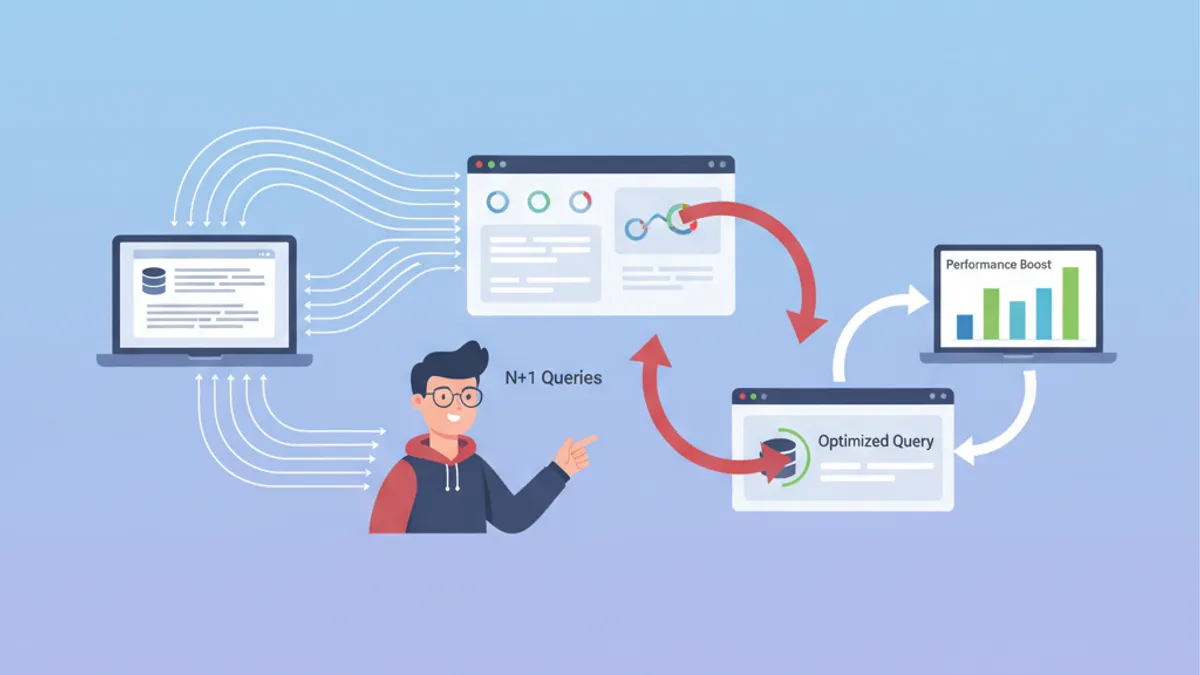
ActiveRecord: rozwiązywanie problemów z zapytaniami N+1 w Ruby on Rails
Kompletny przewodnik po wykrywaniu i naprawianiu zapytań N+1 w Rails z ActiveRecord. Opanuj includes, preload, eager_load i narzędzia automatycznej detekcji.

Ruby on Rails 7: Hotwire i Turbo dla Reaktywnych Aplikacji
Kompletny przewodnik po Hotwire i Turbo w Rails 7. Budowanie reaktywnych aplikacji bez JavaScript z Turbo Drive, Frames i Streams.