Swift Testing Framework Rozmowa kwalifikacyjna 2026: Makra #expect i #require vs XCTest
Opanuj nowy Swift Testing Framework na rozmowy iOS: makra #expect i #require, migracja z XCTest, zaawansowane wzorce i typowe pułapki.
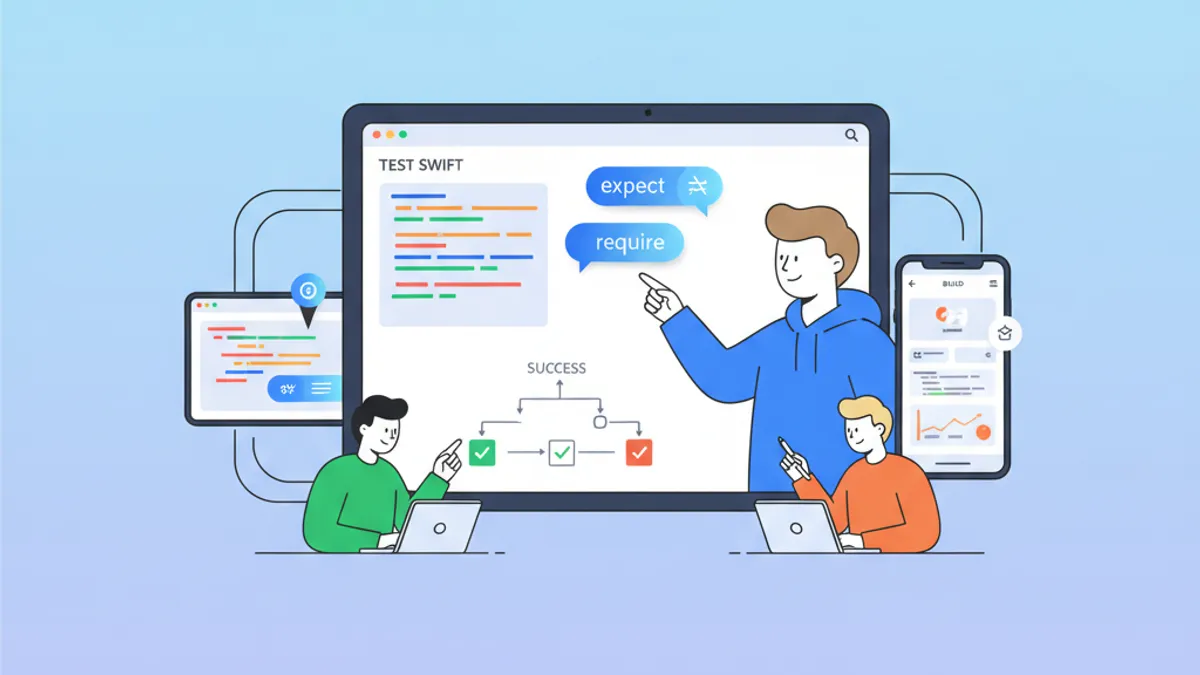
Zaprezentowany na WWDC 2024 i wydany razem ze Swift 6 oraz Xcode 16, Swift Testing stanowi kompletne przemyślenie sposobu działania testów w Swift. Ten framework zastępuje ponad 40 asercji z XCTest zaledwie dwoma makrami: #expect oraz #require. Rekruterzy regularnie weryfikują tę wiedzę podczas technicznych rozmów iOS.
Każda sekcja odzwierciedla pytanie z technicznej rozmowy kwalifikacyjnej wraz ze szczegółowymi odpowiedziami i działającym kodem. Progresja prowadzi od podstawowych pojęć do zaawansowanych wzorców.
Podstawy Swift Testing
Pytanie 1: Jakie są główne różnice między Swift Testing a XCTest?
Swift Testing wprowadza pięć fundamentalnych zmian względem XCTest:
- Składnia deklaratywna: atrybut
@Testzamiast prefiksówtest - Dwa uniwersalne makra:
#expecti#requirezastępują ponad 40 asercji - Domyślnie równoległe: wszystkie testy działają współbieżnie
- Natywne wsparcie async: pełna integracja ze Swift Concurrency
- Wieloplatformowe: działa na platformach Apple, Linux i Windows
import XCTest
import Testing

// ❌ Legacy XCTest pattern
class UserServiceXCTests: XCTestCase {
    // Must start with "test"
    func testUserCreation() {
        let user = User(name: "Alice", age: 25)

        // Multiple verbose assertions
        XCTAssertNotNil(user)
        XCTAssertEqual(user.name, "Alice")
        XCTAssertGreaterThan(user.age, 18)
        XCTAssertTrue(user.isValid)
    }
}

// ✅ Modern Swift Testing pattern
@Test("User creation with valid data")
func userCreation() {
    let user = User(name: "Alice", age: 25)

    // Single macro for all verifications
    #expect(user.name == "Alice")
    #expect(user.age > 18)
    #expect(user.isValid)
}
Kluczowa różnica leży w ekspresyjności: Swift Testing wykorzystuje standardowe wyrażenia Swift zamiast wyspecjalizowanych asercji, co czyni testy czytelniejszymi, a komunikaty o błędach bardziej informatywnymi.
Pytanie 2: Jak działa makro #expect?
Makro #expect weryfikuje, że wyrażenie logiczne jest prawdziwe. Automatycznie przechwytuje wartości obliczone, dostarczając szczegółowe komunikaty błędów. W przeciwieństwie do XCTAssert używa natywnej składni Swift.
import Testing

@Test func basicExpectations() {
    let numbers = [1, 2, 3, 4, 5]
    let user = User(name: "Bob", email: "bob@example.com")

    // Simple comparisons - standard Swift expression
    #expect(numbers.count == 5)
    #expect(user.name == "Bob")

    // Comparisons with operators
    #expect(numbers.first! < numbers.last!)
    #expect(user.email.contains("@"))

    // Nil checking
    #expect(numbers.first != nil)

    // Collection verification
    #expect(numbers.contains(3))
    #expect(!numbers.isEmpty)
}

@Test func expectWithCustomMessage() {
    let balance = 150.0
    let withdrawAmount = 200.0

    // Custom message to clarify intent
    #expect(
        balance >= withdrawAmount,
        "Insufficient funds: balance \(balance) < withdrawal \(withdrawAmount)"
    )
}
Gdy #expect zawodzi, test kontynuuje wykonywanie. Ta cecha pozwala zebrać wiele błędów w jednym uruchomieniu, co ułatwia diagnostykę.
Pytanie 3: Jaka jest różnica między #expect a #require?
Fundamentalna różnica dotyczy zachowania po niepowodzeniu:
#expect: rejestruje błąd i kontynuuje wykonywanie#require: rejestruje błąd i natychmiast zatrzymuje test
#require musi być zawsze używane z try, ponieważ może rzucić błąd.
import Testing

struct ApiResponse {
    let data: Data?
    let items: [Item]?
}

@Test func demonstrateExpectContinues() {
    let values = [1, 2, 3]

    // First #expect fails but test continues
    #expect(values.count == 10)  // ❌ Failure recorded

    // These verifications still execute
    #expect(values.first == 1)   // ✅ Success
    #expect(values.last == 3)    // ✅ Success

    // Result: 1 failure, 2 successes in the same test
}

@Test func demonstrateRequireStops() throws {
    let response = ApiResponse(data: nil, items: nil)

    // #require stops immediately if condition fails
    let data = try #require(response.data)  // ❌ Failure and STOP

    // This code NEVER executes if data is nil
    let json = try JSONDecoder().decode(User.self, from: data)
    #expect(json.name == "Alice")
}
W praktyce #require doskonale zastępuje XCTUnwrap przy bezpiecznym rozpakowywaniu opcjonali.
Używaj #require, gdy kolejne kroki zależą od wyniku (rozpakowanie, warunki wstępne). Używaj #expect do niezależnych weryfikacji, które mogą zawieść bez blokowania reszty testu.
Zaawansowane wzorce z #require
Pytanie 4: Jak używać #require do rozpakowywania opcjonali?
#require wyróżnia się przy rozpakowywaniu opcjonali. Zwraca wartość nieopcjonalną jeśli istnieje, lub natychmiast oblewa test, jeśli wartość to nil.
import Testing

struct UserProfile {
    let id: Int
    let name: String
    let settings: Settings?
}

struct Settings {
    let theme: String
    let notifications: Bool
}

@Test func unwrapOptionalChain() throws {
    let profile = UserProfile(
        id: 1,
        name: "Alice",
        settings: Settings(theme: "dark", notifications: true)
    )

    // Safe unwrap - stops if nil
    let settings = try #require(profile.settings)

    // Now settings is no longer optional
    #expect(settings.theme == "dark")
    #expect(settings.notifications == true)
}

@Test func unwrapArrayElement() throws {
    let users = ["Alice", "Bob", "Charlie"]

    // Unwrap first element
    let firstUser = try #require(users.first)
    #expect(firstUser == "Alice")

    // Unwrap with safe index
    let secondUser = try #require(users[safe: 1])
    #expect(secondUser == "Bob")
}

@Test func unwrapDictionaryValue() throws {
    let config: [String: Any] = [
        "apiUrl": "https://api.example.com",
        "timeout": 30,
        "retryCount": 3
    ]

    // Unwrap and cast in a single operation
    let apiUrl = try #require(config["apiUrl"] as? String)
    let timeout = try #require(config["timeout"] as? Int)

    #expect(apiUrl.contains("https"))
    #expect(timeout > 0)
}
To podejście eliminuje piramidy guard let i sprawia, że kod testów jest liniowy i czytelny.
Pytanie 5: Jak testować, że funkcja rzuca błąd?
Swift Testing oferuje #expect(throws:) do weryfikacji, że funkcja rzuca konkretny błąd.
import Testing

enum ValidationError: Error, Equatable {
    case emptyName
    case invalidEmail
    case underAge(minimum: Int)
}

struct Validator {
    static func validateUser(name: String, email: String, age: Int) throws {
        guard !name.isEmpty else {
            throw ValidationError.emptyName
        }
        guard email.contains("@") else {
            throw ValidationError.invalidEmail
        }
        guard age >= 18 else {
            throw ValidationError.underAge(minimum: 18)
        }
    }
}

@Test func testThrowsSpecificError() {
    // Verify a specific error is thrown
    #expect(throws: ValidationError.emptyName) {
        try Validator.validateUser(name: "", email: "test@mail.com", age: 25)
    }

    #expect(throws: ValidationError.invalidEmail) {
        try Validator.validateUser(name: "Alice", email: "invalid", age: 25)
    }
}

@Test func testThrowsErrorType() {
    // Verify error type without specific value
    #expect(throws: ValidationError.self) {
        try Validator.validateUser(name: "Bob", email: "bob@mail.com", age: 15)
    }
}

@Test func testThrowsWithInspection() throws {
    // Capture error for detailed inspection
    let error = try #require(
        throws: ValidationError.self
    ) {
        try Validator.validateUser(name: "Charlie", email: "charlie@mail.com", age: 16)
    }

    // Verify error details
    if case .underAge(let minimum) = error {
        #expect(minimum == 18)
    }
}
Ta składnia zastępuje XCTAssertThrowsError jaśniejszym i bezpiecznym typowo API.
Gotowy na rozmowy o iOS?
Ćwicz z naszymi interaktywnymi symulatorami, flashcards i testami technicznymi.
Organizacja testów z @Test i @Suite
Pytanie 6: Jak organizować testy z @Suite?
@Suite logicznie grupuje powiązane testy. W przeciwieństwie do XCTestCase nie wymaga dziedziczenia po klasie.
import Testing

// Suite for authentication tests
@Suite("Authentication Tests")
struct AuthenticationTests {

    // Shared property for all tests in the suite
    let authService = AuthService()

    @Test("Login with valid credentials succeeds")
    func loginWithValidCredentials() async throws {
        let result = try await authService.login(
            email: "user@example.com",
            password: "validPass123"
        )

        #expect(result.isSuccess)
        let token = try #require(result.token)
        #expect(!token.isEmpty)
    }

    @Test("Login with invalid password fails")
    func loginWithInvalidPassword() async {
        let result = await authService.login(
            email: "user@example.com",
            password: "wrong"
        )

        #expect(!result.isSuccess)
        #expect(result.error == .invalidCredentials)
    }
}

// Nested suites for hierarchical organization
@Suite("User Management")
struct UserManagementTests {

    @Suite("Creation")
    struct CreationTests {
        @Test func createUserWithValidData() {
            // Creation test
        }

        @Test func createUserWithDuplicateEmail() {
            // Duplicate error test
        }
    }

    @Suite("Deletion")
    struct DeletionTests {
        @Test func deleteExistingUser() {
            // Deletion test
        }

        @Test func deleteNonExistentUser() {
            // Error test
        }
    }
}
Suites pozwalają uruchamiać podzbiory testów i organizować raporty w czytelny sposób.
Pytanie 7: Jak używać traits do konfiguracji testów?
Traits modyfikują zachowanie testów: warunki wykonywania, tagi, timeouty itp.
import Testing

@Suite("API Integration Tests")
struct APITests {

    // Temporarily disabled test
    @Test(.disabled("Backend under maintenance"))
    func fetchUserProfile() async {
        // Does not execute
    }

    // Conditional test based on platform
    @Test
    @available(iOS 17, *)
    func useNewAPIFeature() {
        // Executes only on iOS 17+
    }

    // Test with tags for filtering
    @Test(.tags(.critical, .network))
    func criticalNetworkOperation() async throws {
        // Tagged test for filtering
    }

    // Test with custom timeout
    @Test(.timeLimit(.minutes(2)))
    func longRunningOperation() async {
        // Must complete within 2 minutes
    }

    // Trait combination
    @Test(
        "Complex data sync",
        .tags(.slow),
        .timeLimit(.minutes(5)),
        .bug("JIRA-1234", "Flaky on CI")
    )
    func complexDataSync() async throws {
        // Test documented with known bug
    }
}

// Custom tag definitions
extension Tag {
    @Tag static var critical: Self
    @Tag static var network: Self
    @Tag static var slow: Self
}
Traits czynią testy samodokumentującymi i umożliwiają selektywne uruchamianie z linii poleceń.
Testy parametryzowane
Pytanie 8: Jak tworzyć testy parametryzowane?
Swift Testing pozwala uruchomić ten sam test z różnymi danymi wejściowymi przez parametry.
import Testing

struct EmailValidator {
    static func isValid(_ email: String) -> Bool {
        let pattern = #"^[\w-\.]+@([\w-]+\.)+[\w-]{2,4}$"#
        return email.range(of: pattern, options: .regularExpression) != nil
    }
}

// Parameterized test with a collection
@Test(arguments: [
    "user@example.com",
    "test.name@domain.org",
    "contact@company.co.uk"
])
func validEmailsAreAccepted(email: String) {
    #expect(EmailValidator.isValid(email))
}

@Test(arguments: [
    "invalid",
    "@nodomain.com",
    "no@tld",
    "spaces in@email.com"
])
func invalidEmailsAreRejected(email: String) {
    #expect(!EmailValidator.isValid(email))
}

// Test with tuples for input/output cases
@Test(arguments: [
    ("hello", "HELLO"),
    ("World", "WORLD"),
    ("Swift", "SWIFT")
])
func uppercaseConversion(input: String, expected: String) {
    #expect(input.uppercased() == expected)
}

// Test with Cartesian product of two collections
@Test(arguments: [1, 2, 3], ["a", "b"])
func combinationTest(number: Int, letter: String) {
    // Runs for (1,"a"), (1,"b"), (2,"a"), (2,"b"), (3,"a"), (3,"b")
    let combined = "\(number)\(letter)"
    #expect(combined.count == 2)
}
Każda kombinacja parametrów generuje niezależny test, co ułatwia identyfikację oblanych przypadków.
Pytanie 9: Jak testować kod asynchroniczny?
Swift Testing natywnie integruje async/await, drastycznie upraszczając testy asynchroniczne.
import Testing

actor DataStore {
    private var items: [String] = []

    func add(_ item: String) {
        items.append(item)
    }

    func getAll() -> [String] {
        items
    }

    func clear() {
        items.removeAll()
    }
}

@Suite("Async Operations")
struct AsyncTests {

    @Test func basicAsyncOperation() async {
        // No need for expectation or wait
        let result = await fetchData()
        #expect(!result.isEmpty)
    }

    @Test func asyncWithTimeout() async throws {
        // Use Task.sleep to simulate delay
        try await Task.sleep(for: .milliseconds(100))

        let data = await loadConfiguration()
        let config = try #require(data)
        #expect(config.isValid)
    }

    @Test func testActorIsolation() async {
        let store = DataStore()

        // Operations on actor sequentially
        await store.add("Item 1")
        await store.add("Item 2")

        let items = await store.getAll()
        #expect(items.count == 2)
        #expect(items.contains("Item 1"))
    }

    @Test func testConcurrentOperations() async {
        let store = DataStore()

        // Concurrent execution with TaskGroup
        await withTaskGroup(of: Void.self) { group in
            for i in 1...10 {
                group.addTask {
                    await store.add("Item \(i)")
                }
            }
        }

        let items = await store.getAll()
        #expect(items.count == 10)
    }
}

// Async helpers for tests
func fetchData() async -> [String] {
    try? await Task.sleep(for: .milliseconds(50))
    return ["data1", "data2"]
}

func loadConfiguration() async -> Configuration? {
    Configuration(isValid: true)
}

struct Configuration {
    let isValid: Bool
}Swift Testing domyślnie uruchamia testy równolegle. Dla testów modyfikujących stan współdzielony użyj .serialized na suite lub izoluj stan przez aktorów.
Migracja z XCTest do Swift Testing
Pytanie 10: Jak stopniowo migrować z XCTest?
Oba frameworki współistnieją w tym samym projekcie. Zalecana jest stopniowa migracja.
import XCTest
import Testing

// ⚠️ CRITICAL RULE: Never mix frameworks in the same test

// ❌ INCORRECT - Mixing forbidden
class BadMixedTest: XCTestCase {
    func testMixed() {
        #expect(true)  // Does not work in XCTestCase
    }
}

// ✅ CORRECT - Pure XCTest for existing tests
class LegacyUserTests: XCTestCase {
    func testUserCreation() {
        let user = User(name: "Test")
        XCTAssertNotNil(user)
        XCTAssertEqual(user.name, "Test")
    }
}

// ✅ CORRECT - Swift Testing for new tests
@Suite("User Tests - Modern")
struct ModernUserTests {
    @Test func userCreation() {
        let user = User(name: "Test")
        #expect(user.name == "Test")
    }
}

// Migration strategy by file
// 1. Identify tests to migrate (start with simplest)
// 2. Create new file with @Suite
// 3. Rewrite tests one by one
// 4. Delete old XCTest file once validated| XCTest | Swift Testing |
|---|---|
XCTAssertTrue(x) | #expect(x) |
XCTAssertFalse(x) | #expect(!x) |
XCTAssertEqual(a, b) | #expect(a == b) |
XCTAssertNil(x) | #expect(x == nil) |
XCTAssertNotNil(x) | #expect(x != nil) |
XCTUnwrap(x) | try #require(x) |
XCTAssertThrowsError | #expect(throws:) |
Pytanie 11: Których funkcji XCTest nadal nie ma w Swift Testing?
Swift Testing (Swift 6) nie pokrywa jeszcze wszystkich przypadków użycia XCTest.
// ❌ NOT SUPPORTED: Performance tests
// Stick with XCTest for measuring performance
class PerformanceTests: XCTestCase {
    func testPerformance() {
        measure {
            // Code to measure
            _ = (0..<1000).map { $0 * 2 }
        }
    }
}

// ❌ NOT SUPPORTED: UI tests (XCUITest)
// Continue using XCUITest for interface tests
class UITests: XCTestCase {
    func testLoginFlow() {
        let app = XCUIApplication()
        app.launch()
        // UI tests...
    }
}

// ✅ SUPPORTED: Async integration tests
@Test func integrationTest() async throws {
    let api = APIClient()
    let response = try await api.fetchUsers()
    #expect(!response.isEmpty)
}

// ✅ SUPPORTED: Mocking with protocols
@Test func mockingWithProtocols() async {
    let mockService = MockUserService()
    let viewModel = UserViewModel(service: mockService)

    await viewModel.loadUser(id: 1)

    #expect(viewModel.user?.name == "Mock User")
}
W projektach z testami UI lub wydajnościowymi pozostaw XCTest dla tych konkretnych przypadków.
Gotowy na rozmowy o iOS?
Ćwicz z naszymi interaktywnymi symulatorami, flashcards i testami technicznymi.
Podchwytliwe pytania rekrutacyjne
Pytanie 12: Dlaczego #require wymaga try, a #expect nie?
#require może rzucić błąd, jeśli warunek zawiedzie, ponieważ musi przerwać test. #expect jedynie rejestruje błąd i kontynuuje, więc niczego nie rzuca.
import Testing

@Test func explainTryRequirement() throws {
    let optionalValue: String? = nil

    // #expect returns Void - no error thrown
    // Test continues even if it fails
    #expect(optionalValue != nil)  // No try

    // #require can throw ExpectationFailedError
    // Test stops if it fails
    // Must be marked with try
    let value = try #require(optionalValue)  // Requires try

    // If we reach here, optionalValue was not nil
    #expect(!value.isEmpty)
}

// The internal signature resembles:
// func #expect(_ condition: Bool) -> Void
// func #require<T>(_ value: T?) throws -> T
To architektoniczne rozróżnienie pozwala kompilatorowi gwarantować poprawną obsługę błędów.
Pytanie 13: Jak Swift Testing zarządza równoległością?
Domyślnie wszystkie testy działają równolegle, co przyspiesza suites, ale wymaga prawidłowej izolacji stanu.
import Testing

// ❌ PROBLEM: Mutable shared state
var sharedCounter = 0  // Dangerous in parallel!

@Suite("Problematic Parallel Tests")
struct ProblematicTests {
    @Test func incrementCounter1() {
        sharedCounter += 1  // Race condition!
    }

    @Test func incrementCounter2() {
        sharedCounter += 1  // Race condition!
    }
}

// ✅ SOLUTION 1: Force sequential execution
@Suite("Sequential Tests", .serialized)
struct SequentialTests {
    static var counter = 0

    @Test func first() {
        Self.counter += 1
        #expect(Self.counter == 1)
    }

    @Test func second() {
        Self.counter += 1
        #expect(Self.counter == 2)
    }
}

// ✅ SOLUTION 2: Isolate state per test
@Suite("Isolated Tests")
struct IsolatedTests {
    @Test func independentTest1() {
        var localCounter = 0
        localCounter += 1
        #expect(localCounter == 1)
    }

    @Test func independentTest2() {
        var localCounter = 0
        localCounter += 1
        #expect(localCounter == 1)
    }
}

// ✅ SOLUTION 3: Use actor for shared state
actor TestState {
    var value = 0

    func increment() -> Int {
        value += 1
        return value
    }
}

@Suite("Actor-based Tests")
struct ActorTests {
    let state = TestState()

    @Test func safeIncrement() async {
        let result = await state.increment()
        #expect(result > 0)
    }
}
Trait .serialized gwarantuje sekwencyjne wykonanie całej suite.
Pytanie 14: Jak używać confirmations dla callbacków?
Dla API z callbackami (nie-async) Swift Testing oferuje confirmation.
import Testing

// Legacy service with callback
class LegacyService {
    func fetchData(completion: @escaping (Result<String, Error>) -> Void) {
        DispatchQueue.global().asyncAfter(deadline: .now() + 0.1) {
            completion(.success("Data loaded"))
        }
    }
}

@Test func testCallbackWithConfirmation() async {
    let service = LegacyService()

    // confirmation waits for it to be called
    await confirmation("Data callback received") { confirm in
        service.fetchData { result in
            if case .success(let data) = result {
                #expect(data == "Data loaded")
                confirm()  // Signals callback was executed
            }
        }
    }
}

// For callbacks called multiple times
@Test func testMultipleCallbacks() async {
    let publisher = EventPublisher()

    // expectedCount specifies expected call count
    await confirmation("Events received", expectedCount: 3) { confirm in
        publisher.onEvent = { event in
            #expect(!event.isEmpty)
            confirm()  // Called 3 times
        }

        publisher.emit("Event 1")
        publisher.emit("Event 2")
        publisher.emit("Event 3")
    }
}

class EventPublisher {
    var onEvent: ((String) -> Void)?

    func emit(_ event: String) {
        DispatchQueue.global().async {
            self.onEvent?(event)
        }
    }
}
confirmation elegancko zastępuje XCTestExpectation oraz wait(for:timeout:).
Podsumowanie
Swift Testing reprezentuje przyszłość testowania na platformach Apple. Dwa makra #expect i #require drastycznie upraszczają pisanie testów, jednocześnie poprawiając jakość komunikatów błędów.
Kluczowe punkty do zapamiętania na rozmowy:
- ✅
#expectkontynuuje po niepowodzeniu,#requirezatrzymuje natychmiast - ✅
#requirewymagatry, ponieważ może rzucić błąd - ✅ Swift Testing domyślnie uruchamia się równolegle
- ✅ Oba frameworki współistnieją, ale nie wolno ich mieszać w tym samym teście
- ✅ XCTest pozostaje konieczny dla testów UI i wydajnościowych
- ✅ Traits umożliwiają precyzyjną konfigurację zachowania testów
- ✅ Testy parametryzowane eliminują duplikację kodu
Migrację do Swift Testing można wykonać stopniowo, plik po pliku, zaczynając od najprostszych testów.
Zacznij ćwiczyć!
Sprawdź swoją wiedzę z naszymi symulatorami rozmów i testami technicznymi.
Znajdziesz błąd w iOS?
Prawdziwy fragment kodu, ukryty błąd, jedna próba dziennie. Bez konta, żeby spróbować.

Autor:
Anthony Fillion-MailletZałożyciel SharpSkill
Programista fullstack od ponad 10 lat. Prowadzi SharpSkill i odpowiada za wszystko, co się tu ukazuje.
Zaktualizowano 29 kwietnia 2026
Tagi
Udostępnij
Powiązane artykuły

Rozmowa Kwalifikacyjna StoreKit 2: Zarządzanie Subskrypcjami i Walidacja Paragonów
Opanuj pytania na rozmowy iOS dotyczące StoreKit 2, zarządzania subskrypcjami, walidacji paragonów i implementacji zakupów w aplikacji z praktycznymi przykładami kodu Swift.
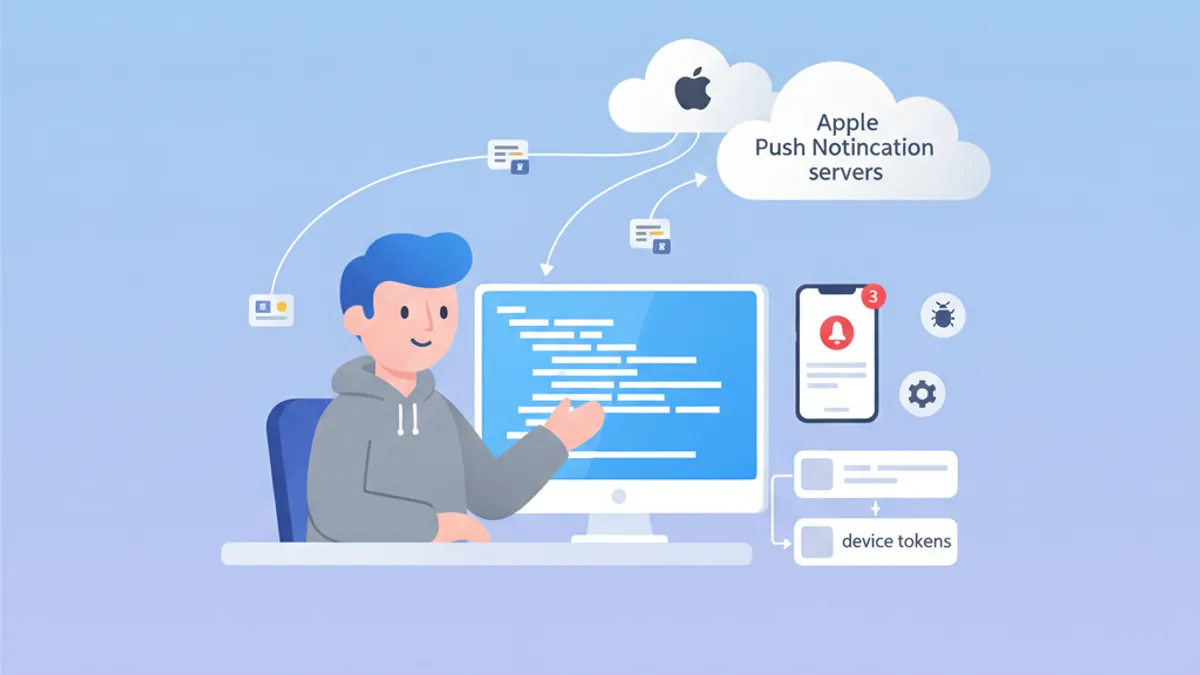
Rozmowa kwalifikacyjna iOS Push Notifications 2026: APNs, tokeny i troubleshooting
Kompleksowy przewodnik przygotowujący do rozmów kwalifikacyjnych iOS dotyczących Push Notifications, APNs, zarządzania tokenami i rozwiązywania problemów. Najczęstsze pytania ze szczegółowymi odpowiedziami.

Rozmowa kwalifikacyjna iOS Senior 2026: Pytania o Architekturę i Wzorce Projektowe
Przygotowanie do rozmów iOS senior z kluczowymi pytaniami o MVVM, VIPER, Clean Architecture i wzorce projektowe. Kompletny przewodnik z przykładami kodu Swift.