Clean Architecture w .NET: Praktyczny Przewodnik
Opanowanie Clean Architecture w .NET z C#. Poznanie zasad SOLID, separacji warstw i wzorców implementacyjnych dla aplikacji łatwych w utrzymaniu.
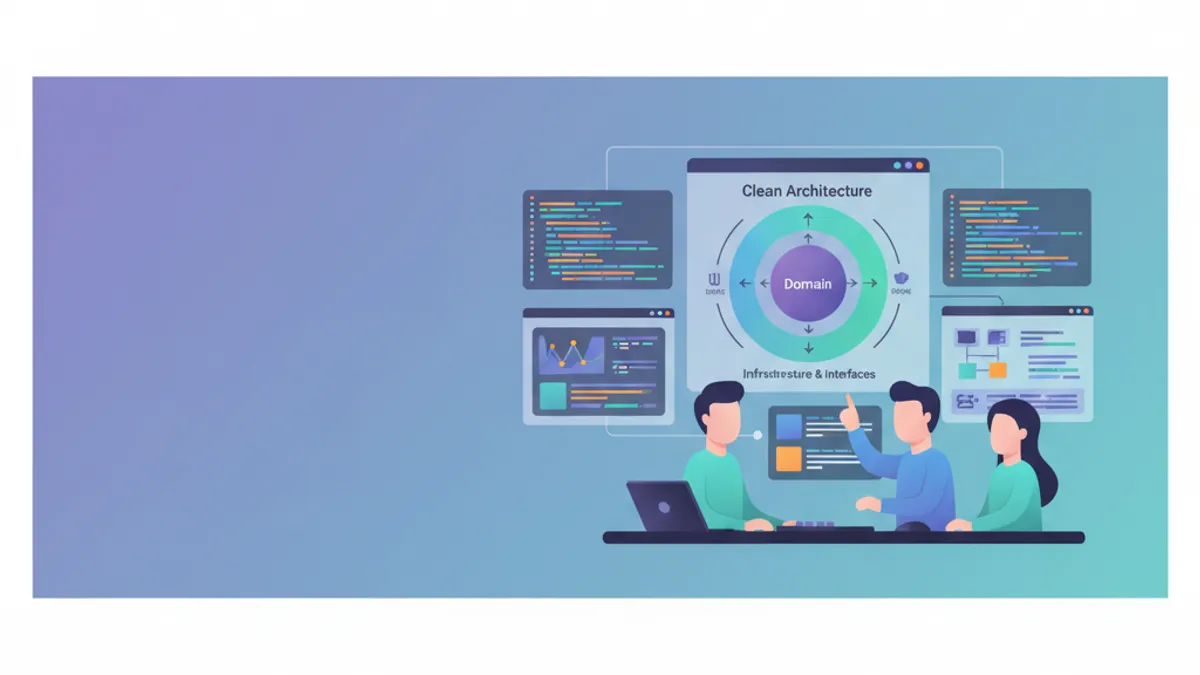
Clean Architecture, spopularyzowana przez Roberta C. Martina (Uncle Bob), organizuje kod w taki sposób, że logika biznesowa znajduje się w centrum aplikacji, niezależnie od frameworków i szczegółów implementacyjnych. To podejście architektoniczne zapewnia testowalność, łatwość utrzymania i skalowalność aplikacji .NET. Ten przewodnik prezentuje praktyczną implementację z wykorzystaniem ASP.NET Core i odnosi się do zmiany licencji MediatR z 2025 roku, która wpływa na wybór wzorców.
Aplikacje, które mieszają logikę biznesową z kodem infrastrukturalnym, szybko stają się trudne w utrzymaniu. Clean Architecture wymusza ścisłą separację, dzięki której można zmieniać szczegóły techniczne bez wpływu na rdzeń biznesowy.
Fundamentalne zasady Clean Architecture
Clean Architecture opiera się na inwersji zależności: warstwy wewnętrzne nie znają warstw zewnętrznych. Domena biznesowa pozostaje odizolowana i może ewoluować niezależnie od decyzji technicznych, takich jak framework webowy czy baza danych.
┌─────────────────────────────────────────────────────────┐
│                     Presentation                        │
│  (Controllers, Razor Pages, Blazor, API Endpoints)     │
├─────────────────────────────────────────────────────────┤
│                    Infrastructure                       │
│    (EF Core, External APIs, File System, Email)        │
├─────────────────────────────────────────────────────────┤
│                      Application                        │
│       (Use Cases, Commands, Queries, DTOs)             │
├─────────────────────────────────────────────────────────┤
│                        Domain                           │
│     (Entities, Value Objects, Domain Services)          │
└─────────────────────────────────────────────────────────┘
Zależności zawsze prowadzą do wewnątrz: Presentation → Infrastructure → Application → Domain. Domena nie odwołuje się do żadnego innego projektu.
Struktura projektu .NET w Clean Architecture
Organizacja projektów odzwierciedla poszczególne warstwy. Każda warstwa odpowiada osobnemu projektowi w solucji Visual Studio, co zapewnia fizyczną separację odpowiedzialności.
# terminal
# Utworzenie struktury solucji
dotnet new sln -n CleanArchitecture

# Utworzenie projektów dla każdej warstwy
dotnet new classlib -n CleanArchitecture.Domain -o src/CleanArchitecture.Domain
dotnet new classlib -n CleanArchitecture.Application -o src/CleanArchitecture.Application
dotnet new classlib -n CleanArchitecture.Infrastructure -o src/CleanArchitecture.Infrastructure
dotnet new webapi -n CleanArchitecture.Api -o src/CleanArchitecture.Api

# Dodanie projektów do solucji
dotnet sln add src/CleanArchitecture.Domain
dotnet sln add src/CleanArchitecture.Application
dotnet sln add src/CleanArchitecture.Infrastructure
dotnet sln add src/CleanArchitecture.Api

# Konfiguracja referencji między projektami
cd src/CleanArchitecture.Application
dotnet add reference ../CleanArchitecture.Domain

cd ../CleanArchitecture.Infrastructure
dotnet add reference ../CleanArchitecture.Application

cd ../CleanArchitecture.Api
dotnet add reference ../CleanArchitecture.Infrastructure
Taka struktura zapewnia, że Domain pozostaje niezależny, a zależności podążają za regułą Dependency Rule Clean Architecture.
Warstwa Domain: rdzeń biznesowy
Warstwa Domain zawiera encje biznesowe, Value Objects oraz interfejsy repozytoriów. W tej warstwie nie są dozwolone żadne zewnętrzne zależności.
namespace CleanArchitecture.Domain.Entities;

// Encja z tożsamością i biznesowym cyklem życia
public class Order
{
    // Unikalny identyfikator zamówienia
    public Guid Id { get; private set; }

    // Referencja do klienta (Value Object dla adresu e-mail)
    public string CustomerEmail { get; private set; }

    // Kolekcja pozycji (relacja jeden-do-wielu)
    private readonly List<OrderItem> _items = new();
    public IReadOnlyCollection<OrderItem> Items => _items.AsReadOnly();

    // Status zamówienia (enum biznesowy)
    public OrderStatus Status { get; private set; }

    // Wyliczona kwota całkowita
    public decimal TotalAmount => _items.Sum(i => i.TotalPrice);

    // Daty śledzenia
    public DateTime CreatedAt { get; private set; }
    public DateTime? ShippedAt { get; private set; }

    // Prywatny konstruktor wymusza użycie metody factory
    private Order() { }

    // Metoda factory tworząca poprawne zamówienie
    public static Order Create(string customerEmail)
    {
        // Walidacja reguł biznesowych podczas tworzenia
        if (string.IsNullOrWhiteSpace(customerEmail))
            throw new DomainException("Adres e-mail klienta jest wymagany.");

        if (!IsValidEmail(customerEmail))
            throw new DomainException("Nieprawidłowy format adresu e-mail.");

        return new Order
        {
            Id = Guid.NewGuid(),
            CustomerEmail = customerEmail,
            Status = OrderStatus.Pending,
            CreatedAt = DateTime.UtcNow
        };
    }

    // Metoda biznesowa: dodanie pozycji
    public void AddItem(Product product, int quantity)
    {
        // Reguła biznesowa: nie można modyfikować wysłanego zamówienia
        if (Status == OrderStatus.Shipped)
            throw new DomainException("Nie można modyfikować wysłanego zamówienia.");

        if (quantity <= 0)
            throw new DomainException("Ilość musi być dodatnia.");

        // Sprawdzenie, czy produkt już istnieje
        var existingItem = _items.FirstOrDefault(i => i.ProductId == product.Id);
        if (existingItem != null)
        {
            existingItem.IncreaseQuantity(quantity);
        }
        else
        {
            _items.Add(OrderItem.Create(this, product, quantity));
        }
    }

    // Metoda biznesowa: potwierdzenie zamówienia
    public void Confirm()
    {
        if (Status != OrderStatus.Pending)
            throw new DomainException("Tylko oczekujące zamówienia mogą zostać potwierdzone.");

        if (!_items.Any())
            throw new DomainException("Zamówienie musi zawierać co najmniej jedną pozycję.");

        Status = OrderStatus.Confirmed;
    }

    // Metoda biznesowa: wysłanie zamówienia
    public void Ship()
    {
        if (Status != OrderStatus.Confirmed)
            throw new DomainException("Zamówienie musi zostać potwierdzone przed wysyłką.");

        Status = OrderStatus.Shipped;
        ShippedAt = DateTime.UtcNow;
    }

    private static bool IsValidEmail(string email) =>
        email.Contains('@') && email.Contains('.');
}
Encja Order enkapsuluje swoje reguły biznesowe i chroni stan wewnętrzny. Modyfikacje muszą przechodzić przez metody biznesowe walidujące niezmienniki.
namespace CleanArchitecture.Domain.Entities;

// Encja podrzędna z własną tożsamością
public class OrderItem
{
    public Guid Id { get; private set; }
    public Guid OrderId { get; private set; }
    public Guid ProductId { get; private set; }
    public string ProductName { get; private set; }
    public decimal UnitPrice { get; private set; }
    public int Quantity { get; private set; }

    // Wyliczenie ceny całkowitej linii
    public decimal TotalPrice => UnitPrice * Quantity;

    private OrderItem() { }

    // Metoda factory z walidacją
    public static OrderItem Create(Order order, Product product, int quantity)
    {
        return new OrderItem
        {
            Id = Guid.NewGuid(),
            OrderId = order.Id,
            ProductId = product.Id,
            ProductName = product.Name,
            UnitPrice = product.Price,
            Quantity = quantity
        };
    }

    // Metoda zwiększająca ilość
    public void IncreaseQuantity(int additionalQuantity)
    {
        if (additionalQuantity <= 0)
            throw new DomainException("Dodatkowa ilość musi być dodatnia.");

        Quantity += additionalQuantity;
    }
}namespace CleanArchitecture.Domain.Enums;
// Wyliczenie statusów zamówienia
public enum OrderStatus
{
Pending = 0, // Oczekuje na potwierdzenie
Confirmed = 1, // Potwierdzone, gotowe do wysyłki
Shipped = 2, // Wysłane
Delivered = 3, // Dostarczone
Cancelled = 4 // Anulowane
}Value Objects, takie jak Money, Address czy Email, enkapsulują koncepcje biznesowe nieposiadające własnej tożsamości. Ich równość opiera się na wartościach, a nie na referencjach. Takie podejście wzmacnia ekspresyjność domeny.
Interfejsy Repository w warstwie Domain
Interfejsy repozytoriów są zdefiniowane w Domain, ale ich implementacje znajdują się w Infrastructure. Ten wzorzec respektuje zasadę inwersji zależności.
namespace CleanArchitecture.Domain.Interfaces;

// Interfejs repozytorium Order
public interface IOrderRepository
{
    // Pobranie po identyfikatorze
    Task<Order?> GetByIdAsync(Guid id, CancellationToken cancellationToken = default);

    // Pobranie wraz z pozycjami
    Task<Order?> GetByIdWithItemsAsync(Guid id, CancellationToken cancellationToken = default);

    // Pobranie po adresie e-mail klienta
    Task<IEnumerable<Order>> GetByCustomerEmailAsync(
        string email,
        CancellationToken cancellationToken = default);

    // Dodanie nowego zamówienia
    Task AddAsync(Order order, CancellationToken cancellationToken = default);

    // Aktualizacja istniejącego zamówienia
    Task UpdateAsync(Order order, CancellationToken cancellationToken = default);

    // Usunięcie zamówienia
    Task DeleteAsync(Guid id, CancellationToken cancellationToken = default);
}namespace CleanArchitecture.Domain.Interfaces;
// Wzorzec Unit of Work do zarządzania transakcjami
public interface IUnitOfWork : IDisposable
{
// Repozytoria dostępne przez UoW
IOrderRepository Orders { get; }
IProductRepository Products { get; }
// Atomowy zapis wszystkich zmian
Task<int> SaveChangesAsync(CancellationToken cancellationToken = default);
// Jawne zarządzanie transakcjami
Task BeginTransactionAsync(CancellationToken cancellationToken = default);
Task CommitTransactionAsync(CancellationToken cancellationToken = default);
Task RollbackTransactionAsync(CancellationToken cancellationToken = default);
}Wzorzec Unit of Work koordynuje operacje na wielu repozytoriach w ramach jednej transakcji.
Gotowy na rozmowy o .NET?
Ćwicz z naszymi interaktywnymi symulatorami, flashcards i testami technicznymi.
Warstwa Application: orkiestracja przypadków użycia
Warstwa Application zawiera logikę aplikacyjną (use cases), DTO oraz interfejsy usług zewnętrznych. Orkiestruje interakcje między domeną a światem zewnętrznym.
MediatR przeszedł na licencję komercyjną w lipcu 2025 roku. Dla nowych projektów warto rozważyć alternatywy: własną prostą implementację mediatora, FastEndpoints lub uwzględnienie budżetu na licencję. Wzorce CQRS przedstawione w tym artykule pozostają aktualne niezależnie od wyboru biblioteki.
using MediatR;

namespace CleanArchitecture.Application.Orders.Commands;

// Command reprezentujący intencję utworzenia zamówienia
public record CreateOrderCommand(
    string CustomerEmail,
    List<OrderItemDto> Items
) : IRequest<Guid>;

// DTO dla pozycji zamówienia
public record OrderItemDto(
    Guid ProductId,
    int Quantity
);using MediatR;
using CleanArchitecture.Domain.Entities;
using CleanArchitecture.Domain.Interfaces;
namespace CleanArchitecture.Application.Orders.Commands;
// Handler implementujący przypadek użycia
public class CreateOrderCommandHandler : IRequestHandler<CreateOrderCommand, Guid>
{
private readonly IUnitOfWork _unitOfWork;
public CreateOrderCommandHandler(IUnitOfWork unitOfWork)
{
_unitOfWork = unitOfWork;
}
public async Task<Guid> Handle(
CreateOrderCommand request,
CancellationToken cancellationToken)
{
// Utworzenie encji Order za pomocą metody factory
var order = Order.Create(request.CustomerEmail);
// Dodanie pozycji do zamówienia
foreach (var item in request.Items)
{
// Pobranie produktu z repozytorium
var product = await _unitOfWork.Products
.GetByIdAsync(item.ProductId, cancellationToken);
if (product == null)
throw new NotFoundException($"Produkt {item.ProductId} nie został znaleziony.");
// Wykorzystanie metody biznesowej encji
order.AddItem(product, item.Quantity);
}
// Persystencja przez repozytorium
await _unitOfWork.Orders.AddAsync(order, cancellationToken);
await _unitOfWork.SaveChangesAsync(cancellationToken);
return order.Id;
}
}MediatR implementuje wzorzec Mediator, aby odseparować handlery od kontrolerów. Każdy command posiada jednego handler odpowiedzialnego za jego obsługę.
using MediatR;

namespace CleanArchitecture.Application.Orders.Queries;

// Query do pobrania zamówienia po ID
public record GetOrderByIdQuery(Guid OrderId) : IRequest<OrderDto?>;

// DTO odpowiedzi dla zamówienia
public record OrderDto(
    Guid Id,
    string CustomerEmail,
    string Status,
    decimal TotalAmount,
    DateTime CreatedAt,
    DateTime? ShippedAt,
    List<OrderItemResponseDto> Items
);

// DTO dla pozycji w odpowiedzi
public record OrderItemResponseDto(
    Guid Id,
    string ProductName,
    decimal UnitPrice,
    int Quantity,
    decimal TotalPrice
);using MediatR;
using CleanArchitecture.Domain.Interfaces;
namespace CleanArchitecture.Application.Orders.Queries;
public class GetOrderByIdQueryHandler : IRequestHandler<GetOrderByIdQuery, OrderDto?>
{
private readonly IOrderRepository _orderRepository;
public GetOrderByIdQueryHandler(IOrderRepository orderRepository)
{
_orderRepository = orderRepository;
}
public async Task<OrderDto?> Handle(
GetOrderByIdQuery request,
CancellationToken cancellationToken)
{
// Pobranie wraz z pozycjami
var order = await _orderRepository
.GetByIdWithItemsAsync(request.OrderId, cancellationToken);
if (order == null)
return null;
// Mapowanie do DTO (ręczna projekcja)
return new OrderDto(
Id: order.Id,
CustomerEmail: order.CustomerEmail,
Status: order.Status.ToString(),
TotalAmount: order.TotalAmount,
CreatedAt: order.CreatedAt,
ShippedAt: order.ShippedAt,
Items: order.Items.Select(i => new OrderItemResponseDto(
Id: i.Id,
ProductName: i.ProductName,
UnitPrice: i.UnitPrice,
Quantity: i.Quantity,
TotalPrice: i.TotalPrice
)).ToList()
);
}
}Rozdzielenie Commands/Queries odpowiada wzorcowi CQRS (Command Query Responsibility Segregation), optymalizując odczyty i zapisy niezależnie od siebie.
Walidacja z FluentValidation
Walidacja commandów odbywa się w warstwie Application, przed wykonaniem handlera. FluentValidation 12+ wymaga .NET 8 lub nowszego.
using FluentValidation;
using CleanArchitecture.Application.Orders.Commands;

namespace CleanArchitecture.Application.Orders.Validators;

public class CreateOrderCommandValidator : AbstractValidator<CreateOrderCommand>
{
    public CreateOrderCommandValidator()
    {
        // Wymagany e-mail i poprawny format
        RuleFor(x => x.CustomerEmail)
            .NotEmpty().WithMessage("Adres e-mail klienta jest wymagany.")
            .EmailAddress().WithMessage("Nieprawidłowy format adresu e-mail.");

        // Wymagana co najmniej jedna pozycja
        RuleFor(x => x.Items)
            .NotEmpty().WithMessage("Zamówienie musi zawierać co najmniej jedną pozycję.");

        // Walidacja każdej pozycji
        RuleForEach(x => x.Items).ChildRules(item =>
        {
            item.RuleFor(i => i.ProductId)
                .NotEmpty().WithMessage("Identyfikator produktu jest wymagany.");

            item.RuleFor(i => i.Quantity)
                .GreaterThan(0).WithMessage("Ilość musi być dodatnia.")
                .LessThanOrEqualTo(100).WithMessage("Maksymalna ilość: 100.");
        });
    }
}using FluentValidation;
using MediatR;
namespace CleanArchitecture.Application.Common.Behaviors;
// Pipeline behavior do automatycznej walidacji
public class ValidationBehavior<TRequest, TResponse>
: IPipelineBehavior<TRequest, TResponse>
where TRequest : notnull
{
private readonly IEnumerable<IValidator<TRequest>> _validators;
public ValidationBehavior(IEnumerable<IValidator<TRequest>> validators)
{
_validators = validators;
}
public async Task<TResponse> Handle(
TRequest request,
RequestHandlerDelegate<TResponse> next,
CancellationToken cancellationToken)
{
// Jeśli brak walidatorów, kontynuuj
if (!_validators.Any())
return await next();
// Wykonanie wszystkich walidatorów
var context = new ValidationContext<TRequest>(request);
var validationResults = await Task.WhenAll(
_validators.Select(v => v.ValidateAsync(context, cancellationToken)));
// Agregacja błędów
var failures = validationResults
.SelectMany(r => r.Errors)
.Where(f => f != null)
.ToList();
// Wyrzucenie wyjątku w razie błędów
if (failures.Any())
throw new ValidationException(failures);
return await next();
}
}ValidationBehavior wykonuje się automatycznie przed każdym handlerem, gwarantując, że tylko poprawne commandy trafiają do logiki biznesowej.
Warstwa Infrastructure: implementacja techniczna
Warstwa Infrastructure dostarcza konkretne implementacje interfejsów zdefiniowanych w Domain i Application. Entity Framework Core 10 wprowadza nowe operatory LINQ (LeftJoin, RightJoin) oraz ulepszone możliwości ExecuteUpdate, które dobrze integrują się ze wzorcami repozytoriów.
using Microsoft.EntityFrameworkCore;
using CleanArchitecture.Domain.Entities;

namespace CleanArchitecture.Infrastructure.Persistence;

public class AppDbContext : DbContext
{
    public AppDbContext(DbContextOptions<AppDbContext> options) : base(options)
    {
    }

    public DbSet<Order> Orders => Set<Order>();
    public DbSet<OrderItem> OrderItems => Set<OrderItem>();
    public DbSet<Product> Products => Set<Product>();

    protected override void OnModelCreating(ModelBuilder modelBuilder)
    {
        // Zastosowanie konfiguracji z assembly
        modelBuilder.ApplyConfigurationsFromAssembly(typeof(AppDbContext).Assembly);
    }
}using Microsoft.EntityFrameworkCore;
using Microsoft.EntityFrameworkCore.Metadata.Builders;
using CleanArchitecture.Domain.Entities;
namespace CleanArchitecture.Infrastructure.Persistence.Configurations;
public class OrderConfiguration : IEntityTypeConfiguration<Order>
{
public void Configure(EntityTypeBuilder<Order> builder)
{
// Tabela i klucz główny
builder.ToTable("Orders");
builder.HasKey(o => o.Id);
// Właściwości
builder.Property(o => o.CustomerEmail)
.IsRequired()
.HasMaxLength(256);
builder.Property(o => o.Status)
.IsRequired()
.HasConversion<string>(); // Zapis jako czytelny string
// Relacja z OrderItems
builder.HasMany(o => o.Items)
.WithOne()
.HasForeignKey(i => i.OrderId)
.OnDelete(DeleteBehavior.Cascade);
// Indeks dla wyszukiwania po e-mailu
builder.HasIndex(o => o.CustomerEmail);
// Dostęp do prywatnego pola _items
builder.Navigation(o => o.Items)
.UsePropertyAccessMode(PropertyAccessMode.Field);
}
}using Microsoft.EntityFrameworkCore;
using CleanArchitecture.Domain.Entities;
using CleanArchitecture.Domain.Interfaces;
using CleanArchitecture.Infrastructure.Persistence;
namespace CleanArchitecture.Infrastructure.Repositories;
public class OrderRepository : IOrderRepository
{
private readonly AppDbContext _context;
public OrderRepository(AppDbContext context)
{
_context = context;
}
public async Task<Order?> GetByIdAsync(
Guid id,
CancellationToken cancellationToken = default)
{
return await _context.Orders
.FirstOrDefaultAsync(o => o.Id == id, cancellationToken);
}
public async Task<Order?> GetByIdWithItemsAsync(
Guid id,
CancellationToken cancellationToken = default)
{
// Eager loading pozycji
return await _context.Orders
.Include(o => o.Items)
.FirstOrDefaultAsync(o => o.Id == id, cancellationToken);
}
public async Task<IEnumerable<Order>> GetByCustomerEmailAsync(
string email,
CancellationToken cancellationToken = default)
{
return await _context.Orders
.Include(o => o.Items)
.Where(o => o.CustomerEmail == email)
.OrderByDescending(o => o.CreatedAt)
.ToListAsync(cancellationToken);
}
public async Task AddAsync(
Order order,
CancellationToken cancellationToken = default)
{
await _context.Orders.AddAsync(order, cancellationToken);
}
public Task UpdateAsync(
Order order,
CancellationToken cancellationToken = default)
{
// EF Core automatycznie śledzi zmiany
_context.Orders.Update(order);
return Task.CompletedTask;
}
public async Task DeleteAsync(
Guid id,
CancellationToken cancellationToken = default)
{
await _context.Orders
.Where(o => o.Id == id)
.ExecuteDeleteAsync(cancellationToken);
}
}Repozytoria nie powinny bezpośrednio udostępniać IQueryable, ponieważ tworzyłoby to zależność od EF Core w wyższych warstwach. Lepiej stosować specyficzne metody z jasnymi parametrami.
Implementacja Unit of Work
using Microsoft.EntityFrameworkCore.Storage;
using CleanArchitecture.Domain.Interfaces;
using CleanArchitecture.Infrastructure.Repositories;

namespace CleanArchitecture.Infrastructure.Persistence;

public class UnitOfWork : IUnitOfWork
{
    private readonly AppDbContext _context;
    private IDbContextTransaction? _transaction;

    // Lazy loading repozytoriów
    private IOrderRepository? _orderRepository;
    private IProductRepository? _productRepository;

    public UnitOfWork(AppDbContext context)
    {
        _context = context;
    }

    // Tworzenie na żądanie (lazy initialization)
    public IOrderRepository Orders =>
        _orderRepository ??= new OrderRepository(_context);

    public IProductRepository Products =>
        _productRepository ??= new ProductRepository(_context);

    public async Task<int> SaveChangesAsync(
        CancellationToken cancellationToken = default)
    {
        return await _context.SaveChangesAsync(cancellationToken);
    }

    public async Task BeginTransactionAsync(
        CancellationToken cancellationToken = default)
    {
        _transaction = await _context.Database
            .BeginTransactionAsync(cancellationToken);
    }

    public async Task CommitTransactionAsync(
        CancellationToken cancellationToken = default)
    {
        if (_transaction == null)
            throw new InvalidOperationException("Brak aktywnej transakcji.");

        await _transaction.CommitAsync(cancellationToken);
        await _transaction.DisposeAsync();
        _transaction = null;
    }

    public async Task RollbackTransactionAsync(
        CancellationToken cancellationToken = default)
    {
        if (_transaction == null)
            throw new InvalidOperationException("Brak aktywnej transakcji.");

        await _transaction.RollbackAsync(cancellationToken);
        await _transaction.DisposeAsync();
        _transaction = null;
    }

    public void Dispose()
    {
        _transaction?.Dispose();
        _context.Dispose();
    }
}
Konfiguracja Dependency Injection
Rejestracja usług odbywa się w każdej warstwie poprzez metody rozszerzeń, a następnie jest orkiestrowana w pliku Program.cs.
using Microsoft.EntityFrameworkCore;
using Microsoft.Extensions.Configuration;
using Microsoft.Extensions.DependencyInjection;
using CleanArchitecture.Domain.Interfaces;
using CleanArchitecture.Infrastructure.Persistence;
using CleanArchitecture.Infrastructure.Repositories;

namespace CleanArchitecture.Infrastructure;

public static class DependencyInjection
{
    public static IServiceCollection AddInfrastructure(
        this IServiceCollection services,
        IConfiguration configuration)
    {
        // Konfiguracja Entity Framework
        services.AddDbContext<AppDbContext>(options =>
            options.UseSqlServer(
                configuration.GetConnectionString("DefaultConnection"),
                b => b.MigrationsAssembly(typeof(AppDbContext).Assembly.FullName)));

        // Rejestracja Unit of Work (Scoped)
        services.AddScoped<IUnitOfWork, UnitOfWork>();

        // Pojedyncze repozytoria w razie potrzeby
        services.AddScoped<IOrderRepository, OrderRepository>();
        services.AddScoped<IProductRepository, ProductRepository>();

        return services;
    }
}using FluentValidation;
using MediatR;
using Microsoft.Extensions.DependencyInjection;
using CleanArchitecture.Application.Common.Behaviors;
namespace CleanArchitecture.Application;
public static class DependencyInjection
{
public static IServiceCollection AddApplication(this IServiceCollection services)
{
var assembly = typeof(DependencyInjection).Assembly;
// Rejestracja MediatR z handlerami
services.AddMediatR(cfg => cfg.RegisterServicesFromAssembly(assembly));
// Rejestracja walidatorów FluentValidation
services.AddValidatorsFromAssembly(assembly);
// Pipeline behaviors (kolejność wykonywania ma znaczenie)
services.AddTransient(typeof(IPipelineBehavior<,>), typeof(ValidationBehavior<,>));
return services;
}
}using CleanArchitecture.Application;
using CleanArchitecture.Infrastructure;
var builder = WebApplication.CreateBuilder(args);
// Rejestracja warstw
builder.Services.AddApplication();
builder.Services.AddInfrastructure(builder.Configuration);
// Konfiguracja API
builder.Services.AddControllers();
builder.Services.AddEndpointsApiExplorer();
builder.Services.AddSwaggerGen();
var app = builder.Build();
if (app.Environment.IsDevelopment())
{
app.UseSwagger();
app.UseSwaggerUI();
}
app.UseHttpsRedirection();
app.UseAuthorization();
app.MapControllers();
app.Run();Warstwa Presentation: kontrolery API
Kontrolery są prostymi adapterami, które delegują pracę do MediatR. Dla prostszych API, ASP.NET Core Minimal APIs oferują lżejsze podejście przy zachowaniu tej samej separacji architektonicznej.
using MediatR;
using Microsoft.AspNetCore.Mvc;
using CleanArchitecture.Application.Orders.Commands;
using CleanArchitecture.Application.Orders.Queries;

namespace CleanArchitecture.Api.Controllers;

[ApiController]
[Route("api/[controller]")]
public class OrdersController : ControllerBase
{
    private readonly IMediator _mediator;

    public OrdersController(IMediator mediator)
    {
        _mediator = mediator;
    }

    [HttpPost]
    [ProducesResponseType(typeof(Guid), StatusCodes.Status201Created)]
    [ProducesResponseType(StatusCodes.Status400BadRequest)]
    public async Task<IActionResult> Create(
        [FromBody] CreateOrderCommand command,
        CancellationToken cancellationToken)
    {
        // Pełna delegacja do MediatR
        var orderId = await _mediator.Send(command, cancellationToken);

        return CreatedAtAction(
            nameof(GetById),
            new { id = orderId },
            orderId);
    }

    [HttpGet("{id:guid}")]
    [ProducesResponseType(typeof(OrderDto), StatusCodes.Status200OK)]
    [ProducesResponseType(StatusCodes.Status404NotFound)]
    public async Task<IActionResult> GetById(
        Guid id,
        CancellationToken cancellationToken)
    {
        var order = await _mediator.Send(
            new GetOrderByIdQuery(id),
            cancellationToken);

        if (order == null)
            return NotFound();

        return Ok(order);
    }

    [HttpPost("{id:guid}/confirm")]
    [ProducesResponseType(StatusCodes.Status204NoContent)]
    [ProducesResponseType(StatusCodes.Status404NotFound)]
    public async Task<IActionResult> Confirm(
        Guid id,
        CancellationToken cancellationToken)
    {
        await _mediator.Send(new ConfirmOrderCommand(id), cancellationToken);
        return NoContent();
    }

    [HttpPost("{id:guid}/ship")]
    [ProducesResponseType(StatusCodes.Status204NoContent)]
    [ProducesResponseType(StatusCodes.Status404NotFound)]
    public async Task<IActionResult> Ship(
        Guid id,
        CancellationToken cancellationToken)
    {
        await _mediator.Send(new ShipOrderCommand(id), cancellationToken);
        return NoContent();
    }
}
Kontrolery pozostają cienkie i nie zawierają logiki biznesowej, jedynie mapowanie HTTP.
Testy jednostkowe warstwy Application
Clean Architecture ułatwia testy jednostkowe dzięki izolacji zależności. Znajomość wzorców testowania C# i .NET pomaga przy projektowaniu testowalnych architektur.
using Moq;
using Xunit;
using CleanArchitecture.Application.Orders.Commands;
using CleanArchitecture.Domain.Entities;
using CleanArchitecture.Domain.Interfaces;

namespace CleanArchitecture.Tests.Application;

public class CreateOrderCommandHandlerTests
{
    private readonly Mock<IUnitOfWork> _unitOfWorkMock;
    private readonly CreateOrderCommandHandler _handler;

    public CreateOrderCommandHandlerTests()
    {
        _unitOfWorkMock = new Mock<IUnitOfWork>();
        _handler = new CreateOrderCommandHandler(_unitOfWorkMock.Object);
    }

    [Fact]
    public async Task Handle_ValidCommand_CreatesOrderAndReturnsId()
    {
        // Arrange
        var product = new Product { Id = Guid.NewGuid(), Name = "Test", Price = 100 };

        _unitOfWorkMock.Setup(x => x.Products.GetByIdAsync(
            It.IsAny<Guid>(),
            It.IsAny<CancellationToken>()))
            .ReturnsAsync(product);

        _unitOfWorkMock.Setup(x => x.Orders.AddAsync(
            It.IsAny<Order>(),
            It.IsAny<CancellationToken>()))
            .Returns(Task.CompletedTask);

        _unitOfWorkMock.Setup(x => x.SaveChangesAsync(It.IsAny<CancellationToken>()))
            .ReturnsAsync(1);

        var command = new CreateOrderCommand(
            CustomerEmail: "test@example.com",
            Items: new List<OrderItemDto>
            {
                new(ProductId: product.Id, Quantity: 2)
            });

        // Act
        var result = await _handler.Handle(command, CancellationToken.None);

        // Assert
        Assert.NotEqual(Guid.Empty, result);
        _unitOfWorkMock.Verify(x => x.Orders.AddAsync(
            It.Is<Order>(o => o.CustomerEmail == "test@example.com"),
            It.IsAny<CancellationToken>()), Times.Once);
        _unitOfWorkMock.Verify(x => x.SaveChangesAsync(
            It.IsAny<CancellationToken>()), Times.Once);
    }

    [Fact]
    public async Task Handle_ProductNotFound_ThrowsNotFoundException()
    {
        // Arrange
        _unitOfWorkMock.Setup(x => x.Products.GetByIdAsync(
            It.IsAny<Guid>(),
            It.IsAny<CancellationToken>()))
            .ReturnsAsync((Product?)null);

        var command = new CreateOrderCommand(
            CustomerEmail: "test@example.com",
            Items: new List<OrderItemDto>
            {
                new(ProductId: Guid.NewGuid(), Quantity: 1)
            });

        // Act & Assert
        await Assert.ThrowsAsync<NotFoundException>(
            () => _handler.Handle(command, CancellationToken.None));
    }
}
Mocki Moq pozwalają odizolować handler od jego zależności i testować wyłącznie logikę orkiestracji.
Źródła
- Repozytorium MediatR na GitHub - informacje o licencji i wersjach
- Co nowego w EF Core 10 - nowe operatory LINQ i ulepszenia ExecuteUpdate
- Przewodnik aktualizacji FluentValidation 12.0 - breaking changes i wymaganie .NET 8
Checklista implementacji Clean Architecture .NET
Clean Architecture w .NET dostarcza solidnej struktury dla aplikacji enterprise. Ścisłe rozdzielenie odpowiedzialności między warstwami Domain, Application, Infrastructure i Presentation gwarantuje kod łatwy w utrzymaniu i testowaniu w długim okresie.
- Odizolowany Domain bez zewnętrznych zależności
- Encje z enkapsulowaną logiką biznesową
- Interfejsy repozytoriów w Domain
- Use Cases poprzez Commands/Queries (CQRS)
- Walidacja z FluentValidation i Pipeline Behaviors
- Infrastructure implementuje interfejsy Domain
- Cienkie kontrolery delegujące do MediatR (lub własnego mediatora)
- Odizolowane testy jednostkowe z mockami
Zacznij ćwiczyć!
Sprawdź swoją wiedzę z naszymi symulatorami rozmów i testami technicznymi.
Początkowa inwestycja w tę architekturę zwraca się szybko w średnich i dużych projektach, gdzie zmiany wymagań technicznych (migracja bazy danych, zmiana frameworka) wpływają wyłącznie na warstwy zewnętrzne, pozostawiając rdzeń biznesowy nienaruszony. Szczegóły dotyczące wydajności EF Core w środowisku produkcyjnym zawiera przewodnik optymalizacji Entity Framework Core.
Znajdziesz błąd w .NET?
Prawdziwy fragment kodu, ukryty błąd, jedna próba dziennie. Bez konta, żeby spróbować.

Autor:
Anthony Fillion-MailletZałożyciel SharpSkill
Programista fullstack od ponad 10 lat. Prowadzi SharpSkill i odpowiada za wszystko, co się tu ukazuje.
Zaktualizowano 3 września 2026
Tagi
Udostępnij
Powiązane artykuły

Pytania rekrutacyjne C# i .NET: Kompletny przewodnik 2026
17 najczesciej zadawanych pytan rekrutacyjnych z C# i .NET. LINQ, async/await, Dependency Injection, Entity Framework Core i ASP.NET Core ze szczegolowymi odpowiedziami.
.NET 10: Budowanie REST API z ASP.NET Core
Kompletny przewodnik po tworzeniu profesjonalnego REST API z .NET 10 i ASP.NET Core. Kontrolery, Entity Framework Core, wbudowana walidacja i najlepsze praktyki.
Zarządzanie czasem życia DbContext w ASP.NET Core: Wydajność kontra bezpieczeństwo wątkowe w operacjach asynchronicznych
Kompleksowy przewodnik po zarządzaniu czasem życia DbContext w ASP.NET Core. Dowiedz się, kiedy stosować scoped vs transient, jak bezpiecznie obsługiwać operacje asynchroniczne oraz jak optymalizować wydajność za pomocą poolingu DbContext.