Django ve Python Mulakat Sorulari: 2026'nin En Onemli 25 Sorusu
Django ve Python mulakatlarinda en sik sorulan 25 soru. ORM, gorunumler, middleware, DRF, sinyaller ve optimizasyon detayli cevaplar ve kod ornekleriyle.

Django mülakatları, Python'un en popüler web çerçevesindeki yetkinliği, ORM bilgisini, MVT mimarisini ve sağlam REST API'ler oluşturma becerisini değerlendirir. Bu rehber, Django temellerinden ileri düzey Django REST Framework kalıplarına kadar en sık sorulan 25 soruyu kapsar.
Mülakatçılar, Django'nun mimari kararlarını açıklayabilen adayları takdir eder. Çerçevenin neden belirli kuralları benimsediğini (yapılandırma yerine kural) anlamak, mülakatlarda gerçek bir fark yaratır.
Django Temelleri
Soru 1: Django'nun MVT Mimarisini Açıklayın
Model-View-Template (MVT) mimarisi, Django'nun MVC kalıbına getirdiği varyasyondur. Çerçeve, denetleyici (controller) kısmını otomatik olarak yönetir ve geliştirme sürecini basitleştirir.
# models.py
# The Model represents data structure and business logic
from django.db import models

class Article(models.Model):
    title = models.CharField(max_length=200)
    content = models.TextField()
    published_at = models.DateTimeField(auto_now_add=True)
    author = models.ForeignKey(
        "auth.User",
        on_delete=models.CASCADE,  # Deletes articles when author is deleted
        related_name="articles"     # Reverse access: user.articles.all()
    )

    class Meta:
        ordering = ["-published_at"]  # Default ordering

    def __str__(self):
return self.title# views.py
# The View contains request processing logic
from django.shortcuts import render, get_object_or_404
def article_detail(request, pk):
# get_object_or_404 raises Http404 if the object doesn't exist
article = get_object_or_404(Article, pk=pk)
return render(request, "blog/article_detail.html", {"article": article})MVT'de Django, urls.py aracılığıyla URL'leri uygun görünümlere yönlendirerek denetleyici rolünü üstlenir. Template (şablon) ise HTML sunumunu gerçekleştirir.
Soru 2: Django Projesi ile Uygulama Arasındaki Fark Nedir?
Proje, genel yapılandırmadır (ayarlar, kök URL'ler, WSGI/ASGI). Uygulama ise tek bir sorumluluğa sahip, yeniden kullanılabilir bir modüldür. Bir proje birden fazla uygulama içerir.
# Creating a project and an app
# django-admin startproject myproject
# python manage.py startapp blog

# settings.py
# Registering apps in the project
INSTALLED_APPS = [
    "django.contrib.admin",       # Admin interface
    "django.contrib.auth",        # Authentication
    "django.contrib.contenttypes",
    "django.contrib.sessions",
    "django.contrib.messages",
    "django.contrib.staticfiles",
    # Custom apps
    "blog.apps.BlogConfig",       # Blog app
    "users.apps.UsersConfig",     # Users app
]
Her uygulama tek sorumluluk ilkesine uyar ve farklı projelerde yeniden kullanılabilir.
Soru 3: Django İstek Yaşam Döngüsünü Açıklayın
İstek, görünüme ulaşmadan önce birkaç katmandan geçer. Bu döngüyü anlamak, hata ayıklama ve optimizasyon için büyük önem taşır.
# middleware.py
# Middlewares intercept every request/response
class RequestTimingMiddleware:
    """Middleware that measures processing time."""

    def __init__(self, get_response):
        self.get_response = get_response  # Reference to the next middleware

    def __call__(self, request):
        import time
        start = time.time()

        # Request phase: before the view
        response = self.get_response(request)

        # Response phase: after the view
        duration = time.time() - start
        response["X-Request-Duration"] = f"{duration:.3f}s"
        return response
Tam döngü: HTTP isteği → WSGI/ASGI → ara katmanlar (process_request) → URL çözümleyici → görünüm → ara katmanlar (process_response) → HTTP yanıtı.
ORM ve Veritabanı
Soru 4: Django'da QuerySet Nasıl Çalışır ve Tembel Yükleme Nedir?
QuerySet'ler tembel olarak değerlendirilir: veriler gerçekten kullanılana kadar hiçbir SQL sorgusu çalıştırılmaz.
# queryset_lazy.py
# Demonstrating QuerySet lazy loading

# No SQL query executed here
qs = Article.objects.filter(published=True)  # No query
qs = qs.exclude(title="Draft")               # Still none
qs = qs.order_by("-created_at")              # Still none

# The SQL query runs ONLY here
for article in qs:  # ONE combined SQL query
    print(article.title)

# Other evaluation triggers
list(qs)        # Converting to list
qs[0]           # Index access
len(qs)         # Counting (prefer qs.count())
bool(qs)        # Existence check (prefer qs.exists())
Tembel değerlendirme, filtreleri ek yük olmadan zincirleme olarak birleştirmeye olanak tanır ve yalnızca tek bir optimize edilmiş sorgu çalıştırır.
Soru 5: N+1 Problemi Nedir ve Nasıl Çözülür?
N+1 problemi, bir ana sorgunun ilişkileri yüklemek için N ek sorgu oluşturduğunda ortaya çıkar. Django uygulamalarında en yaygın yavaşlık nedenidir.
# n_plus_one.py
# N+1 problem and solutions

# ❌ PROBLEM: N+1 queries
# 1 query for articles + 1 query PER article for the author
articles = Article.objects.all()
for article in articles:
    print(article.author.username)  # SQL query on every iteration!

# ✅ SOLUTION 1: select_related (ForeignKey, OneToOne)
# Joins tables in ONE SQL query (JOIN)
articles = Article.objects.select_related("author").all()
for article in articles:
    print(article.author.username)  # No additional query

# ✅ SOLUTION 2: prefetch_related (ManyToMany, reverse FK)
# Executes 2 separate queries + Python assembly
articles = Article.objects.prefetch_related("tags").all()
for article in articles:
    print(article.tags.all())  # Data already cached

# ✅ SOLUTION 3: Custom Prefetch with filtering
from django.db.models import Prefetch

articles = Article.objects.prefetch_related(
    Prefetch(
        "comments",
        queryset=Comment.objects.filter(approved=True).select_related("user"),
        to_attr="approved_comments"  # Custom attribute
    )
)
ForeignKey/OneToOne ilişkileri için select_related (SQL JOIN), ManyToMany veya ters ilişkiler için prefetch_related (ayrı sorgular) kullanılmalıdır.
Soru 6: Özel Manager Nasıl Oluşturulur ve Ne Zaman Kullanılır?
Özel Manager'lar, sık kullanılan sorguları model seviyesinde kapsüller ve kodu daha okunabilir ve yeniden kullanılabilir hale getirir.
# managers.py
# Custom Managers and QuerySets

class PublishedQuerySet(models.QuerySet):
    """Reusable QuerySet for published articles."""

    def published(self):
        return self.filter(status="published", published_at__lte=timezone.now())

    def by_author(self, user):
        return self.filter(author=user)

    def popular(self):
        return self.annotate(
            comment_count=models.Count("comments")
        ).order_by("-comment_count")


class PublishedManager(models.Manager):
    """Manager that exposes only published articles."""

    def get_queryset(self):
        return PublishedQuerySet(self.model, using=self._db).published()


class Article(models.Model):
    # ...
    objects = models.Manager()          # Default manager (all articles)
    published = PublishedManager()      # Custom manager (published only)

    # Usage:
    # Article.objects.all()             → All articles
    # Article.published.all()           → Published articles only
    # Article.published.popular()       → Published articles sorted by popularity
Özel Manager'lar DRY ilkesini uygular ve sorgu mantığını merkezileştirir.
Django mülakatlarında başarılı olmaya hazır mısın?
İnteraktif simülatörler, flashcards ve teknik testlerle pratik yap.
Görünümler ve URL'ler
Soru 7: Sınıf Tabanlı Görünümler ile Fonksiyon Tabanlı Görünümler Ne Zaman Tercih Edilir?
Fonksiyon Tabanlı Görünümler (FBV) basitlik ve açık kontrol sunar. Sınıf Tabanlı Görünümler (CBV) ise kalıtım yoluyla yeniden kullanılabilirlik ve yapı sağlar.
# views_comparison.py
# FBV: Explicit, simple, easy to understand
from django.http import JsonResponse
from django.views.decorators.http import require_http_methods

@require_http_methods(["GET", "POST"])
def article_list(request):
    if request.method == "GET":
        articles = Article.published.all()
        return render(request, "articles/list.html", {"articles": articles})

    # POST: article creation
    form = ArticleForm(request.POST)
    if form.is_valid():
        form.save()
        return redirect("article-list")
return render(request, "articles/list.html", {"form": form})# views_cbv.py
# CBV: Reusable, extensible via mixins
from django.views.generic import ListView, CreateView
from django.contrib.auth.mixins import LoginRequiredMixin
class ArticleListView(LoginRequiredMixin, ListView):
model = Article
template_name = "articles/list.html"
context_object_name = "articles" # Variable name in the template
paginate_by = 20 # Automatic pagination
def get_queryset(self):
# Override to filter published articles
return Article.published.all()
class ArticleCreateView(LoginRequiredMixin, CreateView):
model = Article
form_class = ArticleForm
success_url = reverse_lazy("article-list")
def form_valid(self, form):
form.instance.author = self.request.user # Assign the author
return super().form_valid(form)Pratik kural: basit veya standart dışı mantık için FBV, standart CRUD işlemleri için CBV tercih edilmelidir.
Soru 8: Django'da Ara Katmanlar (Middleware) Nasıl Çalışır?
Ara katmanlar, her istek ve yanıtı işleyen kancalardır. Her ara katman, işleme döngüsünün farklı aşamalarına müdahale edebilir.
# auth_middleware.py
# Custom authentication middleware
import jwt
from django.conf import settings
from django.http import JsonResponse

class JWTAuthenticationMiddleware:
    """Verifies JWT token on protected endpoints."""

    EXEMPT_PATHS = ["/api/auth/login", "/api/auth/register", "/health"]

    def __init__(self, get_response):
        self.get_response = get_response

    def __call__(self, request):
        # Skip exempt paths
        if any(request.path.startswith(p) for p in self.EXEMPT_PATHS):
            return self.get_response(request)

        # Extract and verify the token
        auth_header = request.headers.get("Authorization", "")
        if not auth_header.startswith("Bearer "):
            return JsonResponse({"error": "Missing token"}, status=401)

        try:
            token = auth_header.split(" ")[1]
            payload = jwt.decode(token, settings.SECRET_KEY, algorithms=["HS256"])
            request.user_id = payload["user_id"]  # Attach to request
        except jwt.ExpiredSignatureError:
            return JsonResponse({"error": "Token expired"}, status=401)
        except jwt.InvalidTokenError:
            return JsonResponse({"error": "Invalid token"}, status=401)

        return self.get_response(request)
MIDDLEWARE içindeki ara katman sıralaması kritik öneme sahiptir: istekler için yukarıdan aşağıya, yanıtlar için aşağıdan yukarıya çalışırlar.
Django REST Framework
Soru 9: Serializer ile ModelSerializer Arasındaki Fark Nedir?
Serializer her alanı elle tanımlar, ModelSerializer ise modelden otomatik olarak alanlar oluşturur.
# serializers.py
from rest_framework import serializers

# Manual Serializer: full control over each field
class ArticleSerializer(serializers.Serializer):
    id = serializers.IntegerField(read_only=True)
    title = serializers.CharField(max_length=200)
    content = serializers.CharField()
    author_name = serializers.SerializerMethodField()

    def get_author_name(self, obj):
        return obj.author.get_full_name()

    def create(self, validated_data):
        return Article.objects.create(**validated_data)

    def update(self, instance, validated_data):
        instance.title = validated_data.get("title", instance.title)
        instance.content = validated_data.get("content", instance.content)
        instance.save()
        return instance


# ModelSerializer: automatic field generation
class ArticleModelSerializer(serializers.ModelSerializer):
    author_name = serializers.SerializerMethodField()
    comment_count = serializers.IntegerField(read_only=True)

    class Meta:
        model = Article
        fields = ["id", "title", "content", "author", "author_name",
                  "comment_count", "published_at"]
        read_only_fields = ["published_at"]

    def get_author_name(self, obj):
        return obj.author.get_full_name()
Standart durumlar için ModelSerializer, gösterim modelden önemli ölçüde farklıysa Serializer tercih edilmelidir.
Soru 10: DRF'de Sayfalama Nasıl Uygulanır?
DRF, global olarak veya görünüm başına yapılandırılabilen birden fazla sayfalama stratejisi sunar.
# settings.py
# Global pagination configuration
REST_FRAMEWORK = {
    "DEFAULT_PAGINATION_CLASS": "rest_framework.pagination.PageNumberPagination",
    "PAGE_SIZE": 20,
}

# pagination.py
# Custom pagination per view
from rest_framework.pagination import CursorPagination, LimitOffsetPagination

class ArticleCursorPagination(CursorPagination):
    """Cursor pagination: performant for large datasets."""
    page_size = 20
    ordering = "-published_at"  # Indexed field required
    cursor_query_param = "cursor"

class ArticleLimitOffsetPagination(LimitOffsetPagination):
    """Offset/limit pagination: flexible but less performant."""
    default_limit = 20
    max_limit = 100

# views.py
class ArticleViewSet(viewsets.ModelViewSet):
    queryset = Article.published.all()
    serializer_class = ArticleModelSerializer
    pagination_class = ArticleCursorPagination  # View-specific pagination
İmleç (cursor) sayfalama, sayfa numarasından bağımsız olarak performanslı kaldığı için büyük veri setlerinde OFFSET/LIMIT'e tercih edilmelidir.
Soru 11: DRF İzinleriyle API Nasıl Güvenliğe Alınır?
DRF, kimlik doğrulamayı ayrıntılı yetkilendirmeyle birleştiren modüler bir izin sistemi sağlar.
# permissions.py
from rest_framework.permissions import BasePermission, IsAuthenticated

class IsAuthorOrReadOnly(BasePermission):
    """Only the author can modify, everyone can read."""

    def has_object_permission(self, request, view, obj):
        # GET, HEAD, OPTIONS are always allowed
        if request.method in ("GET", "HEAD", "OPTIONS"):
            return True
        # Only the author can modify or delete
        return obj.author == request.user


class IsAdminOrManager(BasePermission):
    """Access restricted to admins and managers."""

    def has_permission(self, request, view):
        return (
            request.user.is_authenticated
            and request.user.role in ("admin", "manager")
        )


# views.py
from rest_framework.viewsets import ModelViewSet
from rest_framework.throttling import UserRateThrottle

class ArticleViewSet(ModelViewSet):
    permission_classes = [IsAuthenticated, IsAuthorOrReadOnly]
    throttle_classes = [UserRateThrottle]  # Rate limiting

    def get_permissions(self):
        # Dynamic permissions based on action
        if self.action == "destroy":
            return [IsAdminOrManager()]
        return super().get_permissions()
Görünüm seviyesinde permission_classes ve nesne bazında hassas kontrol için has_object_permission birleştirilmelidir.
Sinyaller ve Asenkron Görevler
Soru 12: Django Sinyalleri Nasıl Çalışır ve Ne Zaman Kullanılır?
Sinyaller, çerçeveden veya uygulamadan gelen olaylara tepki vererek bileşenlerin ayrıştırılmasını sağlar.
# signals.py
from django.db.models.signals import post_save, pre_delete
from django.dispatch import receiver
from django.core.mail import send_mail

@receiver(post_save, sender=Article)
def notify_on_publish(sender, instance, created, **kwargs):
    """Sends a notification when an article is published."""
    if not created and instance.status == "published":
        # Triggered only on publication (not creation)
        subscribers = instance.author.subscribers.values_list("email", flat=True)
        send_mail(
            subject=f"New article: {instance.title}",
            message=f"Check out the latest article by {instance.author.username}",
            from_email="noreply@example.com",
            recipient_list=list(subscribers),
        )

@receiver(pre_delete, sender=Article)
def cleanup_article_files(sender, instance, **kwargs):
    """Deletes associated files before article deletion."""
    if instance.cover_image:
        instance.cover_image.delete(save=False)  # Deletes the physical file
Sinyaller, hafif yan etkiler (loglama, önbellek geçersizleştirme) için uygundur. Ağır görevler için Celery tercih edilmelidir.
Soru 13: Asenkron Görevler İçin Django ile Celery Nasıl Entegre Edilir?
Celery, e-posta gönderme veya dosya işleme gibi uzun süren işlemler için arka plan görev yürütmesini sağlar.
# celery_config.py
# Celery configuration in the Django project
import os
from celery import Celery

os.environ.setdefault("DJANGO_SETTINGS_MODULE", "myproject.settings")

app = Celery("myproject")
app.config_from_object("django.conf:settings", namespace="CELERY")
app.autodiscover_tasks()  # Discovers tasks.py in each app

# tasks.py
from celery import shared_task
from django.core.mail import send_mass_mail

@shared_task(bind=True, max_retries=3, default_retry_delay=60)
def send_newsletter(self, article_id):
    """Sends newsletter asynchronously."""
    try:
        article = Article.objects.get(id=article_id)
        subscribers = User.objects.filter(newsletter=True)

        messages = [
            (f"New: {article.title}", article.content[:200],
             "noreply@example.com", [sub.email])
            for sub in subscribers
        ]
        send_mass_mail(messages, fail_silently=False)
    except Article.DoesNotExist:
        pass  # Article was deleted in the meantime
    except Exception as exc:
        self.retry(exc=exc)  # Automatic retry on error

# Calling from a view
# send_newsletter.delay(article.id)  # Async execution
# send_newsletter.apply_async(args=[article.id], countdown=300)  # 5-min delay
Celery, HTTP yanıtını bloke etmemesi gereken her işlem için üretim ortamında vazgeçilmezdir.
Güvenlik ve Kimlik Doğrulama
Soru 14: Django CSRF Saldırılarına Karşı Nasıl Koruma Sağlar?
Django, her POST isteğinde benzersiz bir token doğrulayan bir ara katman aracılığıyla yerleşik CSRF koruması içerir.
# CSRF protection in forms
# The {% csrf_token %} template tag generates a hidden field

# For APIs (DRF), CSRF is often disabled in favor of tokens
# settings.py
REST_FRAMEWORK = {
    "DEFAULT_AUTHENTICATION_CLASSES": [
        "rest_framework.authentication.SessionAuthentication",  # Includes CSRF
        "rest_framework.authentication.TokenAuthentication",     # No CSRF
    ],
}

# For AJAX views with session auth
# The csrftoken cookie must be sent in the X-CSRFToken header# csrf_exemption.py
# Exempting a specific view (use with caution)
from django.views.decorators.csrf import csrf_exempt, ensure_csrf_cookie
@ensure_csrf_cookie
def get_csrf_token(request):
"""Endpoint that forces sending the CSRF cookie to the client."""
return JsonResponse({"detail": "CSRF cookie set"})
@csrf_exempt # ⚠️ Use only for external webhooks
def stripe_webhook(request):
"""Stripe webhook - authenticated by signature, not CSRF."""
payload = request.body
sig_header = request.headers.get("Stripe-Signature")
# Verified by Stripe signature insteadCSRF koruması asla global olarak devre dışı bırakılmamalıdır. csrf_exempt yalnızca başka yöntemlerle doğrulanan uç noktalarda (webhook'lar, API token'ları) kullanılmalıdır.
Soru 15: Django'da Özel Kimlik Doğrulama Nasıl Uygulanır?
Django, varsayılan User modelinin değiştirilmesine ve kimlik doğrulama arka ucunun özelleştirilmesine olanak tanır.
# models.py
from django.contrib.auth.models import AbstractBaseUser, BaseUserManager, PermissionsMixin

class CustomUserManager(BaseUserManager):
    """Manager for the custom User model."""

    def create_user(self, email, password=None, **extra_fields):
        if not email:
            raise ValueError("Email is required")
        email = self.normalize_email(email)  # Normalizes the domain
        user = self.model(email=email, **extra_fields)
        user.set_password(password)  # Hashes the password
        user.save(using=self._db)
        return user

    def create_superuser(self, email, password=None, **extra_fields):
        extra_fields.setdefault("is_staff", True)
        extra_fields.setdefault("is_superuser", True)
        return self.create_user(email, password, **extra_fields)


class CustomUser(AbstractBaseUser, PermissionsMixin):
    email = models.EmailField(unique=True)          # Login by email
    username = models.CharField(max_length=30, blank=True)
    is_active = models.BooleanField(default=True)
    is_staff = models.BooleanField(default=False)
    date_joined = models.DateTimeField(auto_now_add=True)

    objects = CustomUserManager()

    USERNAME_FIELD = "email"      # Field used for login
    REQUIRED_FIELDS = []          # Fields required in addition to USERNAME_FIELD

# settings.py
AUTH_USER_MODEL = "users.CustomUser"  # Before the first migration!
AUTH_USER_MODEL projenin en başında tanımlanmalıdır. İlk migrasyonlardan sonra değiştirmek karmaşık ve risklidir.
Optimizasyon ve Performans
Soru 16: Django ORM Sorguları Nasıl Optimize Edilir?
Sorgu optimizasyonu performans için kritiktir. Birkaç teknik, SQL sorgularının sayısını ve maliyetini azaltır.
# query_optimization.py
from django.db.models import F, Q, Count, Avg, Prefetch

# 1. Only/Defer: load only needed fields
articles = Article.objects.only("title", "published_at")  # SELECT title, published_at
heavy_articles = Article.objects.defer("content")          # Everything EXCEPT content

# 2. SQL-level aggregations (not Python)
stats = Article.objects.aggregate(
    total=Count("id"),
    avg_views=Avg("view_count"),
)

# 3. F() expressions: SQL-level operations
Article.objects.filter(published=True).update(
    view_count=F("view_count") + 1  # Atomic SQL increment
)

# 4. Q() objects: complex queries
results = Article.objects.filter(
    Q(title__icontains="django") | Q(tags__name="python"),
    ~Q(status="draft"),  # NOT draft
    published_at__year=2026
)

# 5. Bulk operations: reduce INSERT/UPDATE queries
articles = [Article(title=f"Article {i}") for i in range(100)]
Article.objects.bulk_create(articles, batch_size=50)  # 2 queries instead of 100

Article.objects.filter(status="draft").update(status="archived")  # 1 query
Yavaş sorguları ve N+1 problemlerini tespit etmek için geliştirme ortamında django-debug-toolbar kullanılmalıdır.
Soru 17: Django'da Önbellekleme Nasıl Uygulanır?
Django, görünüm başına, şablon parçası başına veya rastgele veriler için çok katmanlı bir önbellekleme çerçevesi sunar.
# settings.py
CACHES = {
    "default": {
        "BACKEND": "django.core.cache.backends.redis.RedisCache",
        "LOCATION": "redis://127.0.0.1:6379/1",
    }
}

# cache_strategies.py
from django.core.cache import cache
from django.views.decorators.cache import cache_page
from django.utils.decorators import method_decorator

# Per-view cache: caches the entire HTTP response
@cache_page(60 * 15)  # 15 minutes
def article_list(request):
    return render(request, "articles/list.html", {"articles": Article.published.all()})

# Data cache: granular control
def get_popular_articles():
    cache_key = "popular_articles_v1"
    articles = cache.get(cache_key)

    if articles is None:
        articles = list(
            Article.published.popular()[:10].values("id", "title", "view_count")
        )
        cache.set(cache_key, articles, timeout=60 * 30)  # 30 min

    return articles

# Cache invalidation
def invalidate_article_cache(article_id):
    cache.delete(f"article_{article_id}")
    cache.delete("popular_articles_v1")
    cache.delete_pattern("article_list_*")  # With django-redis
Kalıcılık ve gelişmiş özellikler (kalıplar, TTL) nedeniyle üretim ortamında Redis önbellek arka ucu olarak tercih edilmelidir.
Django mülakatlarında başarılı olmaya hazır mısın?
İnteraktif simülatörler, flashcards ve teknik testlerle pratik yap.
Migrasyonlar ve Veritabanı Yönetimi
Soru 18: Django'da Karmaşık Migrasyonlar Nasıl Yönetilir?
Django migrasyonları, veritabanı şema evrimini sürümlü ve tekrarlanabilir şekilde yönetir.
# 0005_migrate_data.py
# Custom data migration
from django.db import migrations

def migrate_user_roles(apps, schema_editor):
    """Converts is_admin booleans to text roles."""
    User = apps.get_model("users", "CustomUser")
    # Use apps.get_model() to access the historical model
    User.objects.filter(is_admin=True).update(role="admin")
    User.objects.filter(is_admin=False, is_staff=True).update(role="manager")
    User.objects.filter(is_admin=False, is_staff=False).update(role="user")

def reverse_migrate(apps, schema_editor):
    """Reverse migration for rollback."""
    User = apps.get_model("users", "CustomUser")
    User.objects.filter(role="admin").update(is_admin=True)

class Migration(migrations.Migration):
    dependencies = [
        ("users", "0004_add_role_field"),
    ]

    operations = [
        migrations.RunPython(migrate_user_roles, reverse_migrate),
    ]
Geri alma imkanı için her zaman bir reverse fonksiyonu sağlanmalıdır. Migrasyonlar, dağıtımdan önce üretim veritabanının bir kopyasında test edilmelidir.
Soru 19: Optimizasyon İçin Özel İndeksler Nasıl Oluşturulur?
İndeksler sık yapılan sorguları hızlandırır ancak yazma maliyetini artırır. Dikkatli seçim esastır.
# models.py
class Article(models.Model):
    title = models.CharField(max_length=200)
    slug = models.SlugField(unique=True)
    status = models.CharField(max_length=20, db_index=True)  # Simple index
    published_at = models.DateTimeField(null=True)
    author = models.ForeignKey("auth.User", on_delete=models.CASCADE)

    class Meta:
        indexes = [
            # Composite index for frequent queries
            models.Index(fields=["status", "-published_at"], name="idx_status_date"),
            # Partial index: only published articles
            models.Index(
                fields=["published_at"],
                condition=models.Q(status="published"),
                name="idx_published_articles"
            ),
            # GIN index for full-text search (PostgreSQL)
            GinIndex(fields=["search_vector"], name="idx_search"),
        ]
Bileşik indeksler sütun sırasını izler: en seçici alan ilk sırada yer almalıdır.
Test ve Kalite
Soru 20: Django Projesinde Testler Nasıl Yapılandırılır?
Django, unittest tabanlı sağlam bir test çerçevesi sunar ve pytest-django ile daha fazla esneklik sağlar.
# tests/test_views.py
from django.test import TestCase, Client
from django.urls import reverse
from rest_framework.test import APITestCase, APIClient

class ArticleViewTests(TestCase):
    """View tests with Django's test client."""

    def setUp(self):
        self.client = Client()
        self.user = CustomUser.objects.create_user(
            email="test@example.com", password="testpass123"
        )
        self.article = Article.objects.create(
            title="Test Article",
            content="Content here",
            author=self.user,
            status="published"
        )

    def test_article_list_returns_200(self):
        response = self.client.get(reverse("article-list"))
        self.assertEqual(response.status_code, 200)
        self.assertContains(response, "Test Article")

    def test_create_article_requires_auth(self):
        response = self.client.post(reverse("article-create"), {"title": "New"})
        self.assertEqual(response.status_code, 302)  # Redirects to login


class ArticleAPITests(APITestCase):
    """REST API tests with DRF."""

    def setUp(self):
        self.user = CustomUser.objects.create_user(
            email="api@example.com", password="testpass123"
        )
        self.client = APIClient()
        self.client.force_authenticate(user=self.user)

    def test_create_article_via_api(self):
        data = {"title": "API Article", "content": "Created via API"}
        response = self.client.post("/api/articles/", data, format="json")
        self.assertEqual(response.status_code, 201)
        self.assertEqual(Article.objects.count(), 1)
Testler alan bazında dosyalara ayrılmalıdır: test_models.py, test_views.py, test_serializers.py, test_services.py.
Soru 21: Testlerde Fixture ve Factory'ler Nasıl Kullanılır?
Factory'ler (factory_boy ile), esneklik ve test verisi bakımı açısından JSON fixture'larına tercih edilir.
# factories.py
import factory
from factory.django import DjangoModelFactory

class UserFactory(DjangoModelFactory):
    class Meta:
        model = CustomUser

    email = factory.Sequence(lambda n: f"user{n}@example.com")
    username = factory.Faker("user_name")
    is_active = True

class ArticleFactory(DjangoModelFactory):
    class Meta:
        model = Article

    title = factory.Faker("sentence", nb_words=5)
    content = factory.Faker("paragraphs", nb=3)
    author = factory.SubFactory(UserFactory)  # Creates a user automatically
    status = "published"

    class Params:
        draft = factory.Trait(status="draft", published_at=None)

# tests.py
def test_published_articles_count(self):
    ArticleFactory.create_batch(5)              # 5 published articles
    ArticleFactory.create_batch(3, draft=True)  # 3 drafts
    self.assertEqual(Article.published.count(), 5)
Factory'ler tutarlı test verileri sağlar ve testler arasındaki bağımlılıkları ortadan kaldırır.
İleri Düzey Kalıplar
Soru 22: Django Channels ile WebSocket Nasıl Uygulanır?
Django Channels, Django'yu HTTP'nin ötesine taşıyarak WebSocket, gerçek zamanlı protokoller ve arka plan görevlerini destekler.
# consumers.py
import json
from channels.generic.websocket import AsyncWebsocketConsumer

class ChatConsumer(AsyncWebsocketConsumer):
    """WebSocket consumer for real-time chat."""

    async def connect(self):
        self.room_name = self.scope["url_route"]["kwargs"]["room_name"]
        self.room_group = f"chat_{self.room_name}"

        # Join the room group
        await self.channel_layer.group_add(self.room_group, self.channel_name)
        await self.accept()

    async def disconnect(self, close_code):
        # Leave the group
        await self.channel_layer.group_discard(self.room_group, self.channel_name)

    async def receive(self, text_data):
        data = json.loads(text_data)
        # Broadcast message to the entire group
        await self.channel_layer.group_send(
            self.room_group,
            {"type": "chat.message", "message": data["message"],
             "username": self.scope["user"].username}
        )

    async def chat_message(self, event):
        # Send message to the WebSocket client
        await self.send(text_data=json.dumps({
            "message": event["message"],
            "username": event["username"],
        }))
Django Channels, WSGI yerine ASGI kullanır ve Daphne veya Uvicorn gibi uyumlu bir sunucu gerektirir.
Soru 23: Django'da Repository ve Service Layer Kalıbını Açıklayın
Service Layer kalıbı, iş mantığını görünümlerden ve ORM'den ayırarak test ve bakımı kolaylaştırır.
# services/article_service.py
from django.db import transaction

class ArticleService:
    """Service encapsulating article business logic."""

    @staticmethod
    def publish_article(article_id: int, user) -> Article:
        """Publishes an article with all validations."""
        article = Article.objects.select_for_update().get(id=article_id)

        if article.author != user:
            raise PermissionError("Only the author can publish this article")
        if article.status == "published":
            raise ValueError("Article is already published")

        article.status = "published"
        article.published_at = timezone.now()
        article.save(update_fields=["status", "published_at"])

        # Side effects: notification, cache, analytics
        send_newsletter.delay(article.id)
        cache.delete("popular_articles_v1")

        return article

    @staticmethod
    @transaction.atomic
    def bulk_archive(article_ids: list[int], user) -> int:
        """Archives multiple articles in a transaction."""
        updated = Article.objects.filter(
            id__in=article_ids,
            author=user,
            status="published"
        ).update(status="archived", archived_at=timezone.now())
        return updated
Service Layer, tüm iş mantığının giriş noktasıdır. Görünümler ve serializer'lar servise yönlendirir, asla doğrudan ORM'e değil.
Soru 24: Ortam Değişkenleri ve Çoklu Ortam Yapılandırması Nasıl Yönetilir?
Yapılandırma yönetimi, 12-Factor App ilkelerini izler: yapılandırma ile kod arasında kesin ayrım.
# settings/base.py
# Shared configuration across all environments
import os
from pathlib import Path
from dotenv import load_dotenv

load_dotenv()  # Loads the .env file

BASE_DIR = Path(__file__).resolve().parent.parent.parent

SECRET_KEY = os.environ["DJANGO_SECRET_KEY"]  # Required, no default value
DEBUG = os.environ.get("DEBUG", "False").lower() == "true"
ALLOWED_HOSTS = os.environ.get("ALLOWED_HOSTS", "").split(",")

DATABASES = {
    "default": {
        "ENGINE": "django.db.backends.postgresql",
        "NAME": os.environ.get("DB_NAME", "myapp"),
        "USER": os.environ.get("DB_USER", "postgres"),
        "HOST": os.environ.get("DB_HOST", "localhost"),
        "PORT": os.environ.get("DB_PORT", "5432"),
    }
}

# settings/production.py
from .base import *

DEBUG = False
SECURE_SSL_REDIRECT = True
SESSION_COOKIE_SECURE = True
CSRF_COOKIE_SECURE = True
SECURE_HSTS_SECONDS = 31536000  # 1 year
Gizli bilgiler asla koda eklenmemelidir. Ortam değişkenleri veya gizli bilgi yöneticisi (Vault, AWS Secrets Manager) kullanılmalıdır.
Soru 25: Django Uygulaması Üretim Ortamına Nasıl Dağıtılır?
Üretim dağıtımı; güvenlik, performans ve güvenilirliği kapsayan kapsamlı bir kontrol listesi gerektirir.
# Django deployment checklist

# 1. Built-in verification command
# python manage.py check --deploy

# 2. WSGI/ASGI configuration for production
# gunicorn.conf.py
import multiprocessing

bind = "0.0.0.0:8000"
workers = multiprocessing.cpu_count() * 2 + 1  # Recommended formula
worker_class = "gthread"           # Threaded workers
threads = 4
max_requests = 1000                # Recycle workers to avoid memory leaks
max_requests_jitter = 50
timeout = 30
accesslog = "-"                    # Logs to stdout
errorlog = "-"# docker-compose.yml (typical configuration)
# Services: web (gunicorn), db (postgres), redis (cache/celery), worker (celery)
# 3. Static files
# python manage.py collectstatic --noinput
# Serve via nginx or CDN (WhiteNoise for simple cases)
# 4. Nginx configuration
# - Proxy to gunicorn on port 8000
# - Serve /static/ and /media/ directly
# - Enable gzip, HTTP/2, and security headersHer üretim sürümünden önce python manage.py check --deploy çalıştırılmalıdır. Bu komut, temel güvenlik ayarlarını doğrular.
Sonuc
Bu 25 soru, MVT mimarisi temellerinden üretim dağıtım kalıplarına kadar Django ve Python mülakatlarının temel konularını kapsar.
Hazırlık kontrol listesi:
- MVT mimarisi ve istek yaşam döngüsü
- ORM: QuerySet'ler, N+1, select_related, prefetch_related
- Django REST Framework: serializer'lar, sayfalama, izinler
- Güvenlik: CSRF, kimlik doğrulama, izinler
- Performans: ORM optimizasyonu, önbellekleme, indeksler
- Test: TestCase, APITestCase, factory'ler
- İleri düzey kalıplar: Channels, Service Layer, dağıtım
Her soru, Django'nun resmi dokümantasyonuyla daha derinlemesine incelenmeyi hak eder. Mülakatçılar, çerçevenin inceliklerini anlayan ve teknik kararlarını gerekçelendirebilen adayları değerli bulur.
Pratik yapmaya başla!
Mülakat simülatörleri ve teknik testlerle bilgini test et.
Django kodundaki hatayı bulabilir misin?
Gerçek bir kod parçası, gizli bir hata, günde bir deneme. Denemek için hesap gerekmez.

Yazan:
Anthony Fillion-MailletSharpSkill kurucusu
10 yılı aşkın süredir fullstack geliştirici. SharpSkill’i yönetiyor ve burada yayımlanan her şeyden sorumlu.
12 Nisan 2026 tarihinde güncellendi
Etiketler
Paylaş
İlgili makaleler
Django 5.2 Middleware ve Signal Mekanizmalari: Teknik Mulakat Rehberi
Django 5.2'de custom middleware yazimi, signal handling, post_save, pre_save, async middleware ve domain olaylari. Teknik mulakat sorularina yonelik kapsamli rehber ve Python kod ornekleri.

Django 5: Django REST Framework ile REST API Olusturma
Django 5 ve DRF ile profesyonel REST API olusturma rehberi. Serializer'lar, ViewSet'ler, JWT kimlik dogrulama ve en iyi uygulamalar.
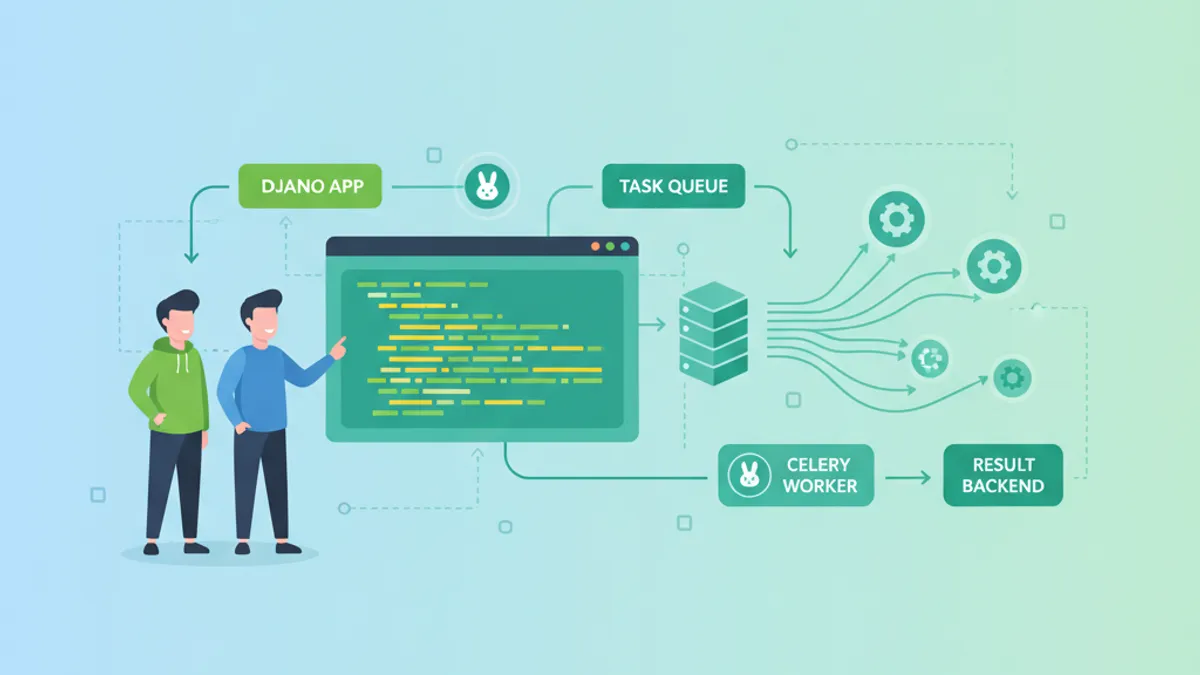
Django ve Celery: Asenkron Görev İşleme ve Mülakat Soruları 2026
Django ve Celery entegrasyonu, asenkron görev işleme, kuyruk yönetimi, Celery Beat zamanlayıcı ve üretim yapılandırması. 2026 mülakat soruları dahil.